The 2027 BMW M3 CS Handschalter Is the Manual M3 We’ve Been Waiting For
 by
by 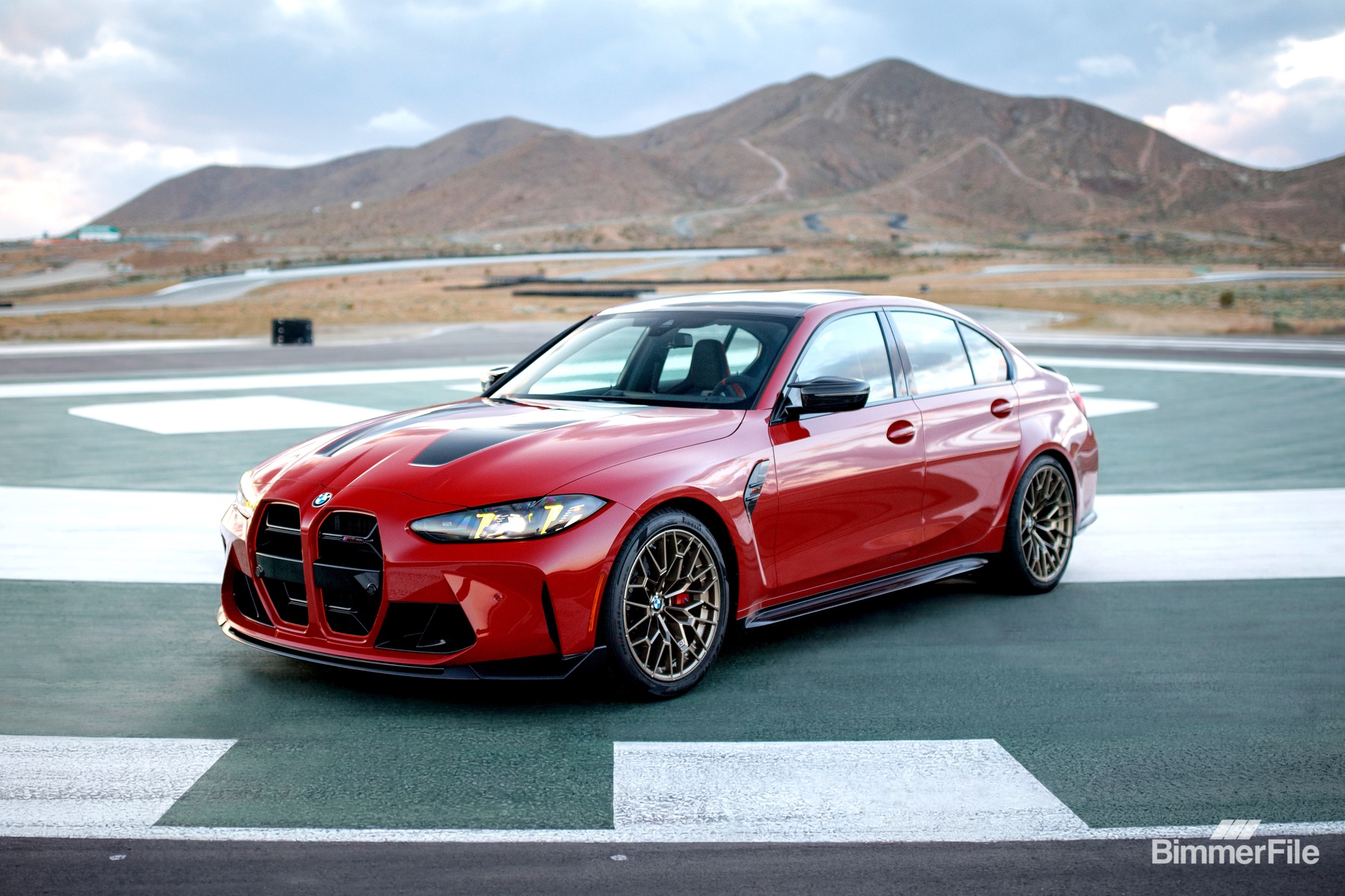

BMW has finally made the manual M3 we’ve been waiting for. Or more specifically, BMW of North America has. Because this is a North American exclusive M3 that brings the best of the M3 CS and marries it to the exceptional 6-speed manual transmission offered on the base model. It is the lightest M3 in the current lineup at nearly 75 pounds lighter than the standard car, priced from $107,100, and it will do 0-60 in 4.1 seconds and hit 180 mph. It is also, at its core, a sendoff: the sixth-generation M3 is bowing out, and this is how BMW M chose to mark the occasion. Not with more power, not with more technology, but with less weight and a third pedal.
Worth noting upfront: the Handschalter makes the same 473 hp and 406 lb-ft of torque as the standard M3. That’s not a shortcoming so much as a mechanical reality. The Getrag six-speed manual has torque limitations that keep the engine at parity with the base car. BMW M worked within that constraint rather than around it, building the case for this car through weight reduction, chassis tuning, and driver engagement instead. Whether that trade resonates depends entirely on what you want an M3 to be.
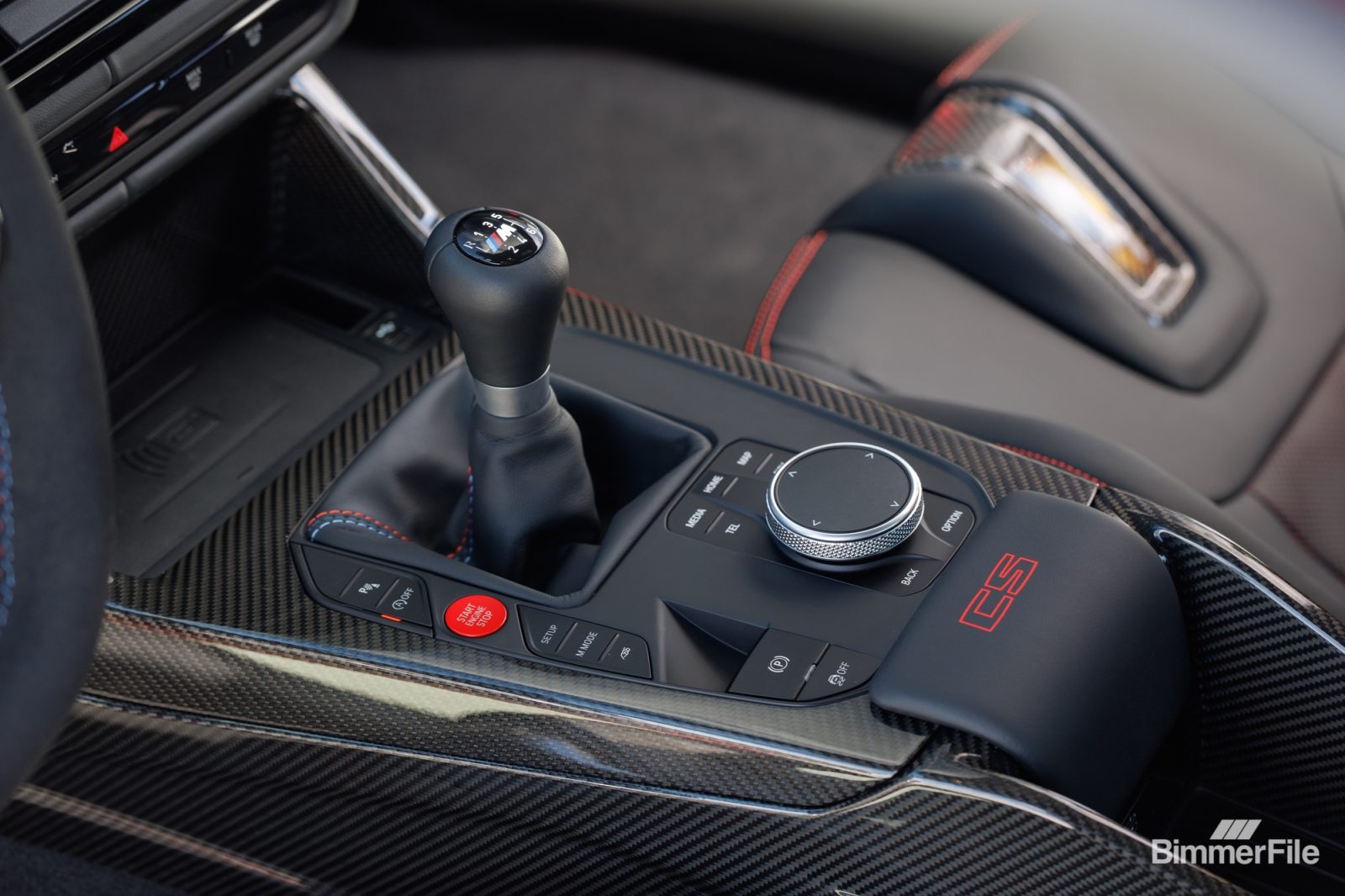
There’s a tension here worth naming. BMW M spent the better part of this generation telling buyers, implicitly if not explicitly, that the automatic and all-wheel drive combination was the performance choice. The data on lap times largely supported that argument. Meanwhile, Porsche’s GT division was drawing a very different conclusion. Manual transmission take rates on the GT3 in North America have exceeded 50%, a number that reflects something deeper than nostalgia. Porsche responded by investing heavily in the manual as a core part of the GT experience, not an accommodation to purists but a genuine performance offering in its own right. BMW M, by contrast, has kept the manual confined to the base versions of the M2, M3, and M4. The higher performance variants, the competition models, the special editions, have all been automatic-only territory. Until now.
The Handschalter doesn’t contradict the performance argument so much as it reframes it: performance for whom, and toward what end? Not every M3 buyer is optimizing for a lap record. Some are optimizing for the experience of driving. That BMW of North America had to champion this particular car into existence says something about where the appetite for it actually lives.
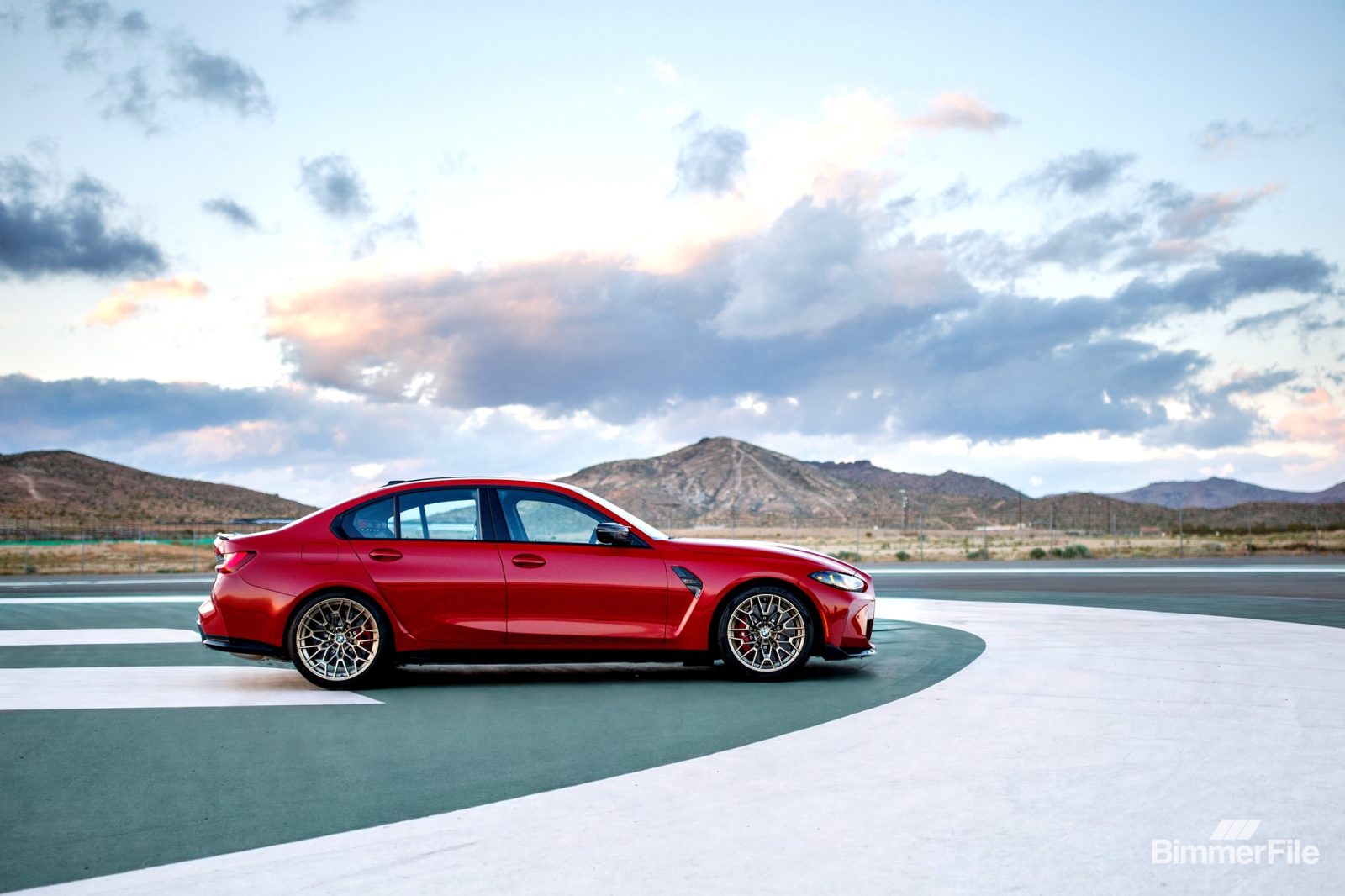
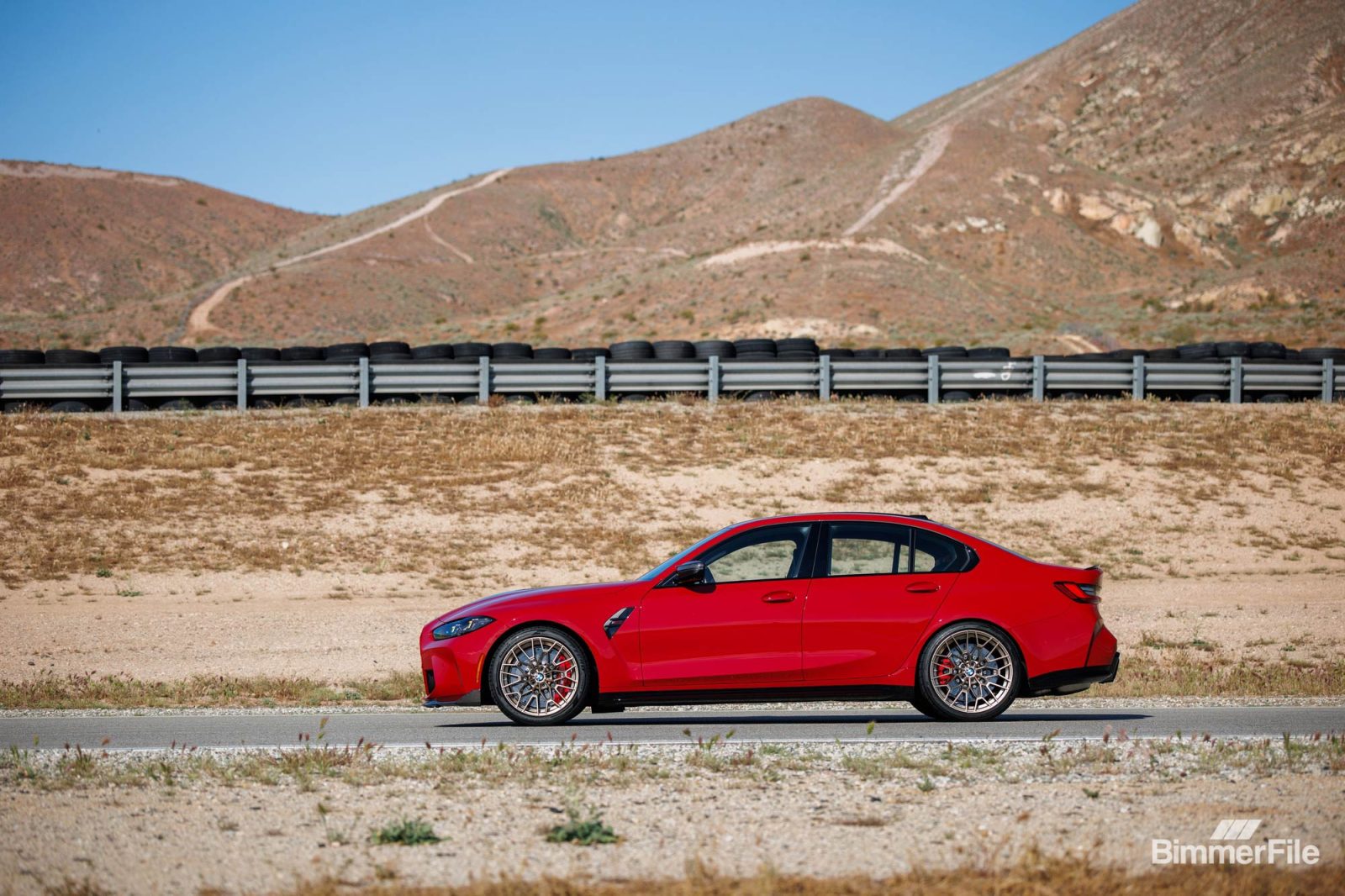
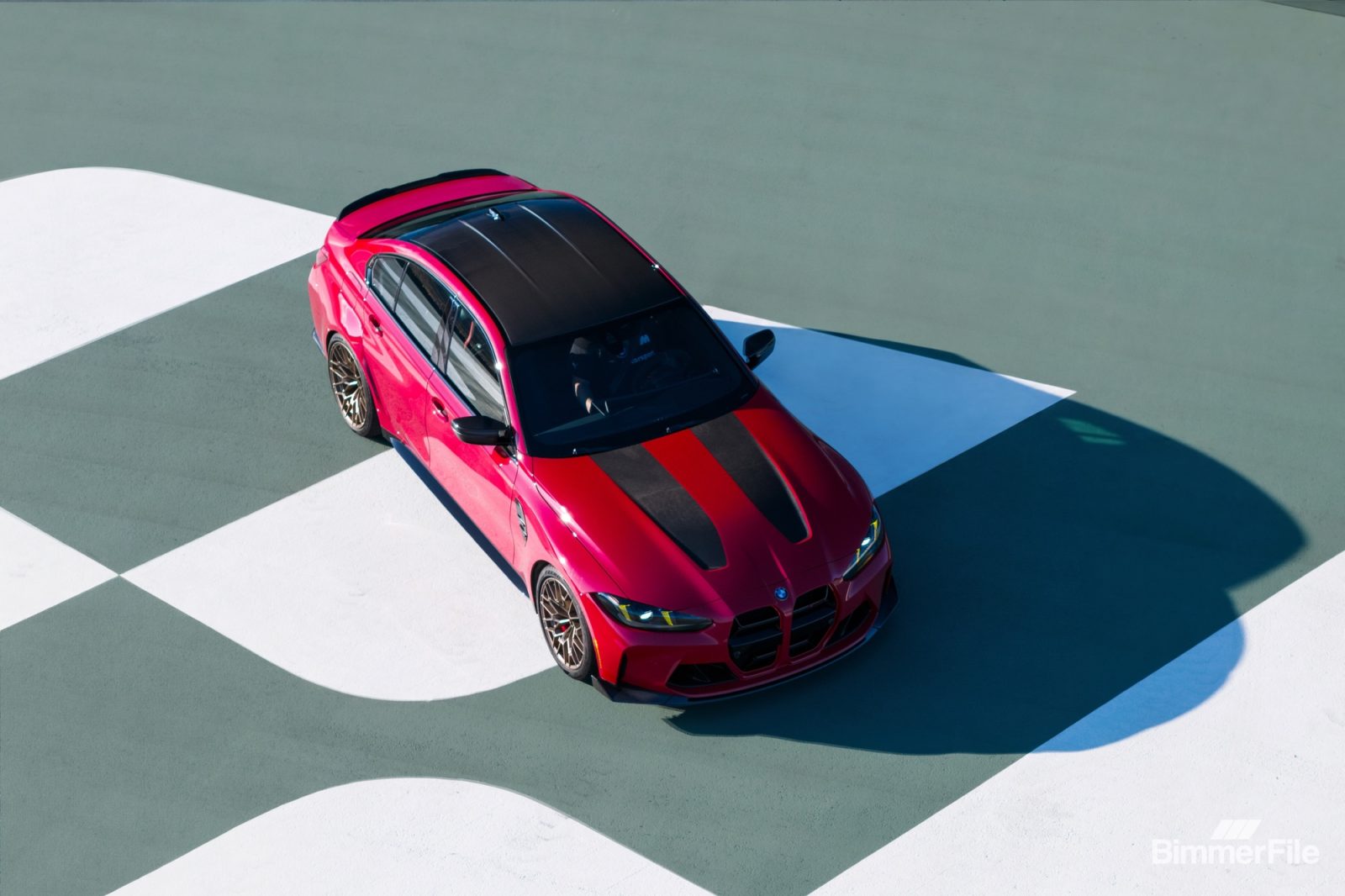
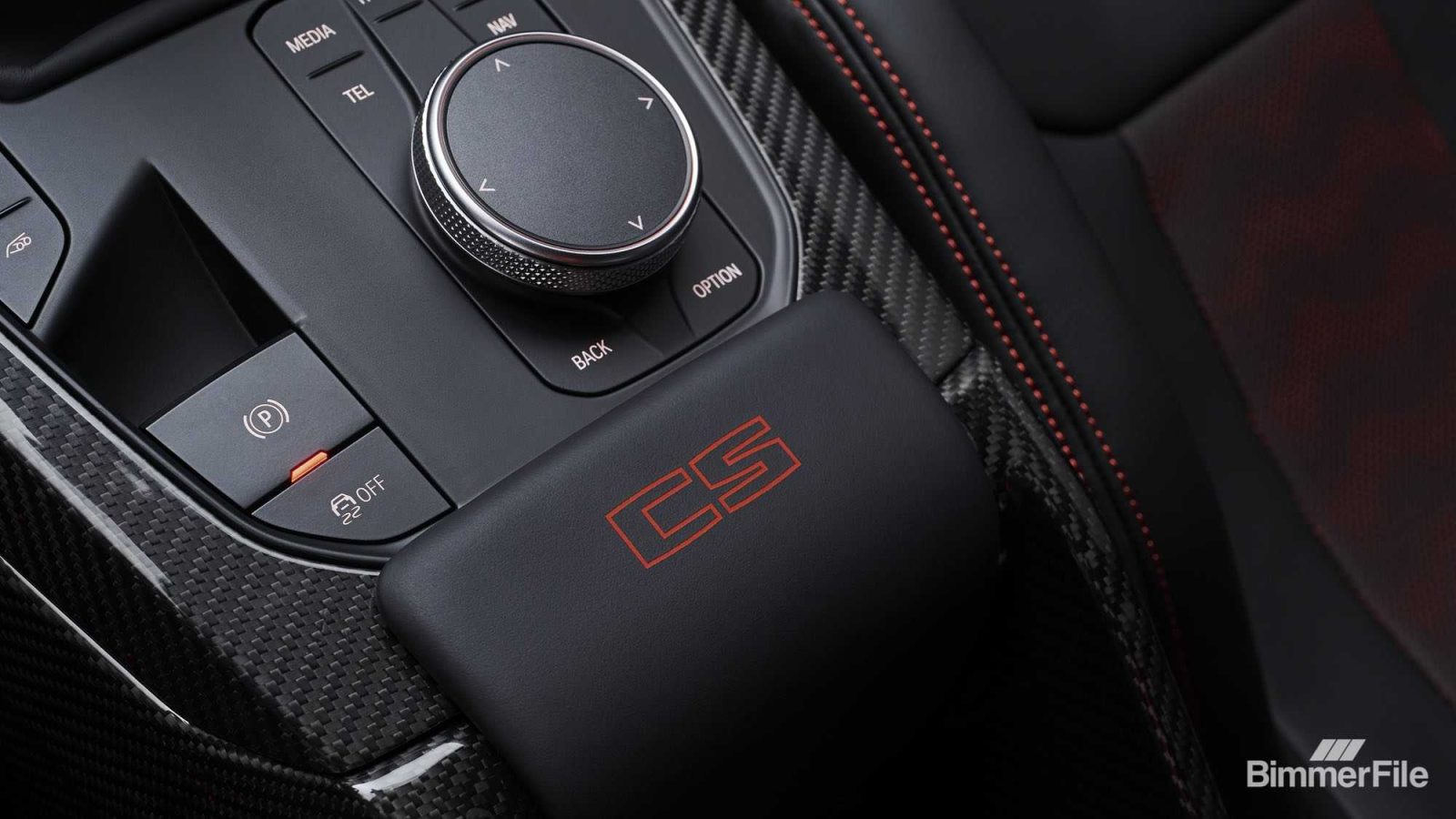
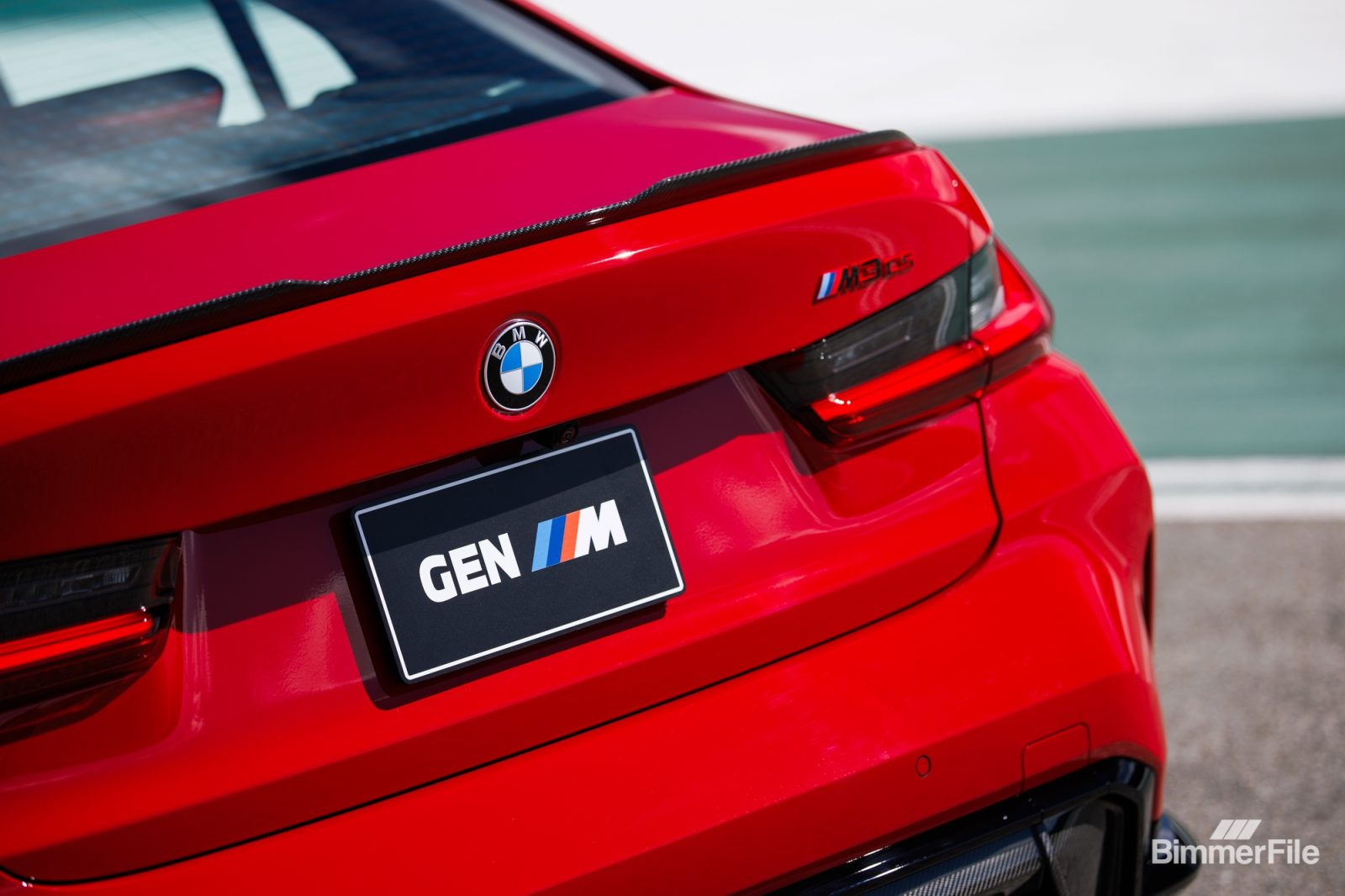
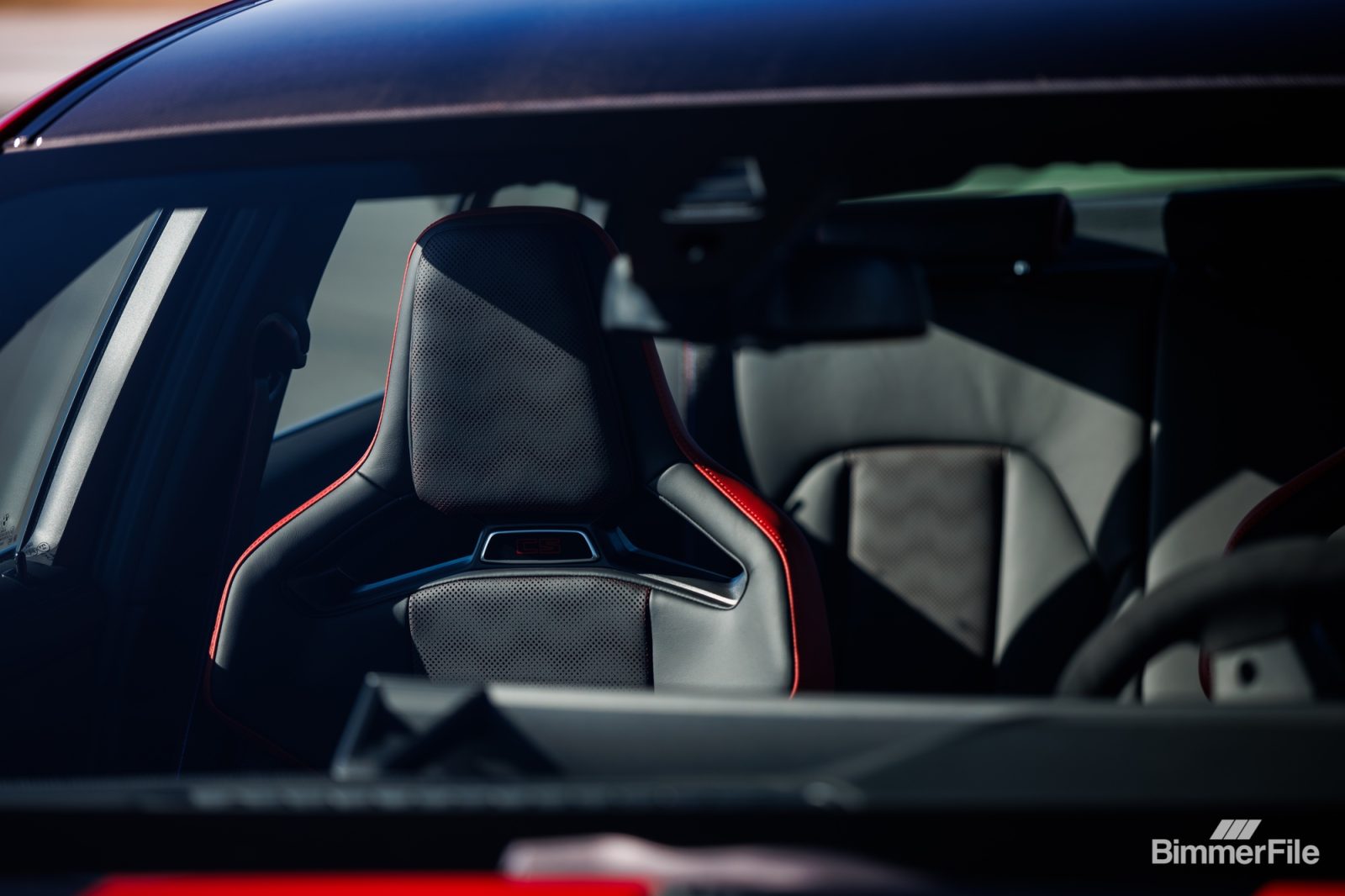
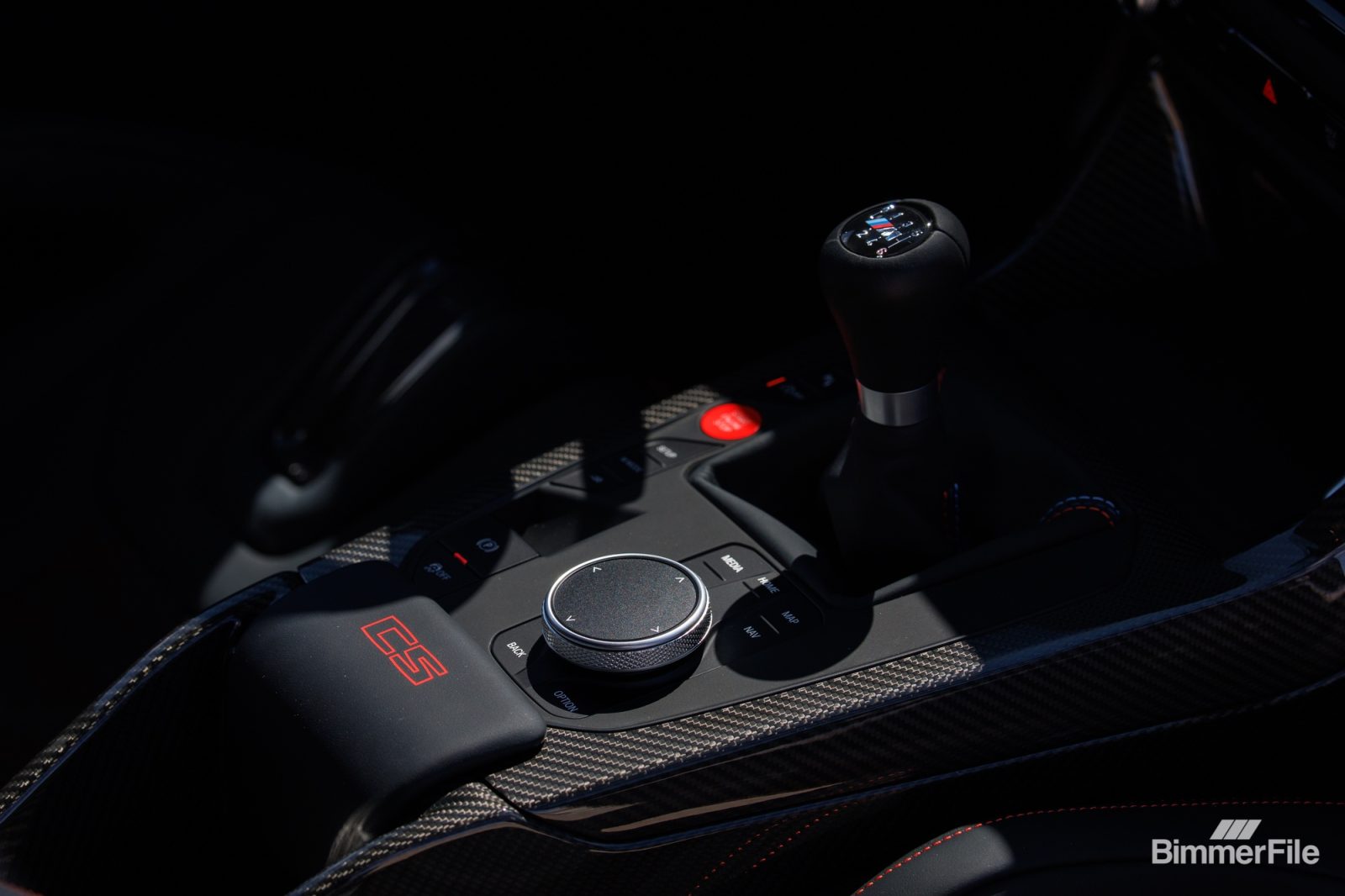
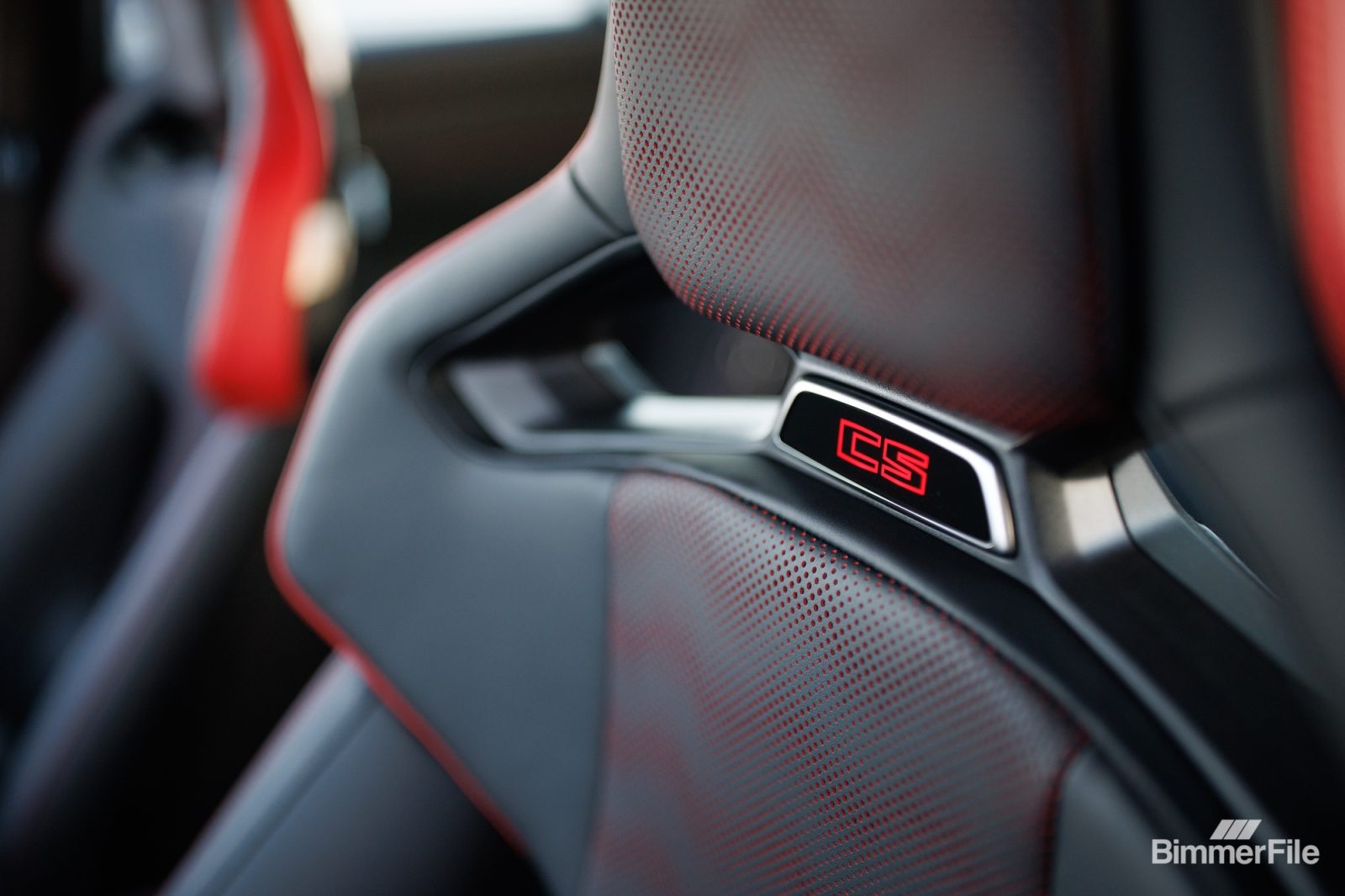
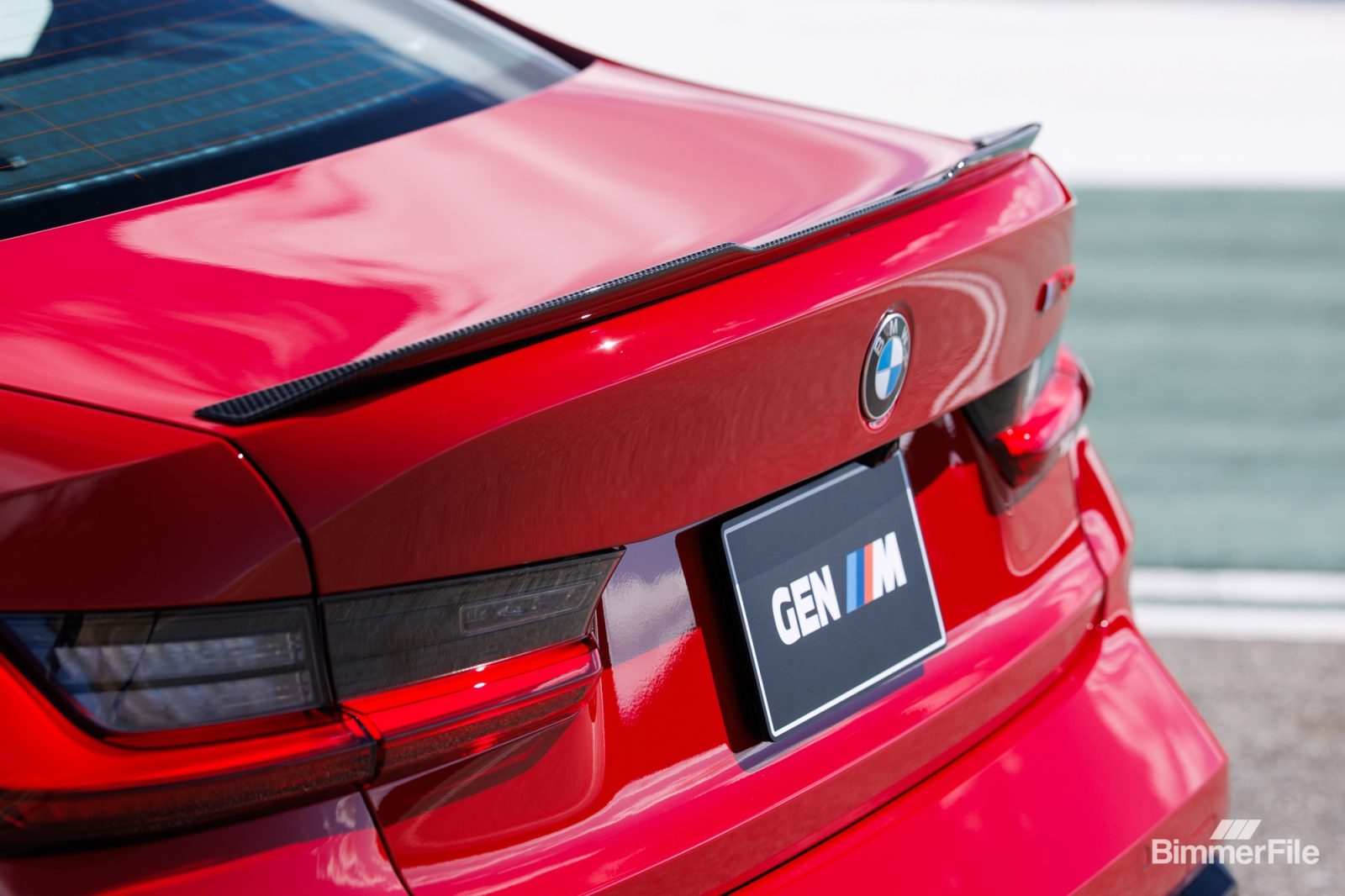
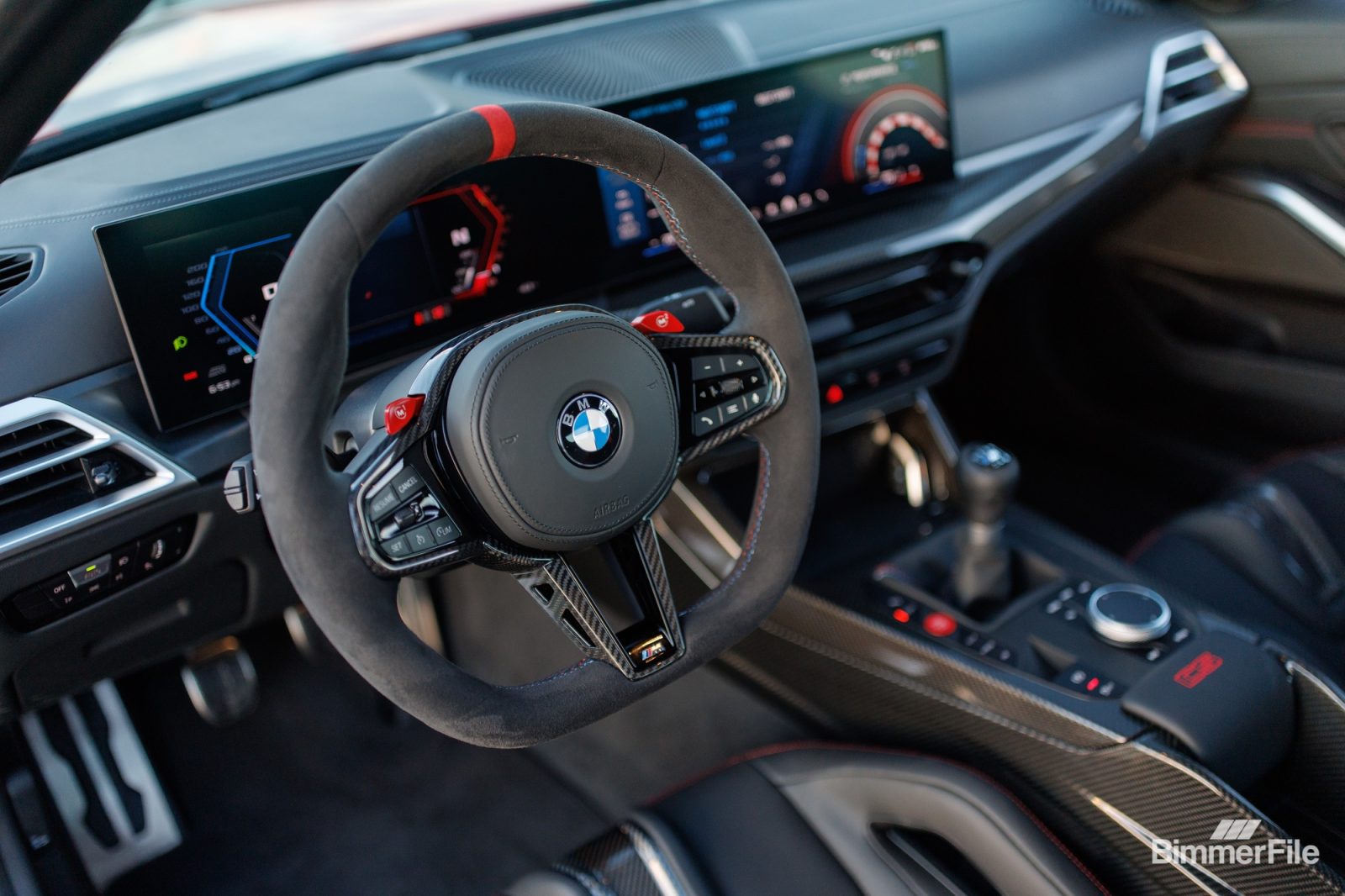
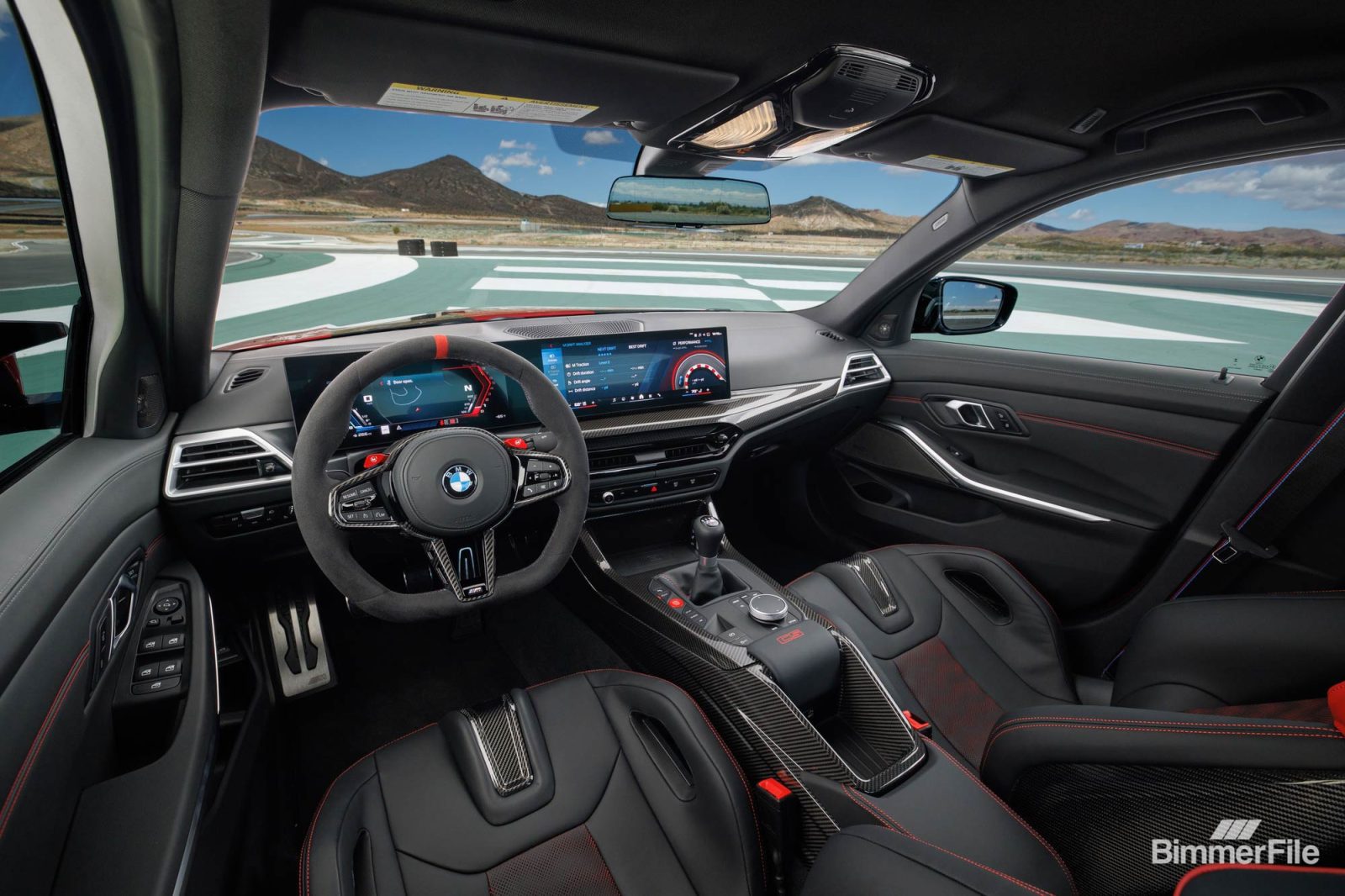
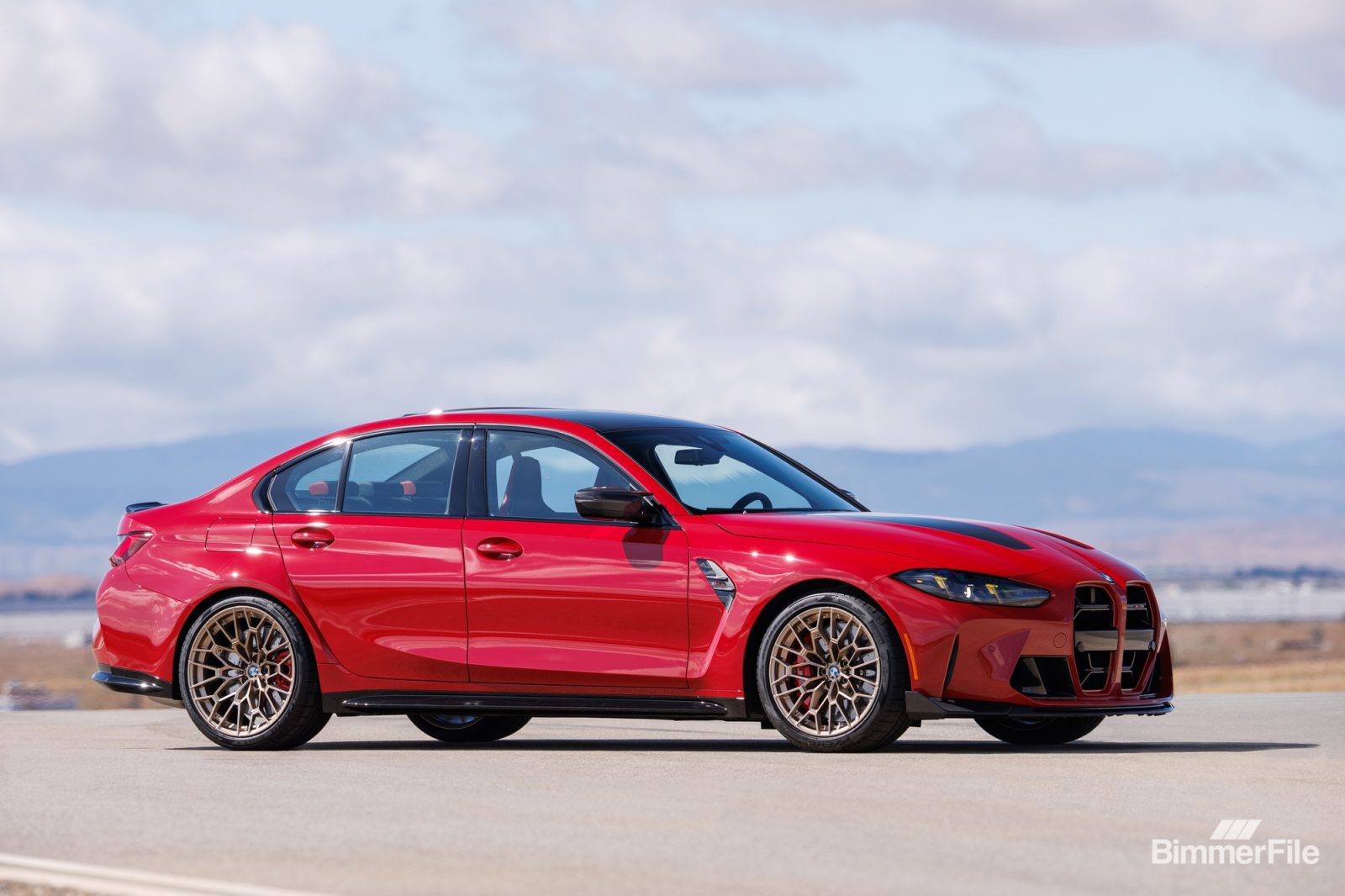
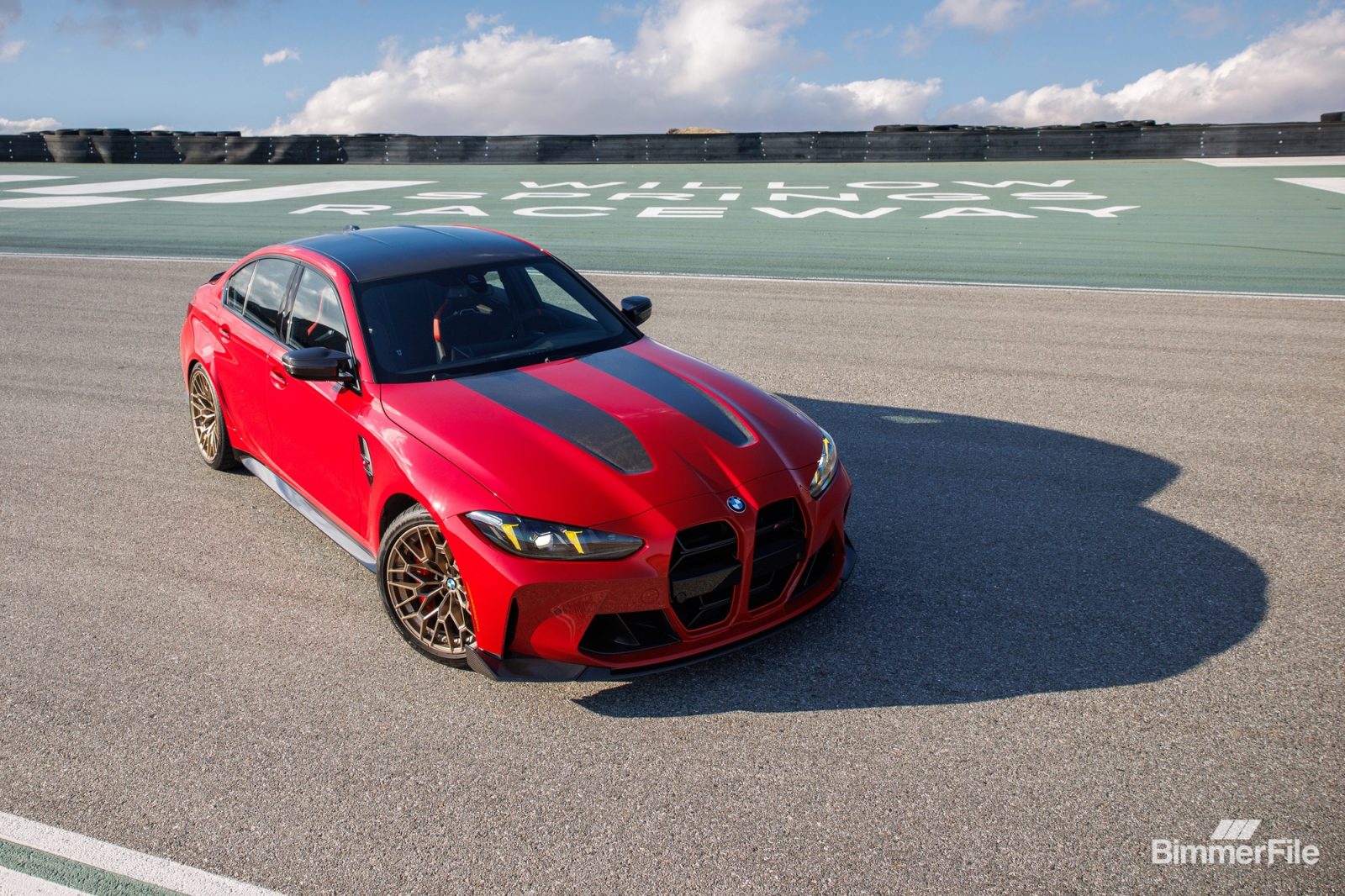
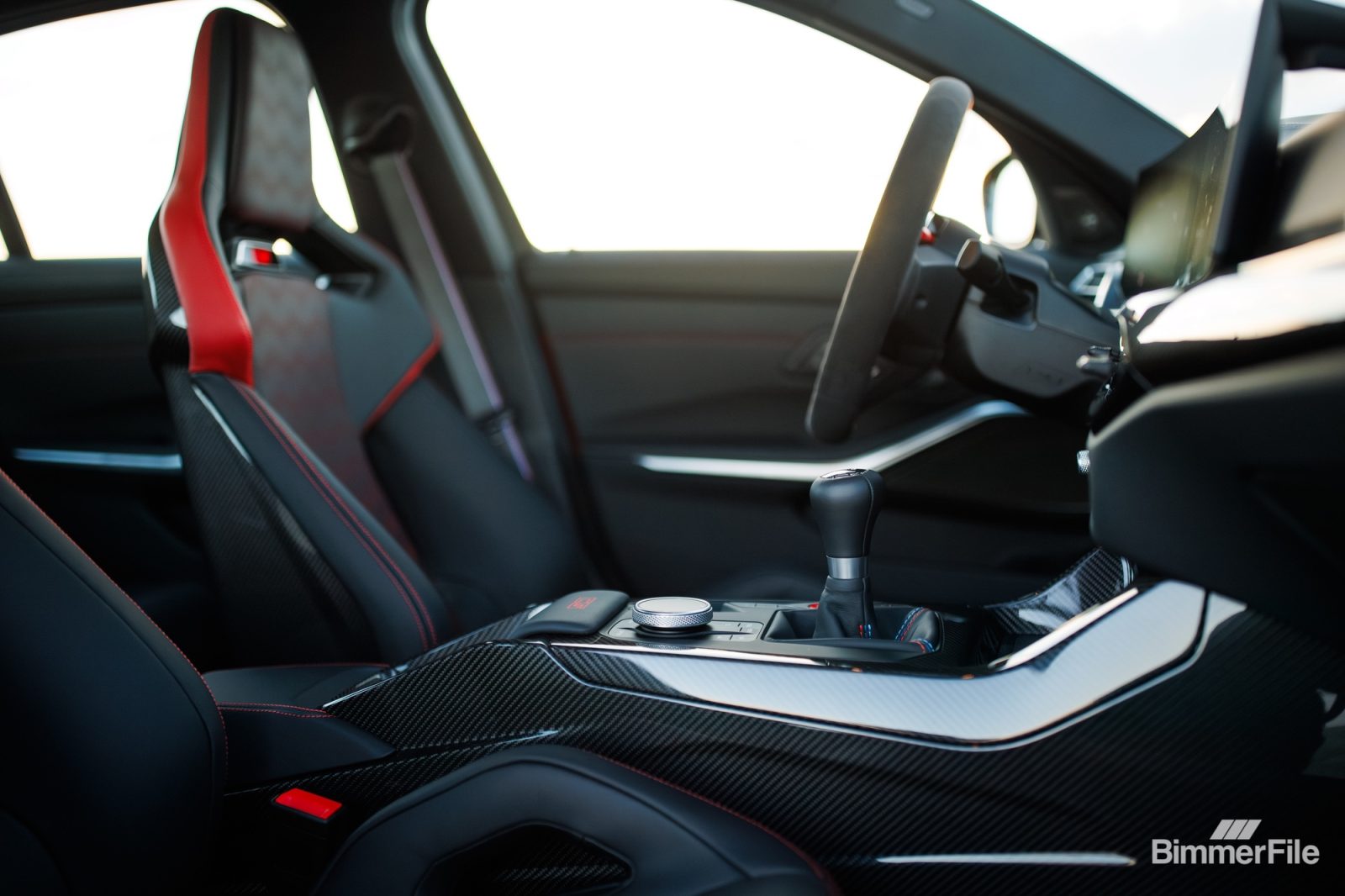
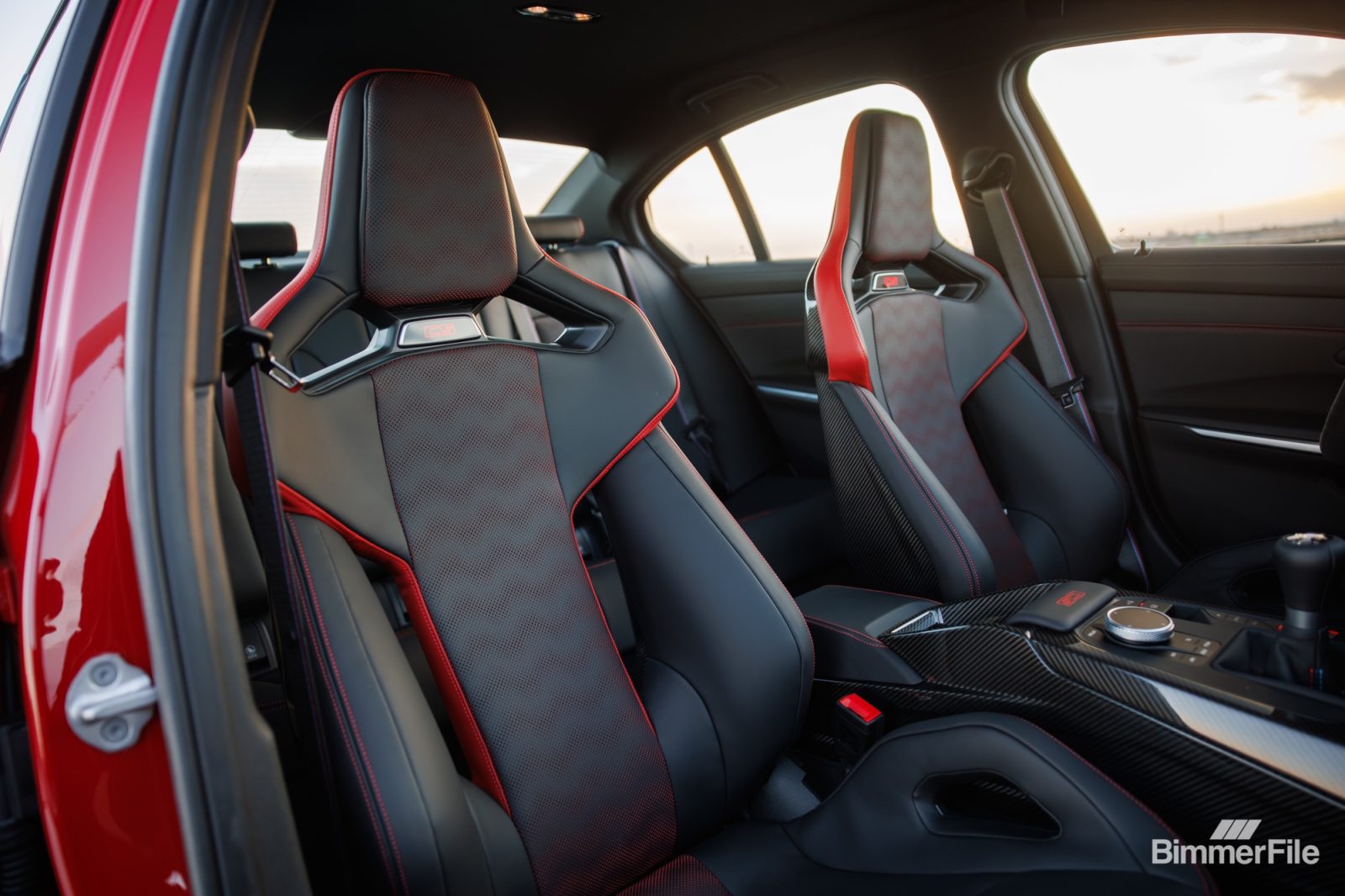
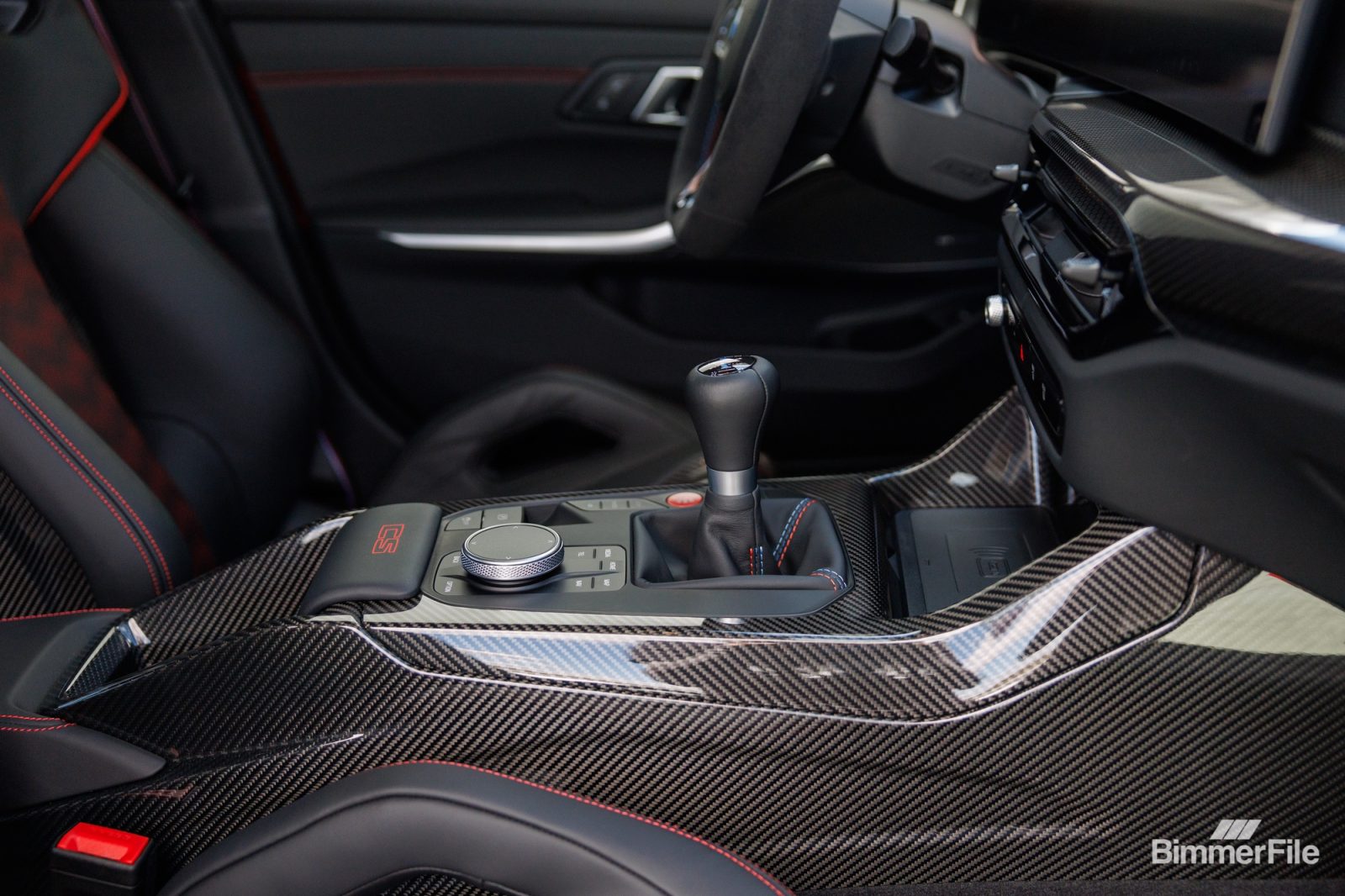
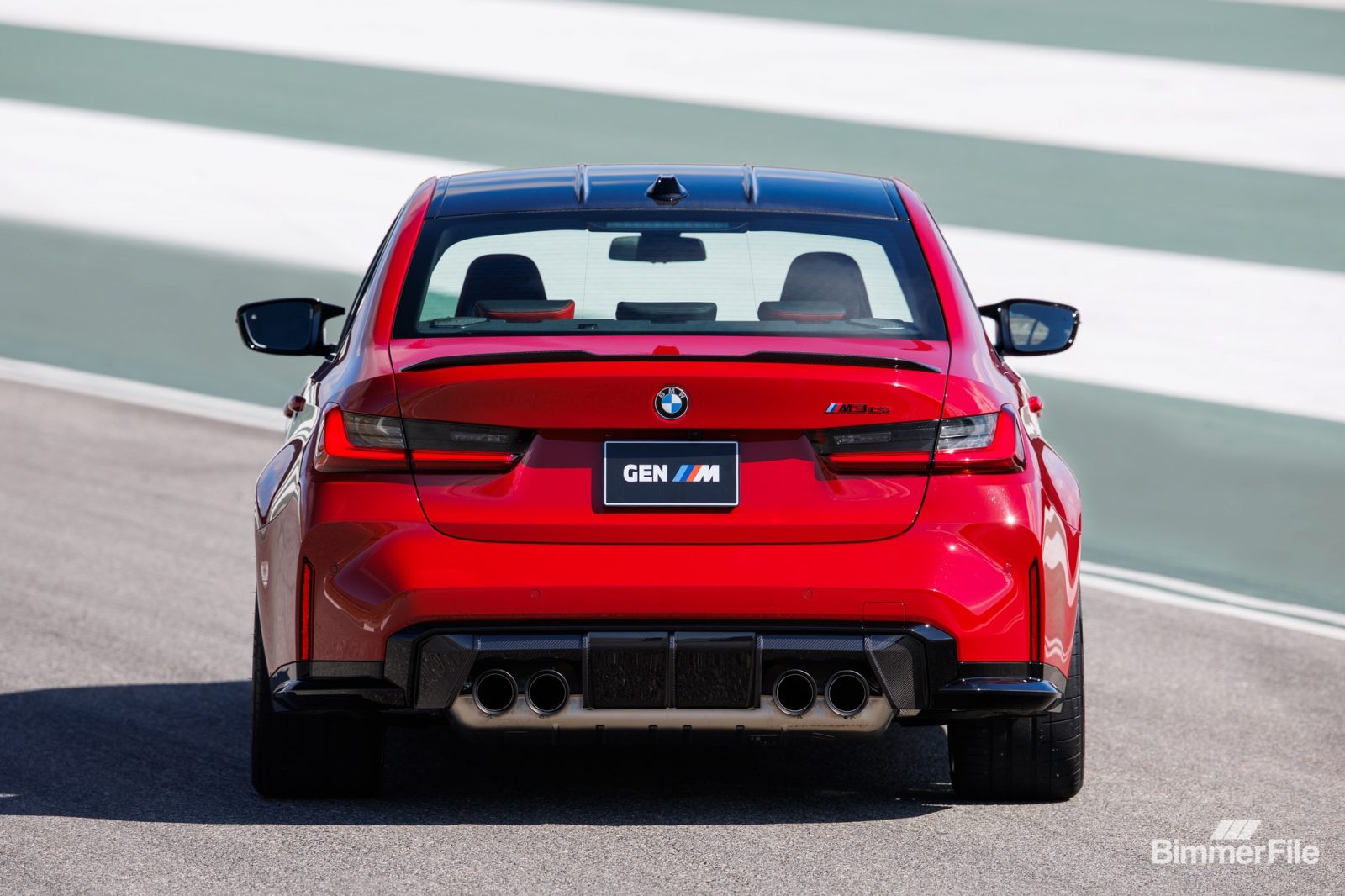
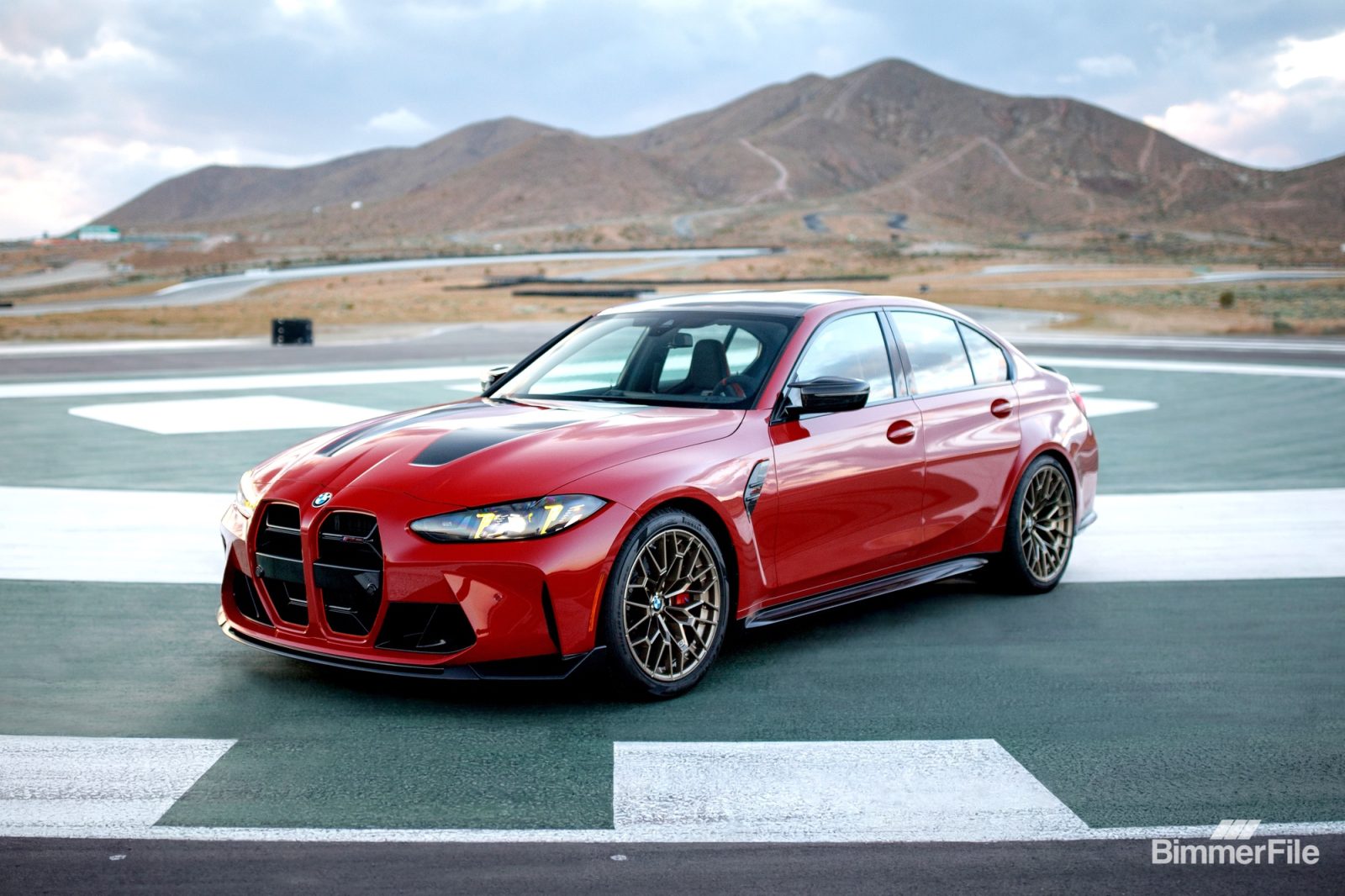
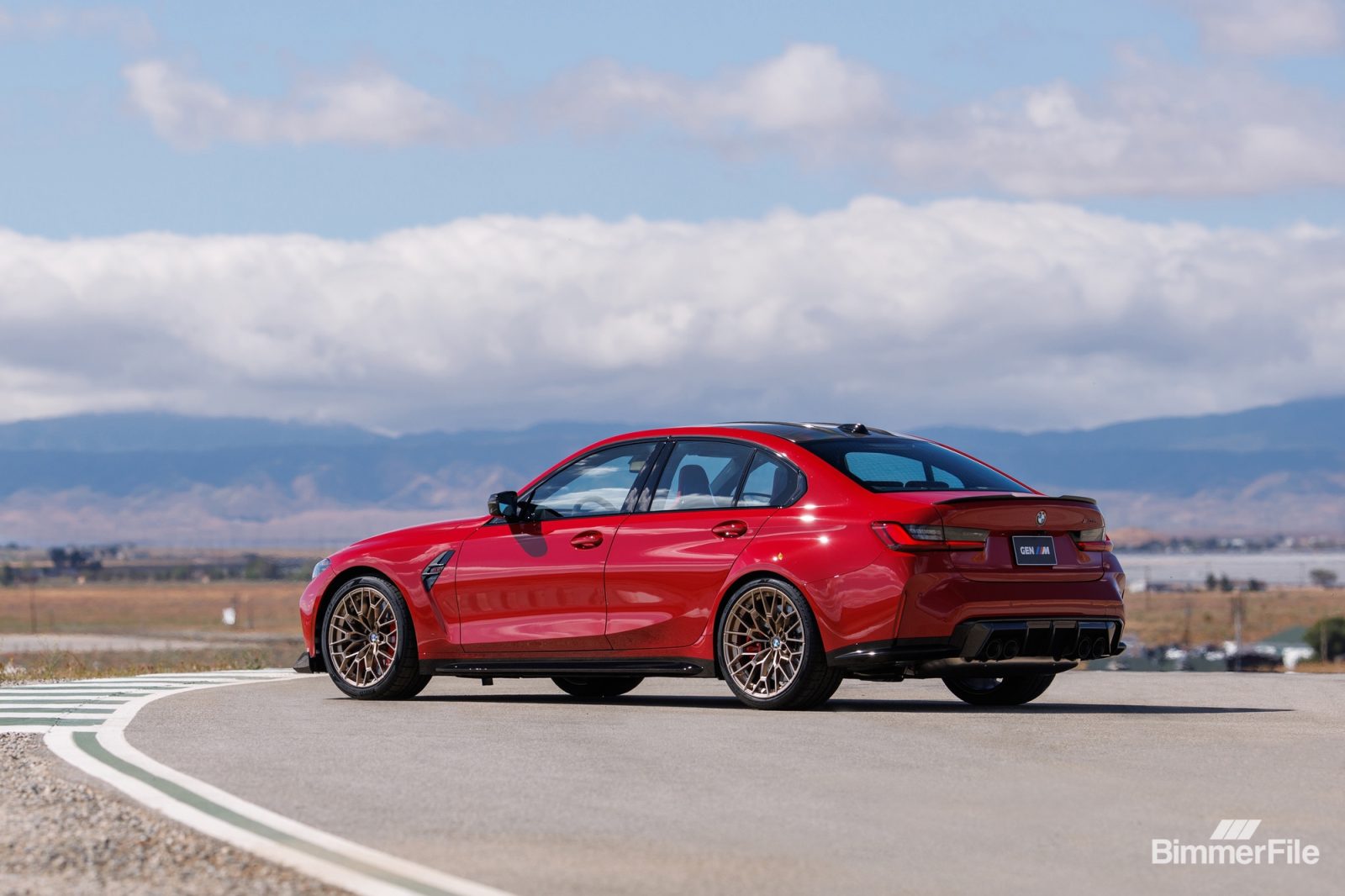
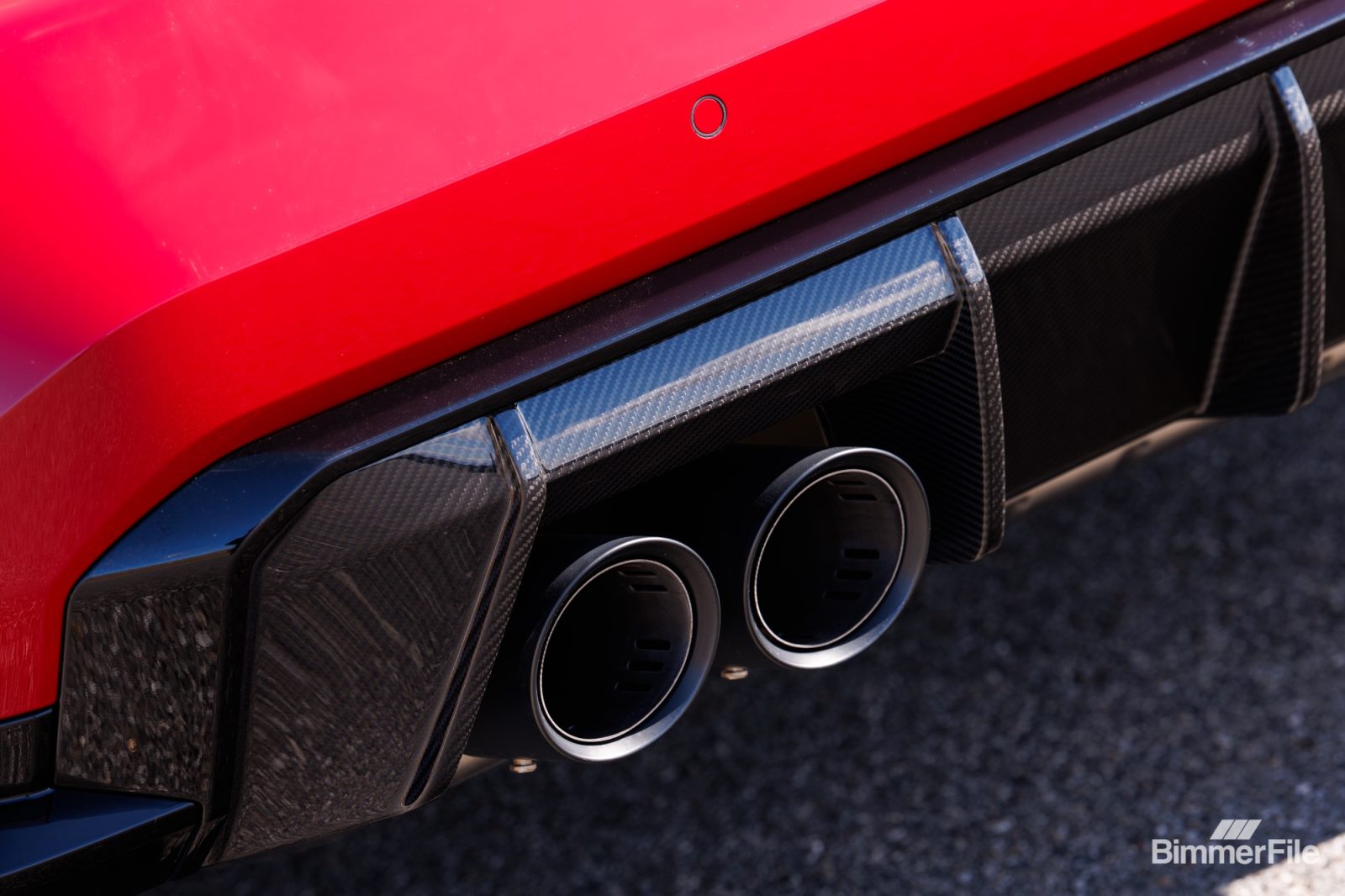
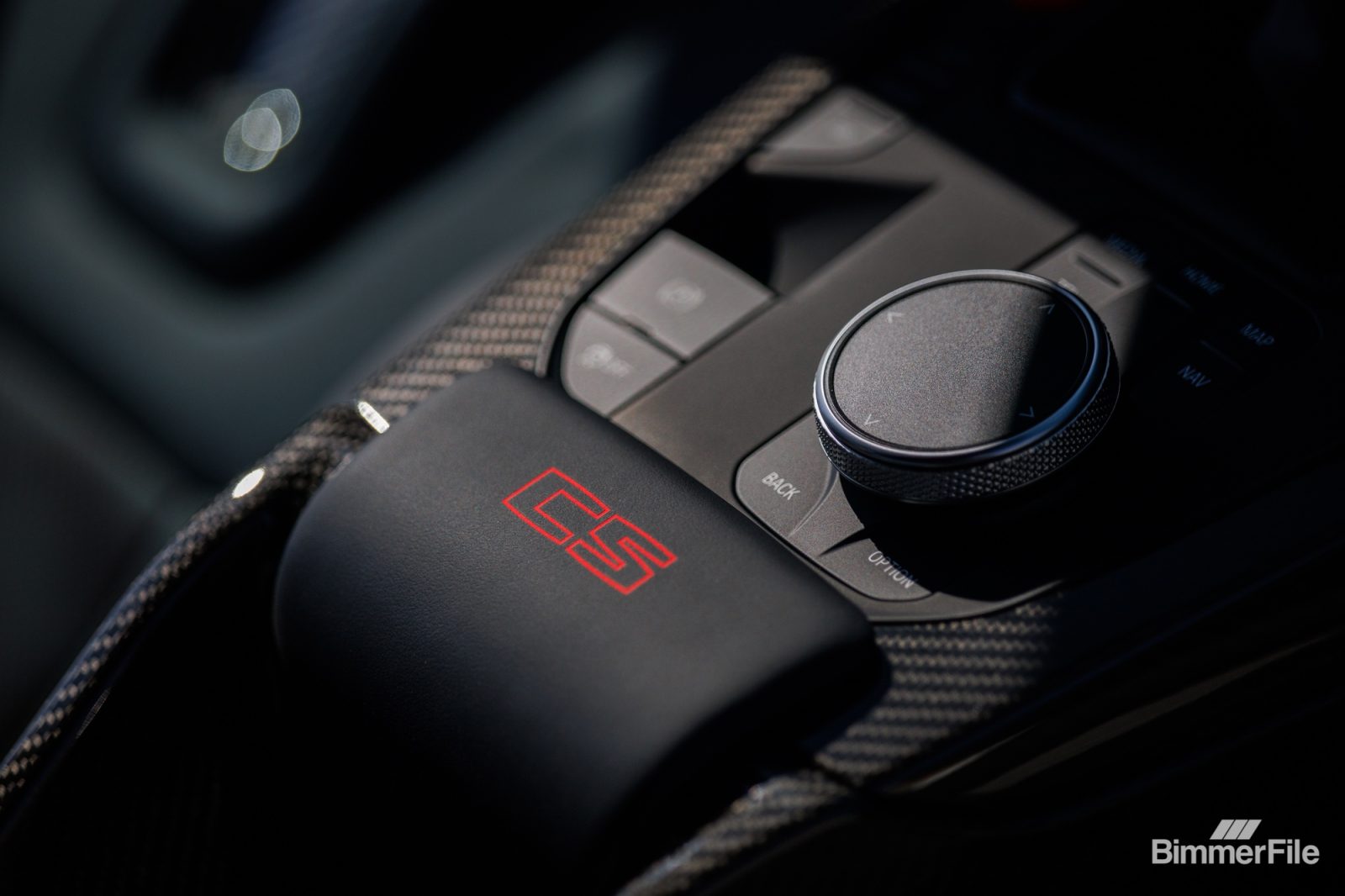
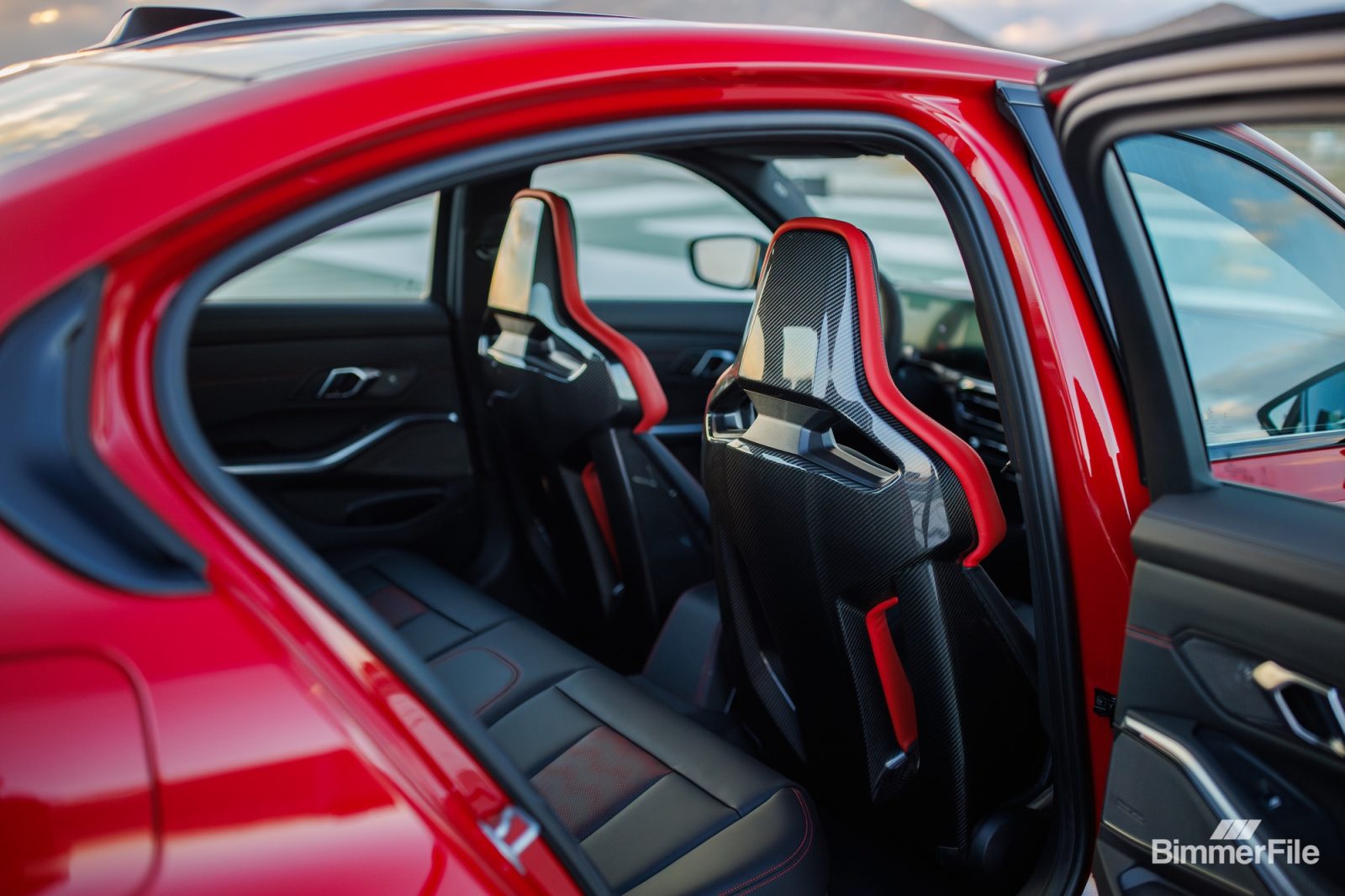
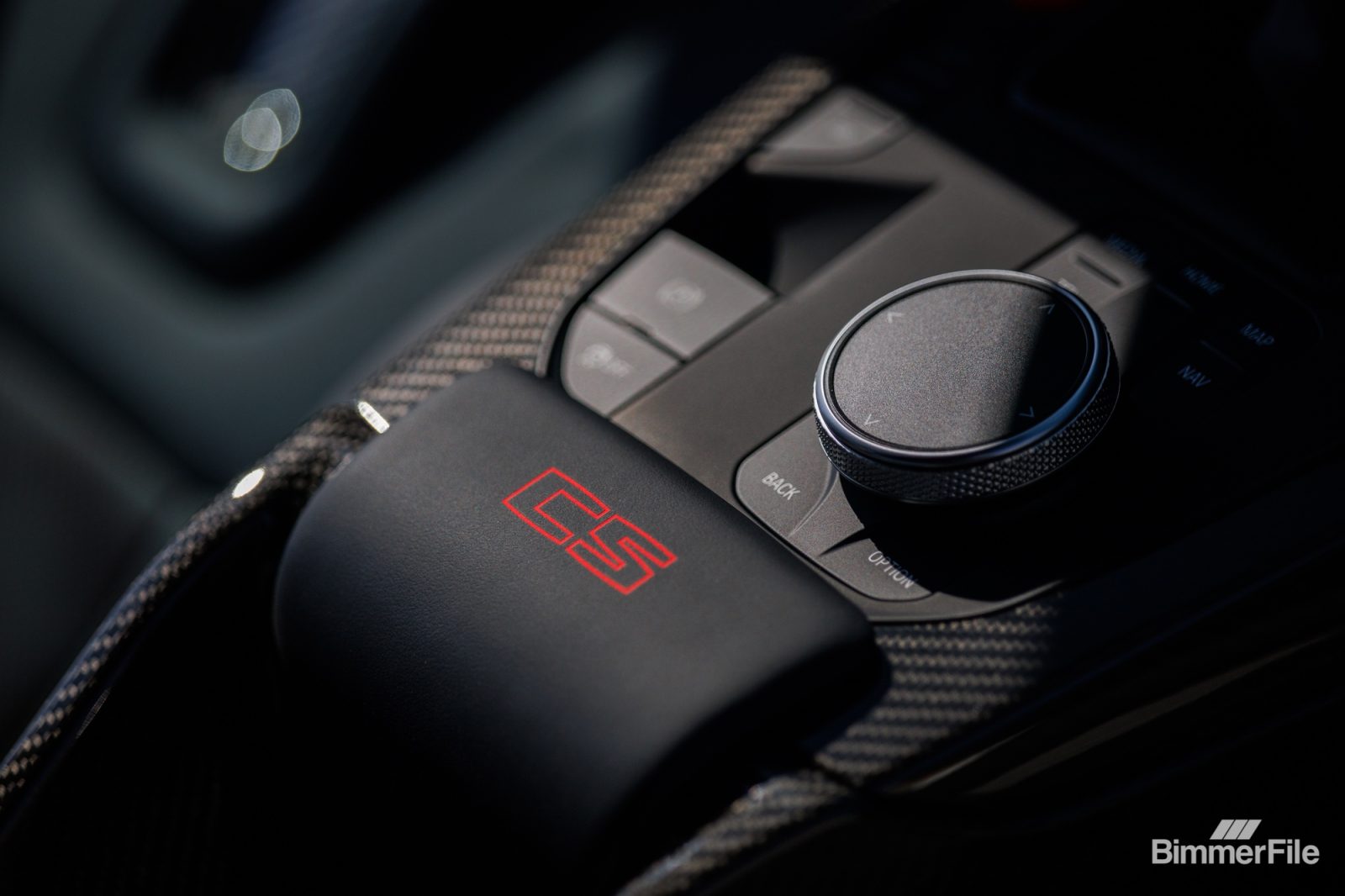
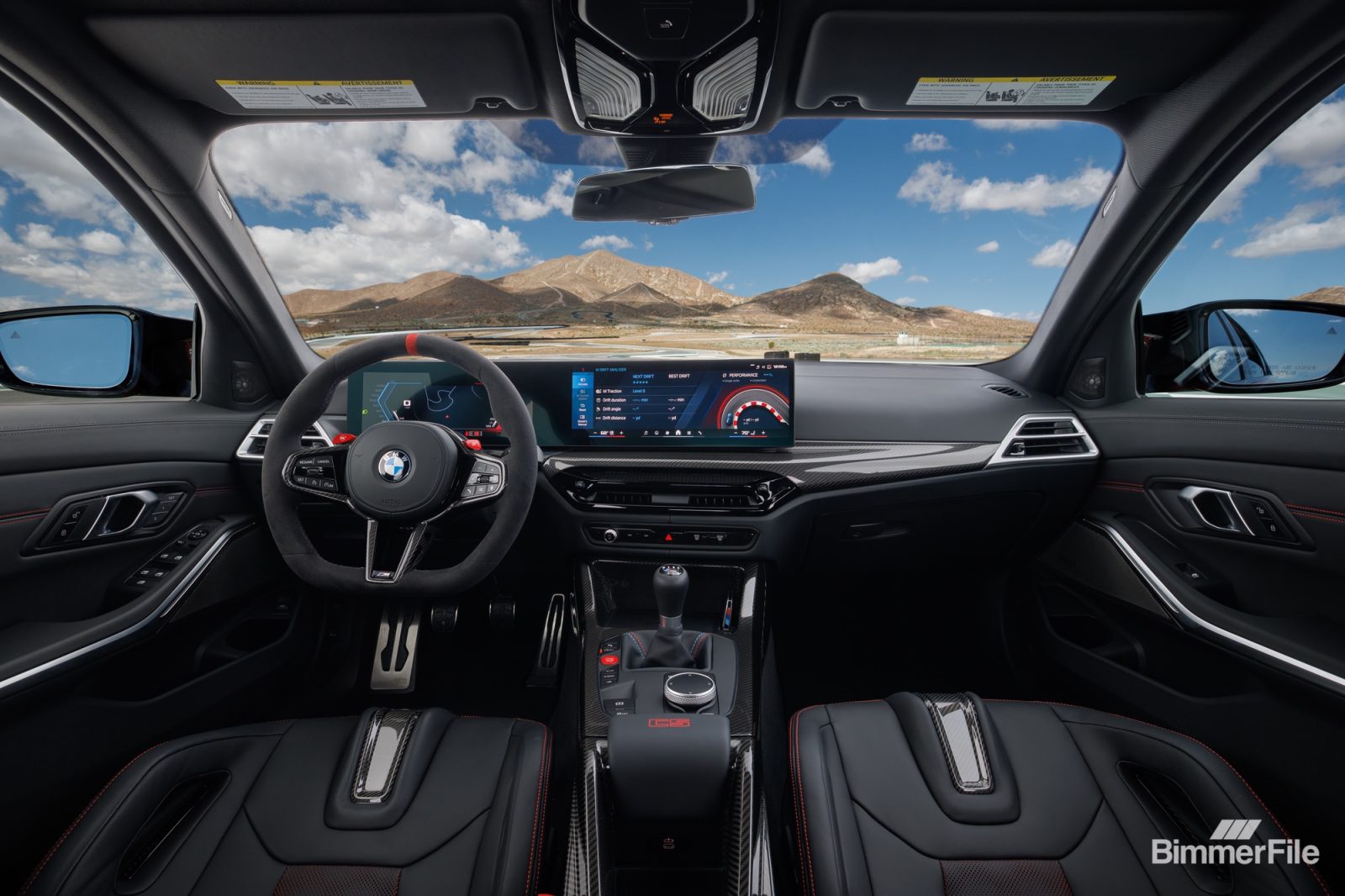
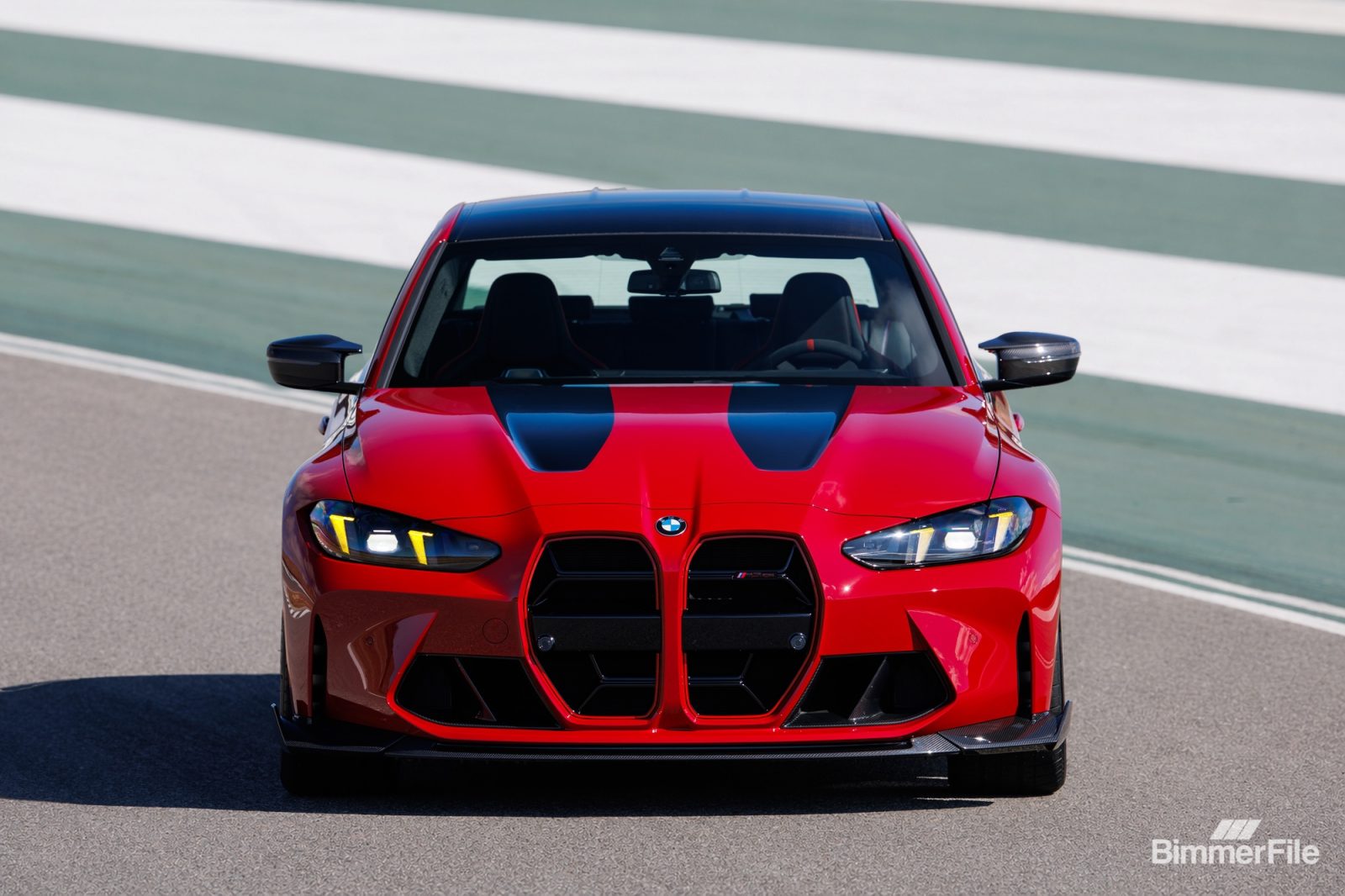
The CS lineage carries specific expectations, and the Handschalter meets them. Weight reduction is targeted and meaningful: carbon fiber reinforced plastic covers the roof, hood, front splitter, front air intakes, mirror caps, rear diffuser, and rear spoiler. Inside, the center console and interior trim are also CFRP, and the standard M Carbon bucket seats reduce cabin weight while providing genuine lateral support. A titanium rear silencer shaves more than eight pounds off the exhaust system alone. In total, these measures save approximately 42 pounds compared to the base M3 with the six-speed manual. Add the optional M Carbon Ceramic brakes, available with calipers in red or gold, and the total rises to nearly 75 pounds. That’s not insignificant in a segment where manufacturers routinely add weight faster than they subtract it.
Drivers looking for additional chassis rigidity can specify the optional M Front Strut Brace at $1,100. The cast aluminum strut tower brace features weight-optimized geometry calibrated to the forces applied across different driving situations, and is particularly relevant for track use.
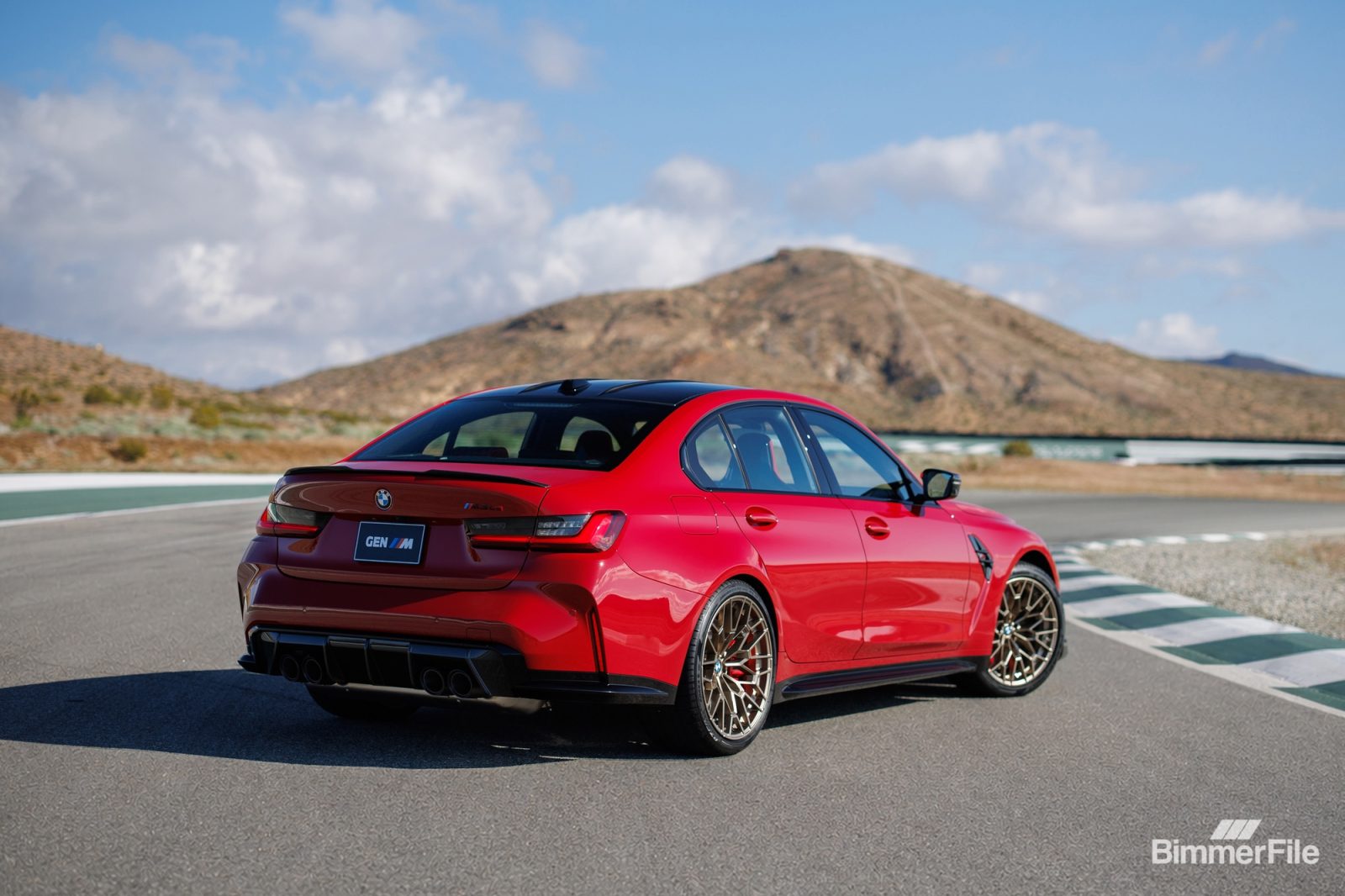
The chassis work goes deeper than the diet. BMW M fitted the Handschalter with shock absorbers sourced from the M4 CSL, auxiliary springs, revised axle kinematics, and unique wheel camber settings engineered to optimize steering precision, lateral force transmission in corners, spring and damping response, and wheel location. New springs and a revised rear axle link lower the car by 6mm compared to the standard M3. The M Servotronic steering has been recalibrated specifically for this drivetrain and weight distribution, as have the electronic control settings for the chassis, engine, and gearbox.
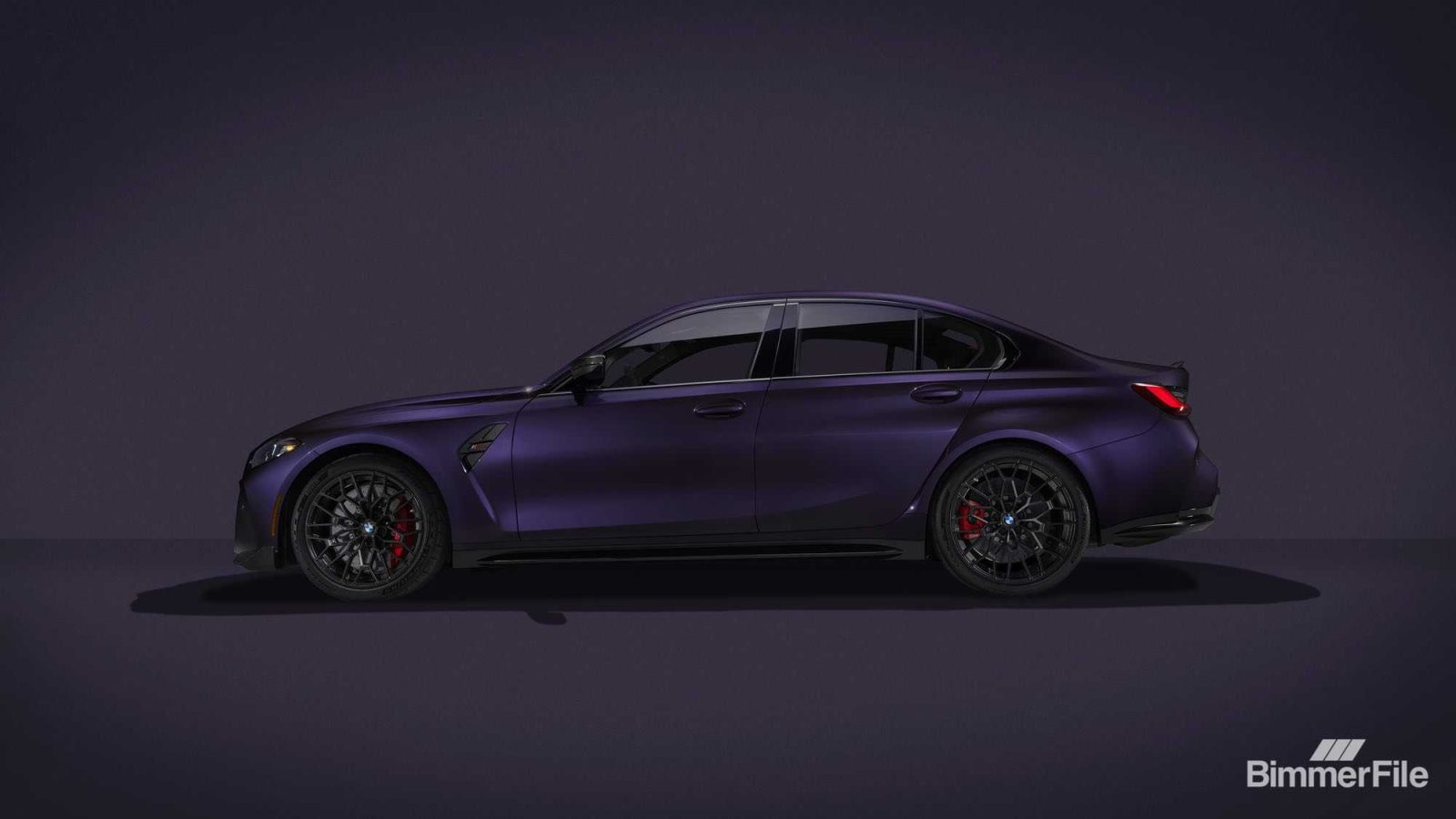
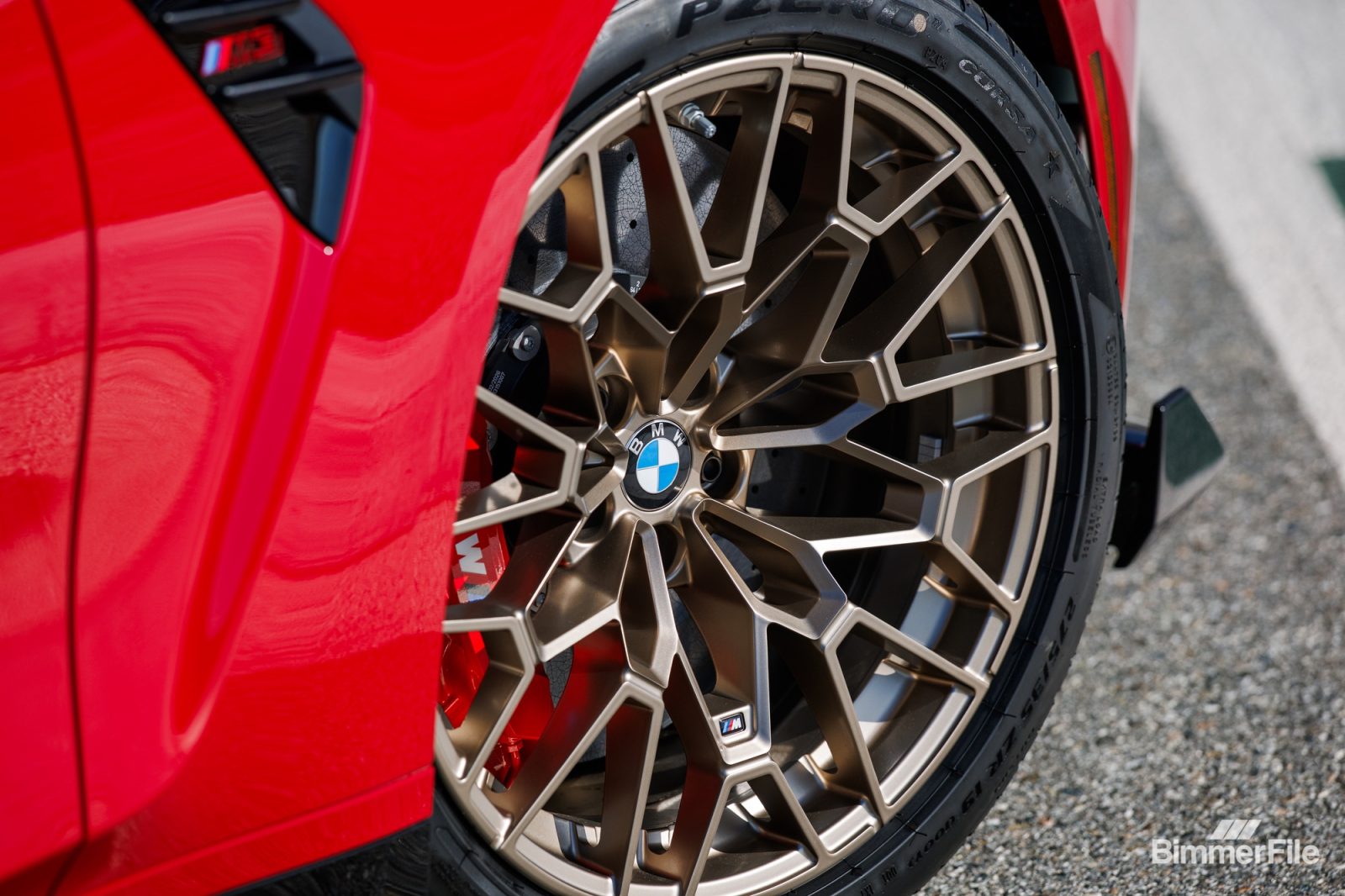
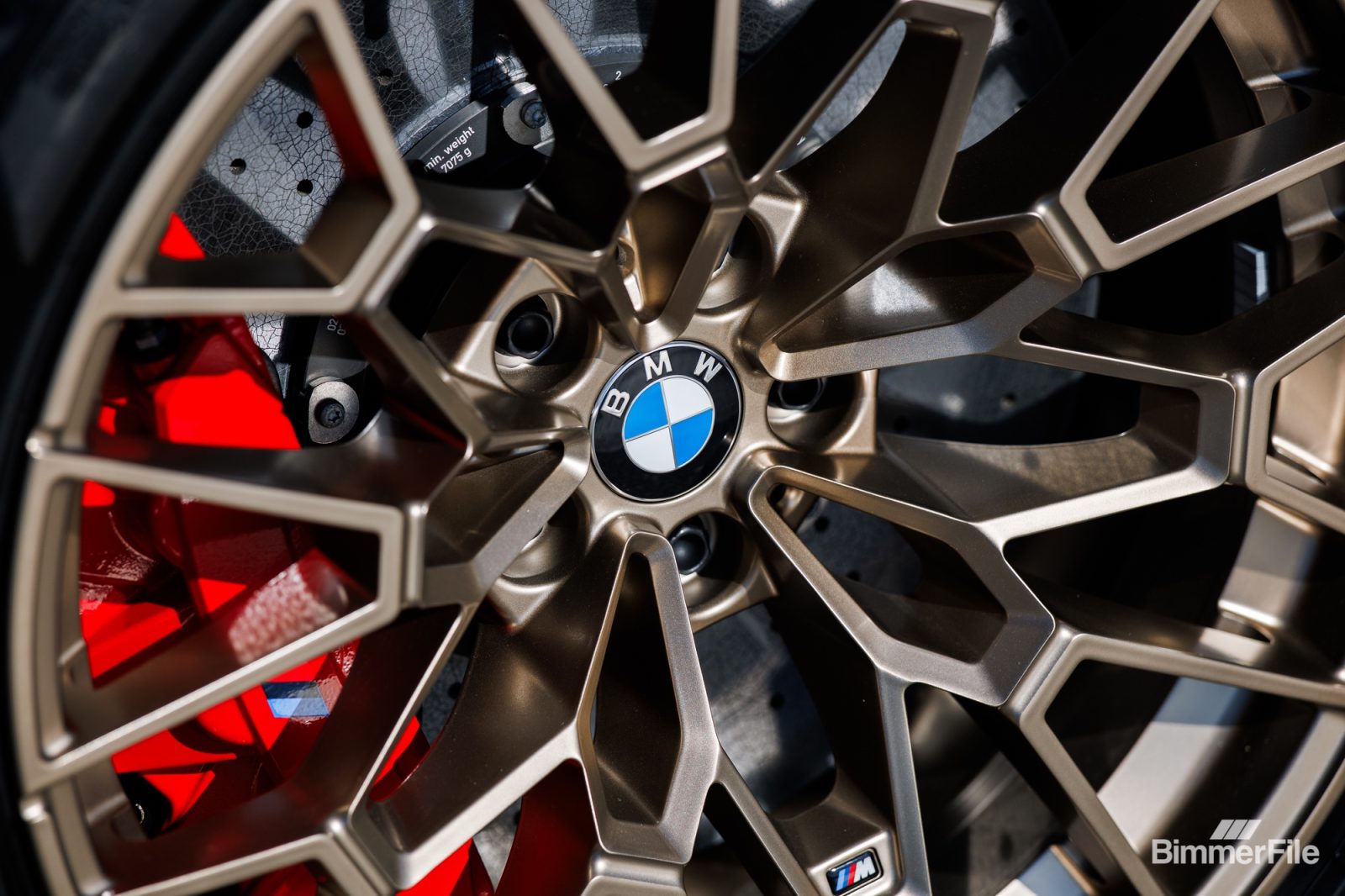
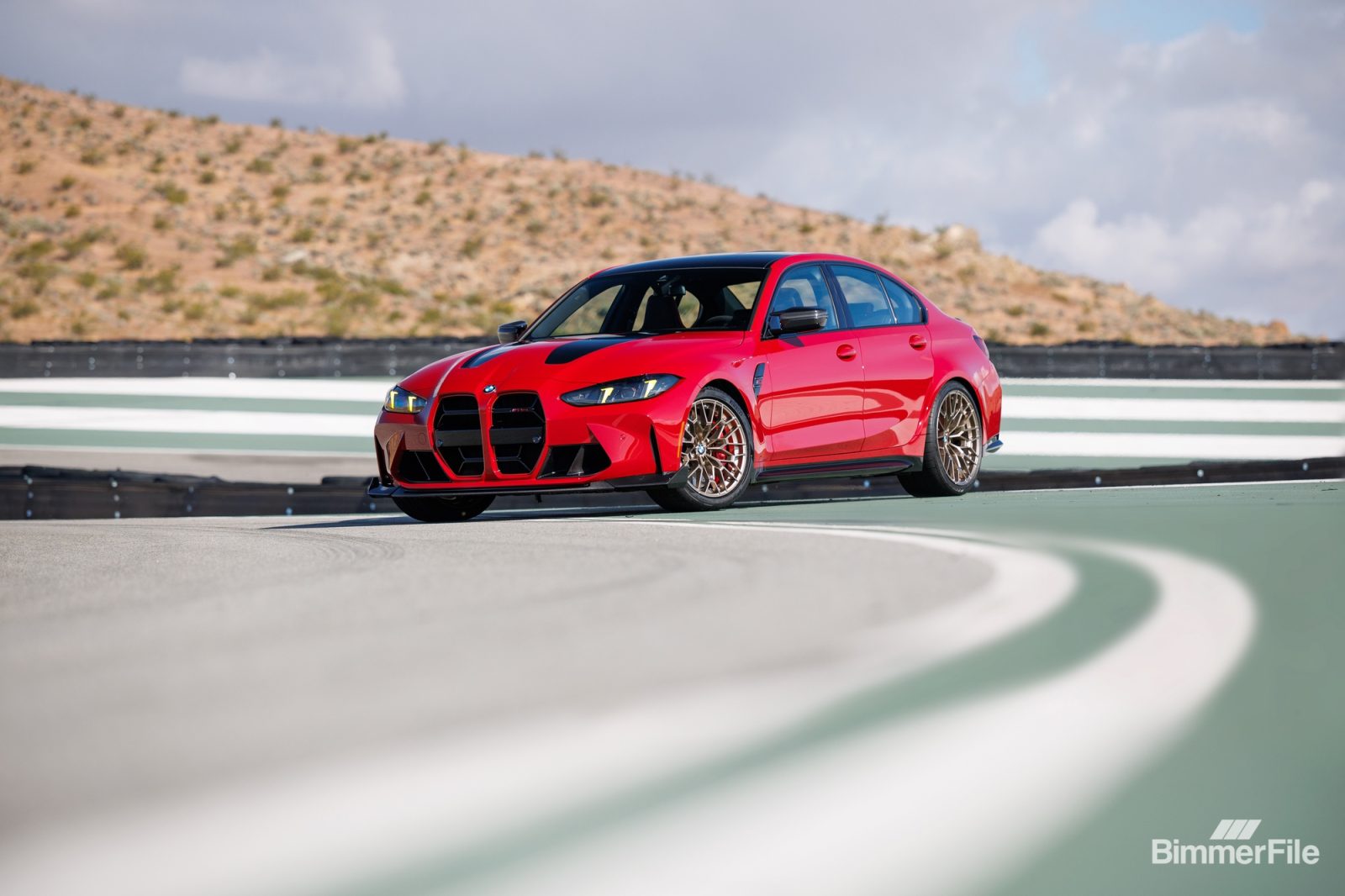
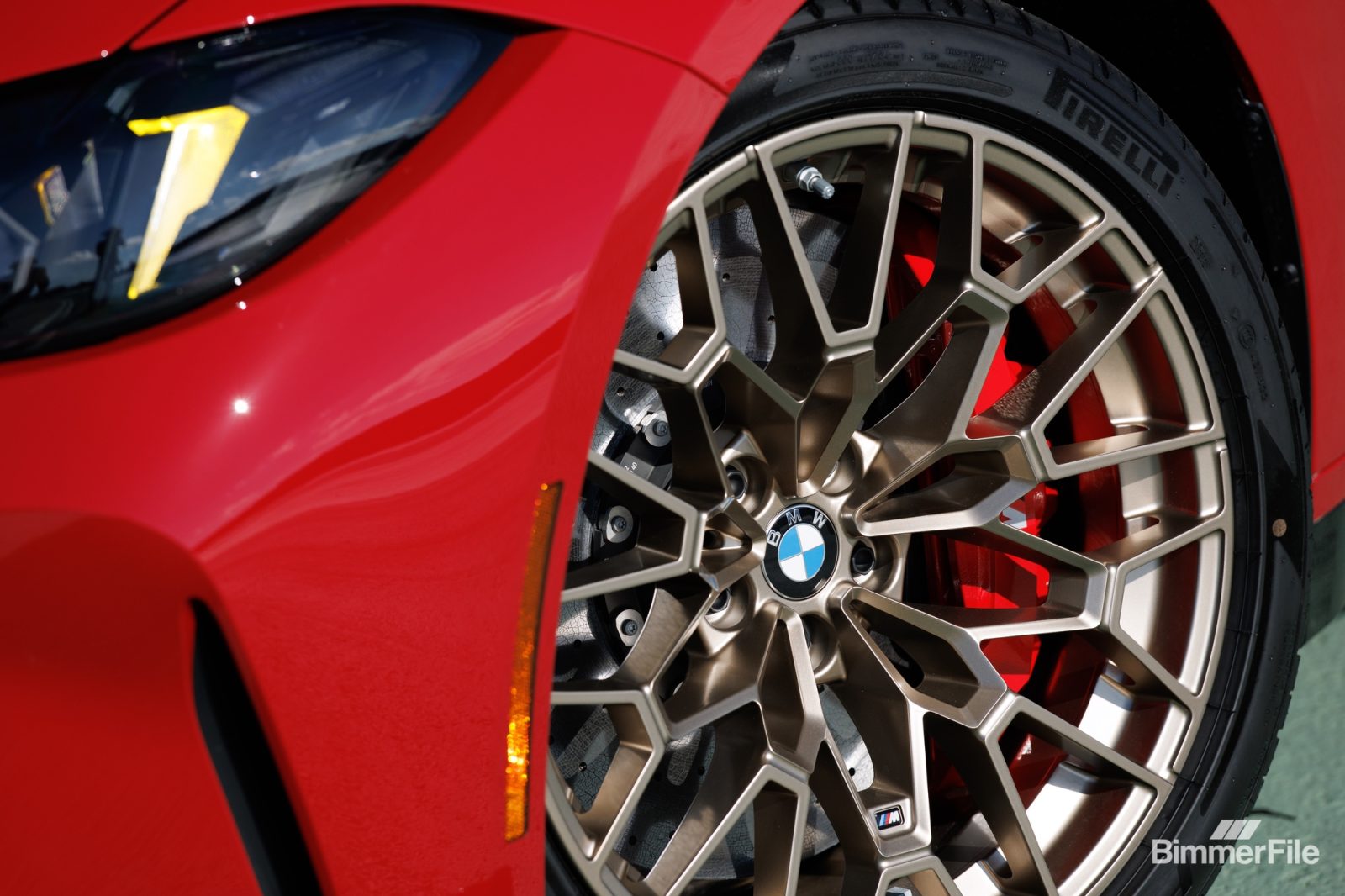
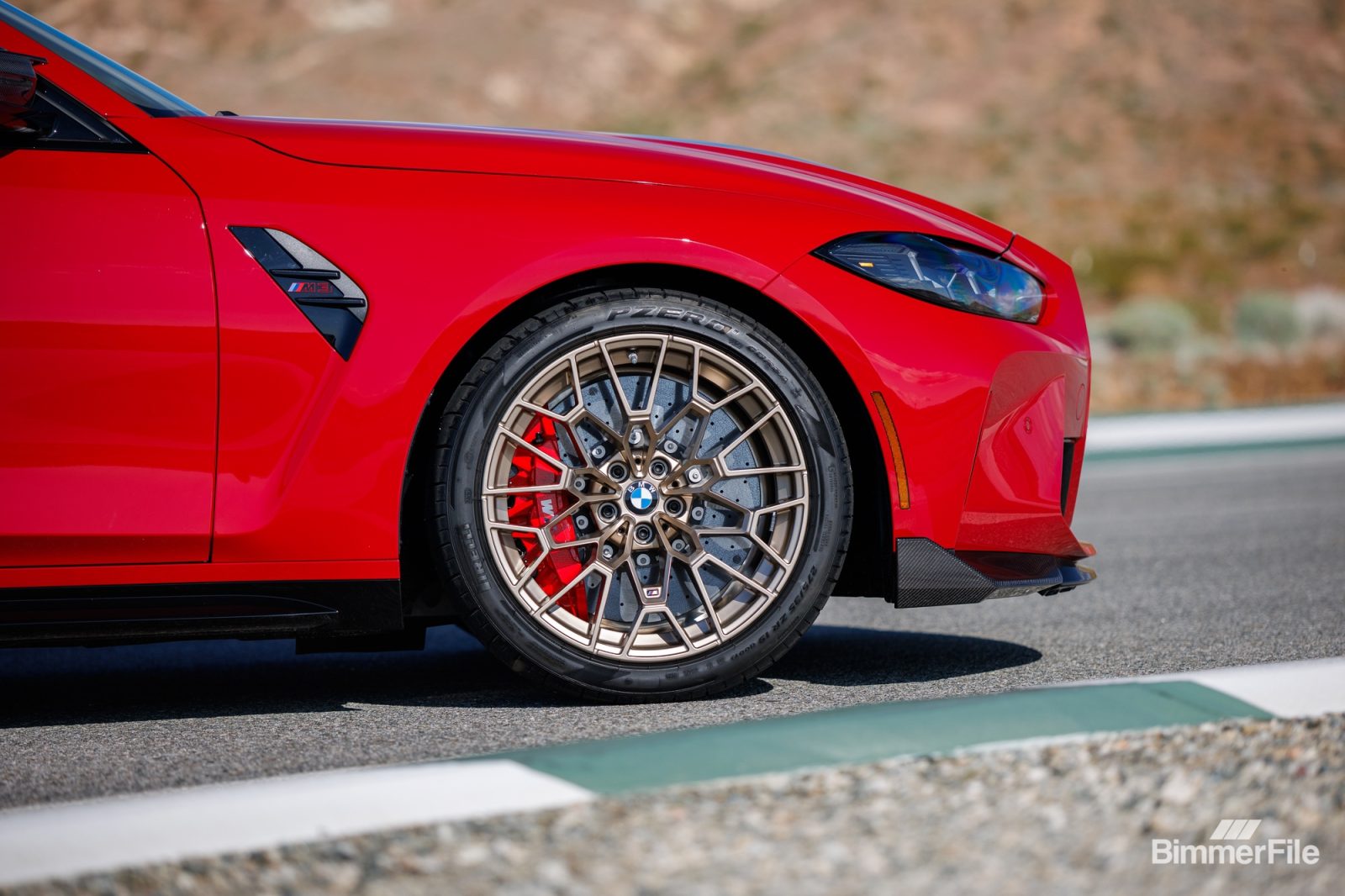
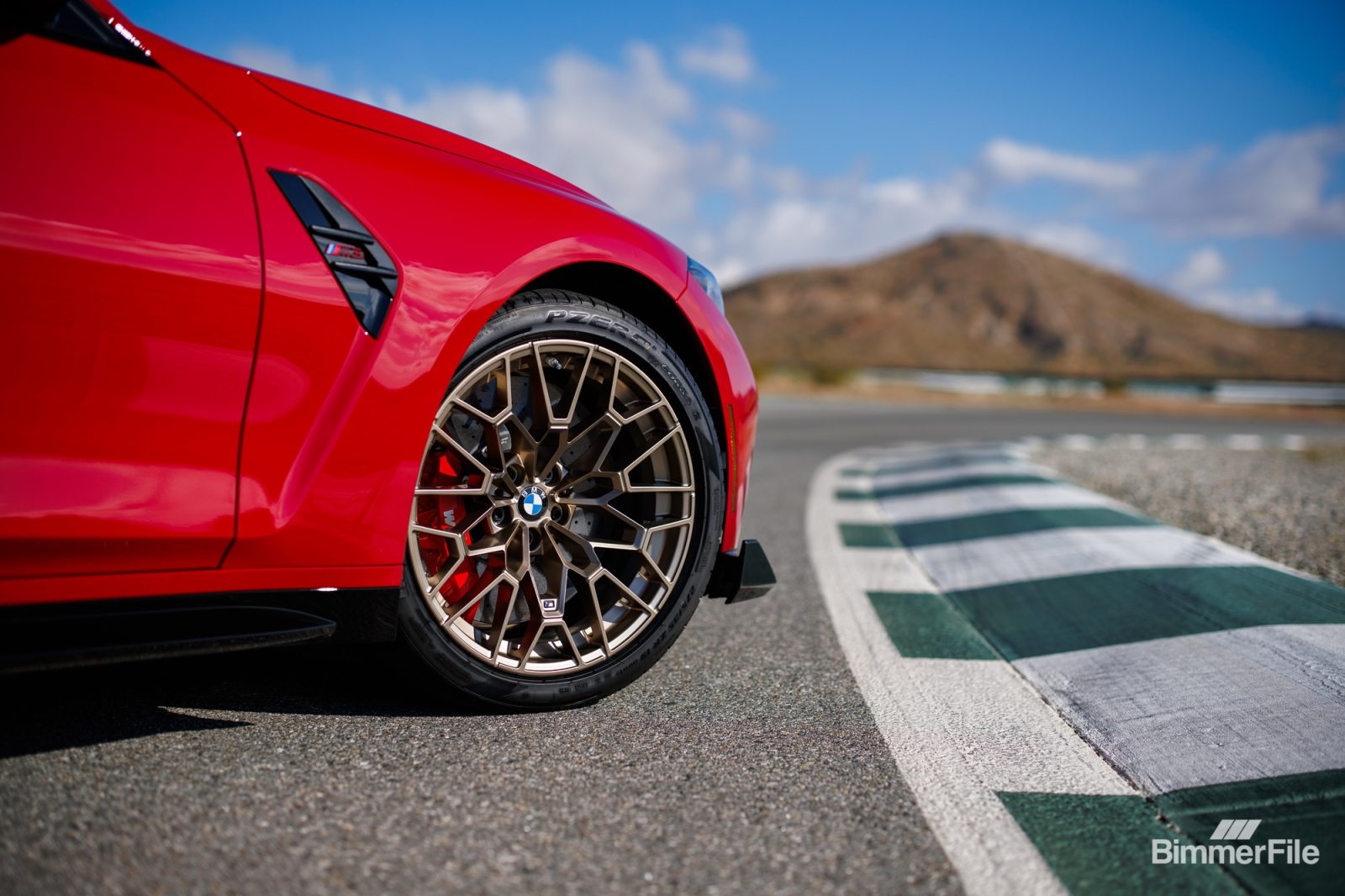
Standard brakes are M Compound units with a choice of red or black calipers. The optional M Carbon Ceramic brakes are available with red or gold calipers. Forged alloy wheels in Style 927M, finished in Gold Bronze or black, are standard. Tire options span three levels of aggression: high performance or track-oriented rubber measuring 275/35ZR19 at the front and 285/30ZR20 at the rear, with ultra track tires available as a $600 option. On paper, this is the most driver-focused M3 the sixth generation has produced. In practice, that claim will live or die at the wheel, but the engineering intent is unambiguous.
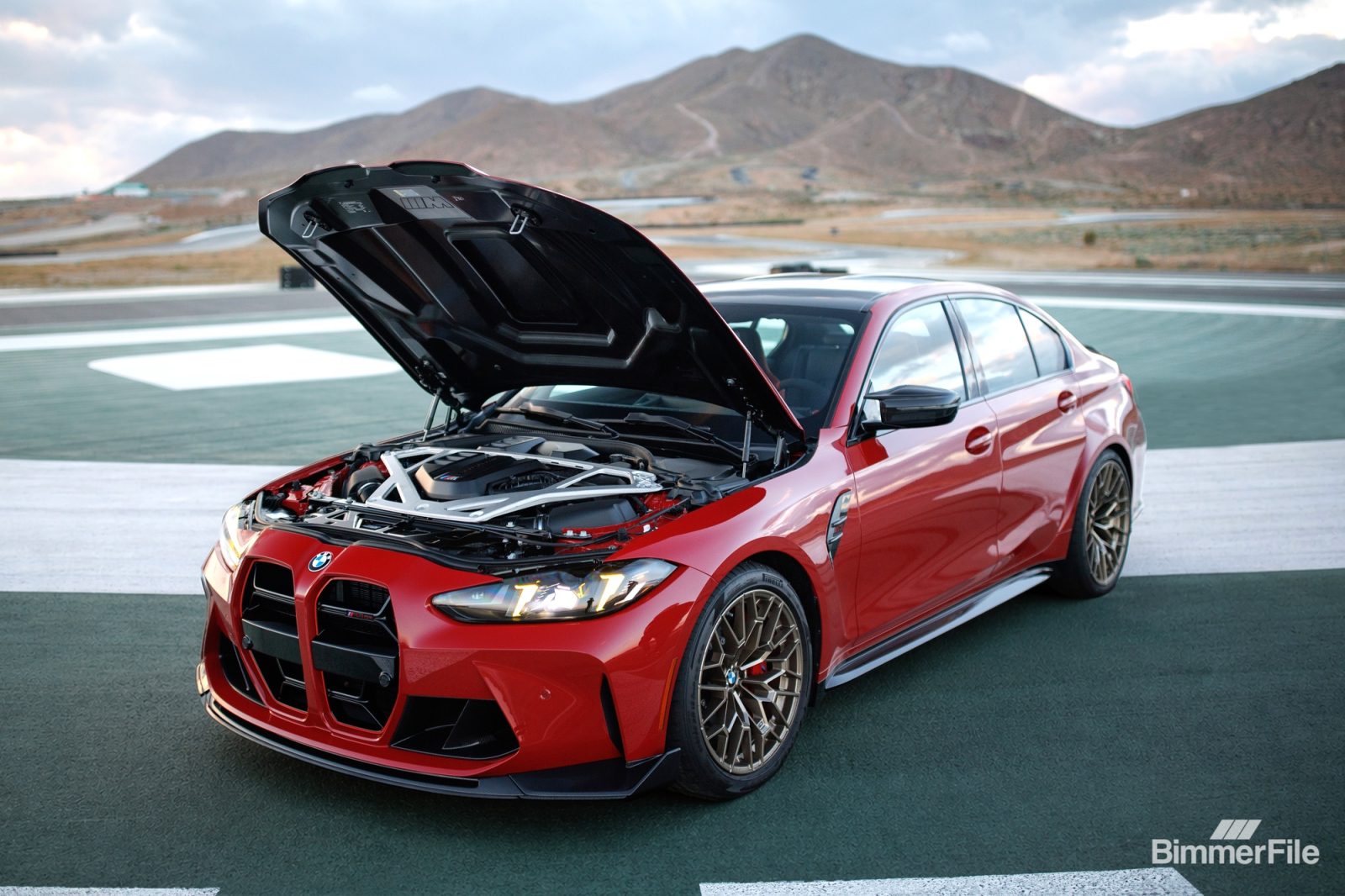
Power comes from the familiar S58 inline-six, producing 473 hp at 6,250 RPM and 406 lb-ft of torque between 2,630 and 6,130 RPM. The same engine architecture underpins the M4 GT3 Evo that won its class at the Rolex 24 at Daytona this year, a lineage BMW M is understandably happy to mention. The crankcase uses a sleeveless, closed-deck construction built for very high combustion pressures, the forged lightweight crankshaft aids power build-up at high revs, and the cylinder head features a 3D-printed core that allows coolant routing impossible to achieve through conventional casting. The oil and cooling systems are both engineered with track use in mind.
The 0-60 time of 4.1 seconds is quick, dropping to 3.8 seconds with a one-foot rollout. Top speed is 180 mph with the standard M Driver’s Package. For a manual, rear-wheel-drive car in this configuration, those are meaningful numbers. The torque limitation of the Getrag gearbox means output is identical to the base M3, but the weight reduction and chassis tuning mean the Handschalter should feel meaningfully different where it counts.
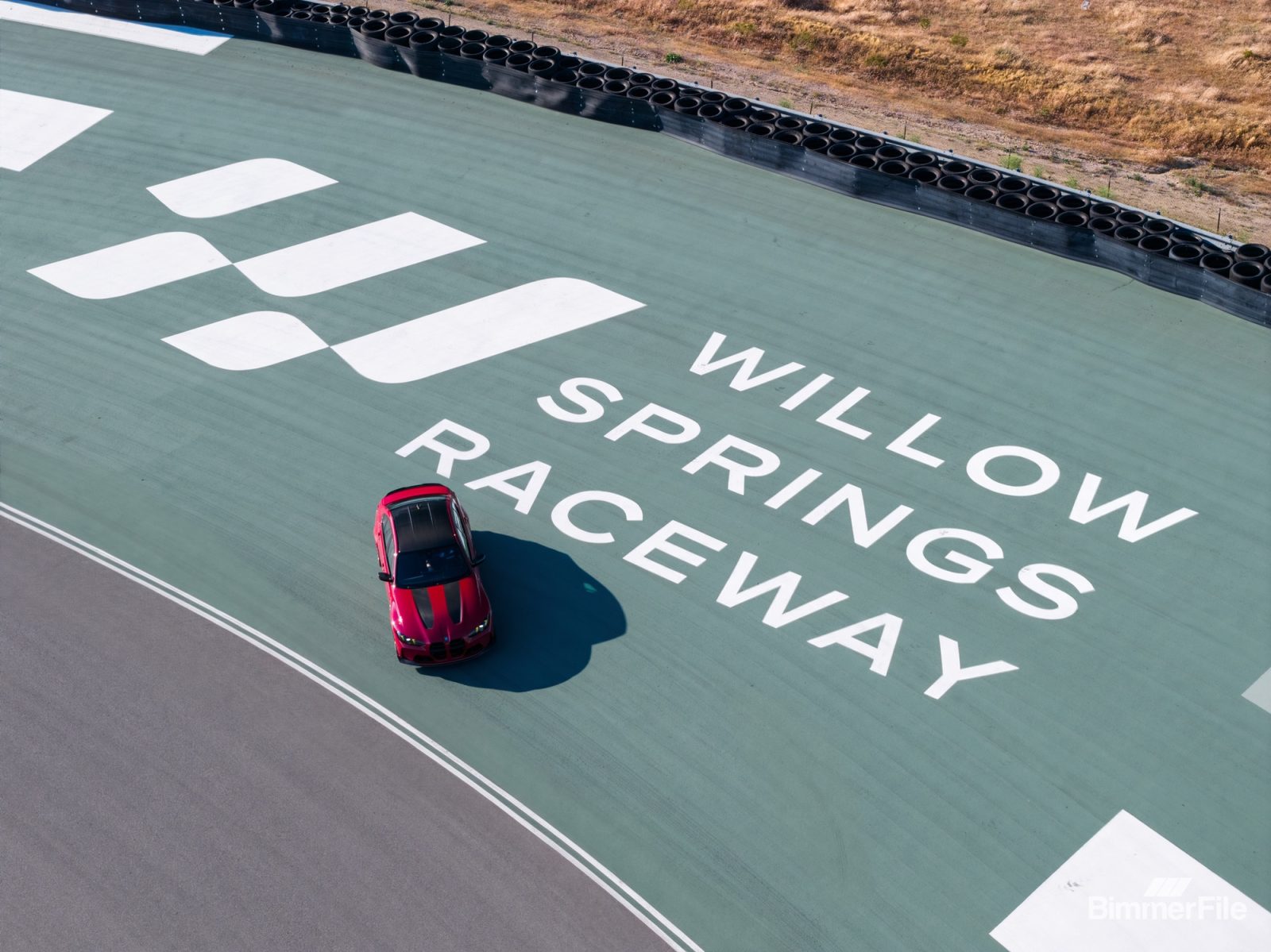
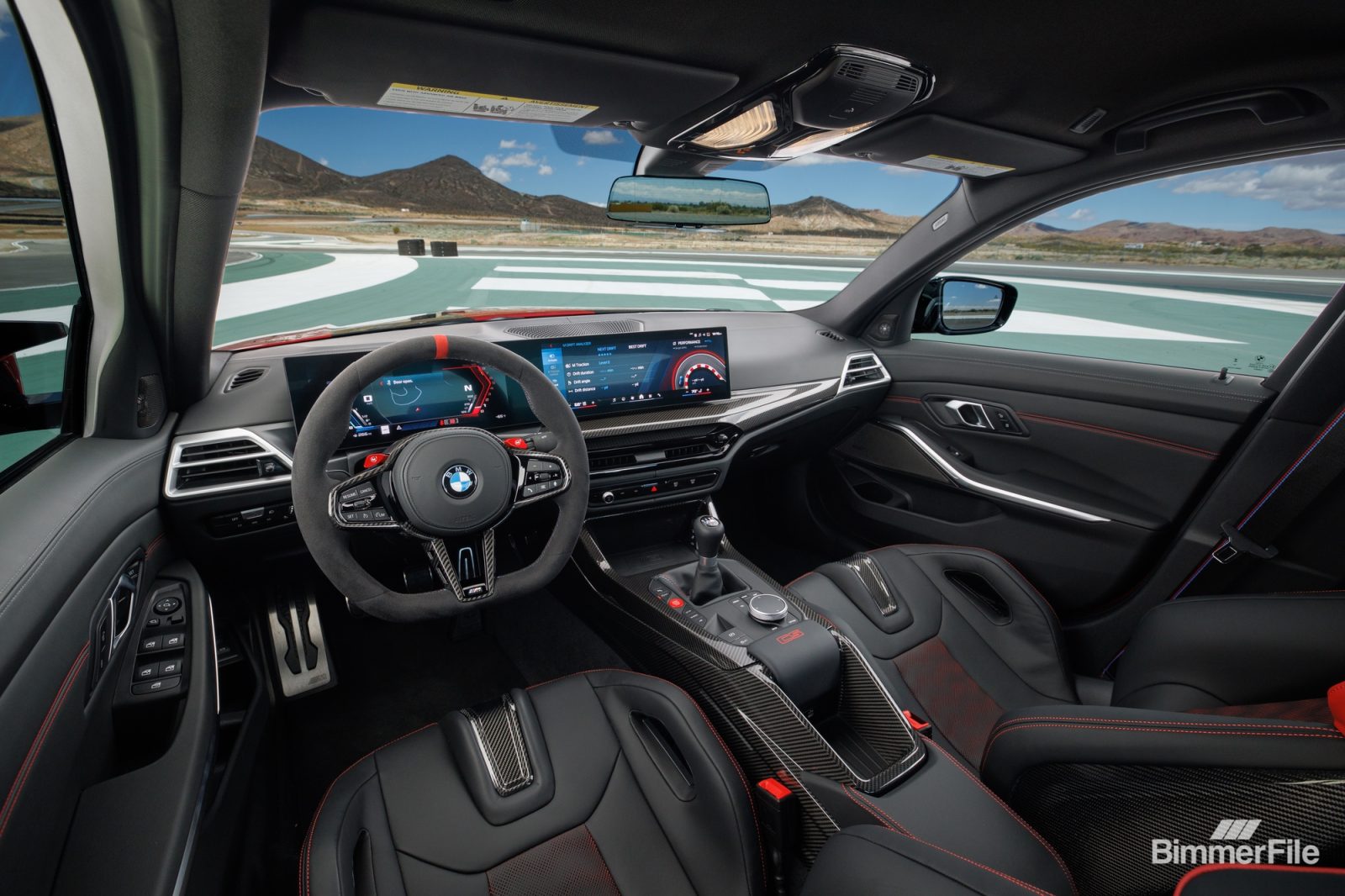
The Handschalter arrives with M Drive Professional fitted as standard, bundling together M Drift Analyzer, M Laptimer, and M Traction Control with ten stages of intervention sensitivity. That last item is particularly relevant: ten discrete stages gives drivers genuine granularity when pushing the car on a closed circuit, rather than a binary choice between full intervention and none. The M Mode button on the center console cycles through ROAD, SPORT, and TRACK settings, adjusting both driver assistance intervention levels and the information displayed. For a car positioned as a track-capable driver’s machine, having these tools standard rather than optional is the right call.
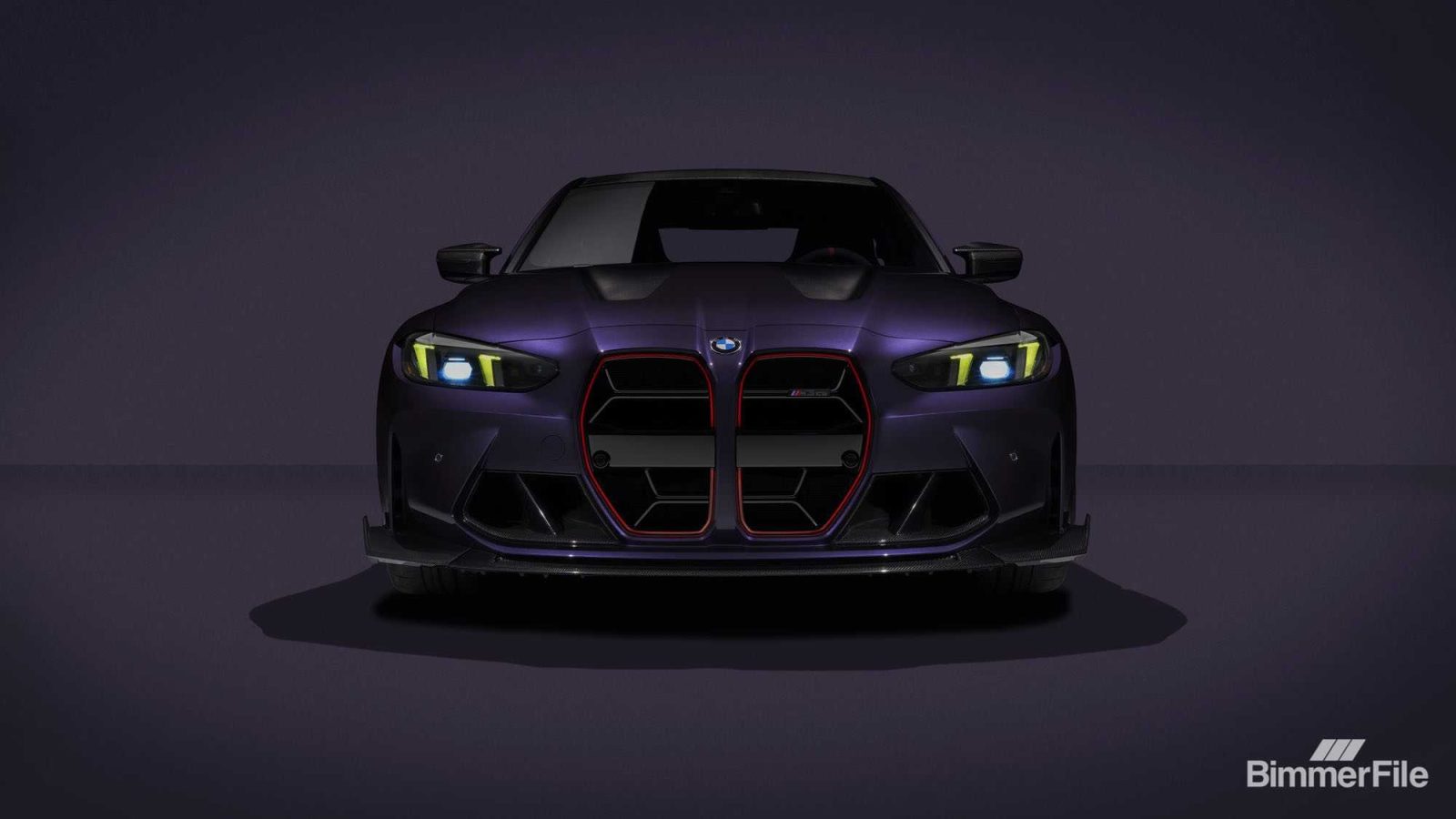
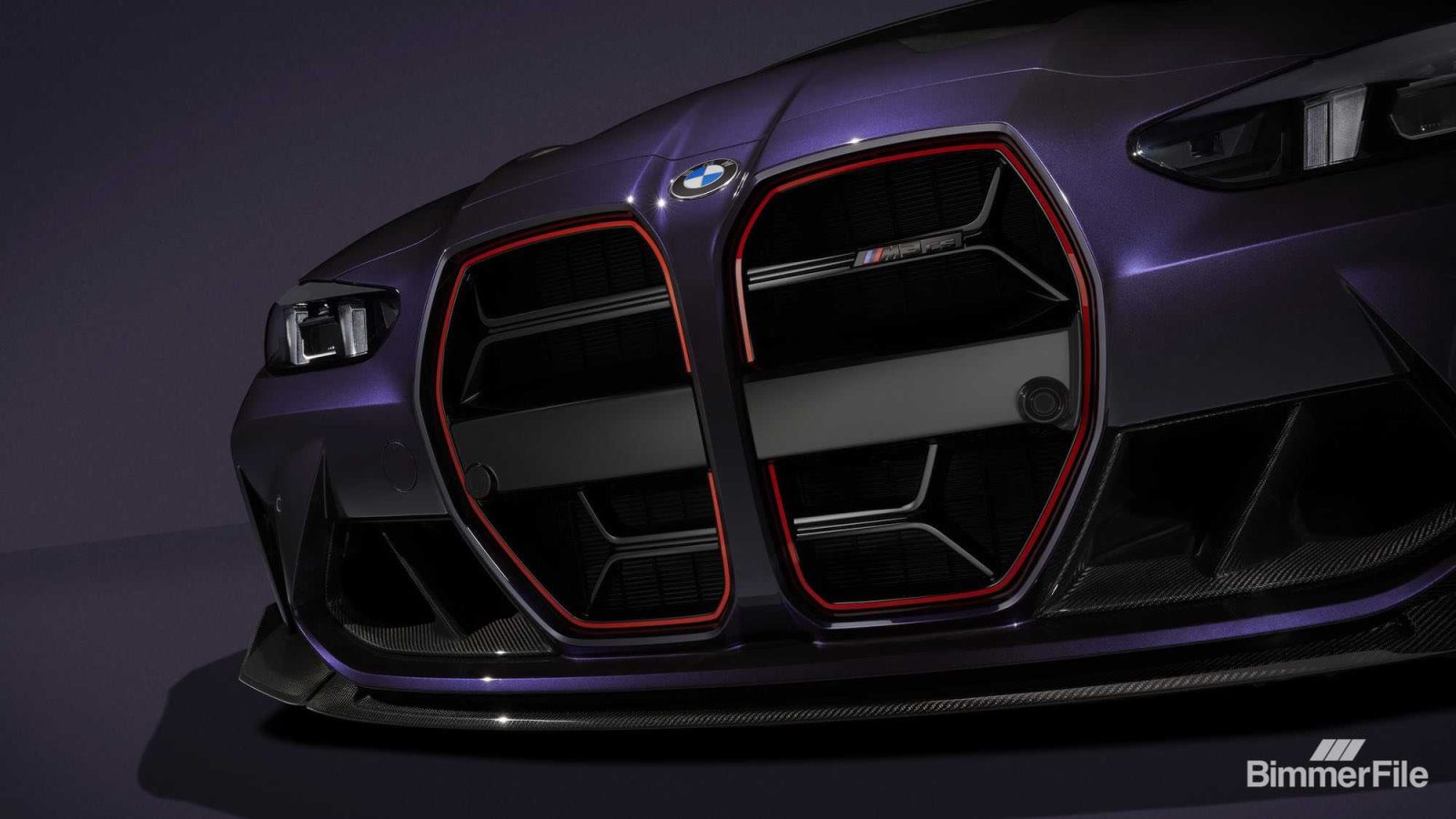
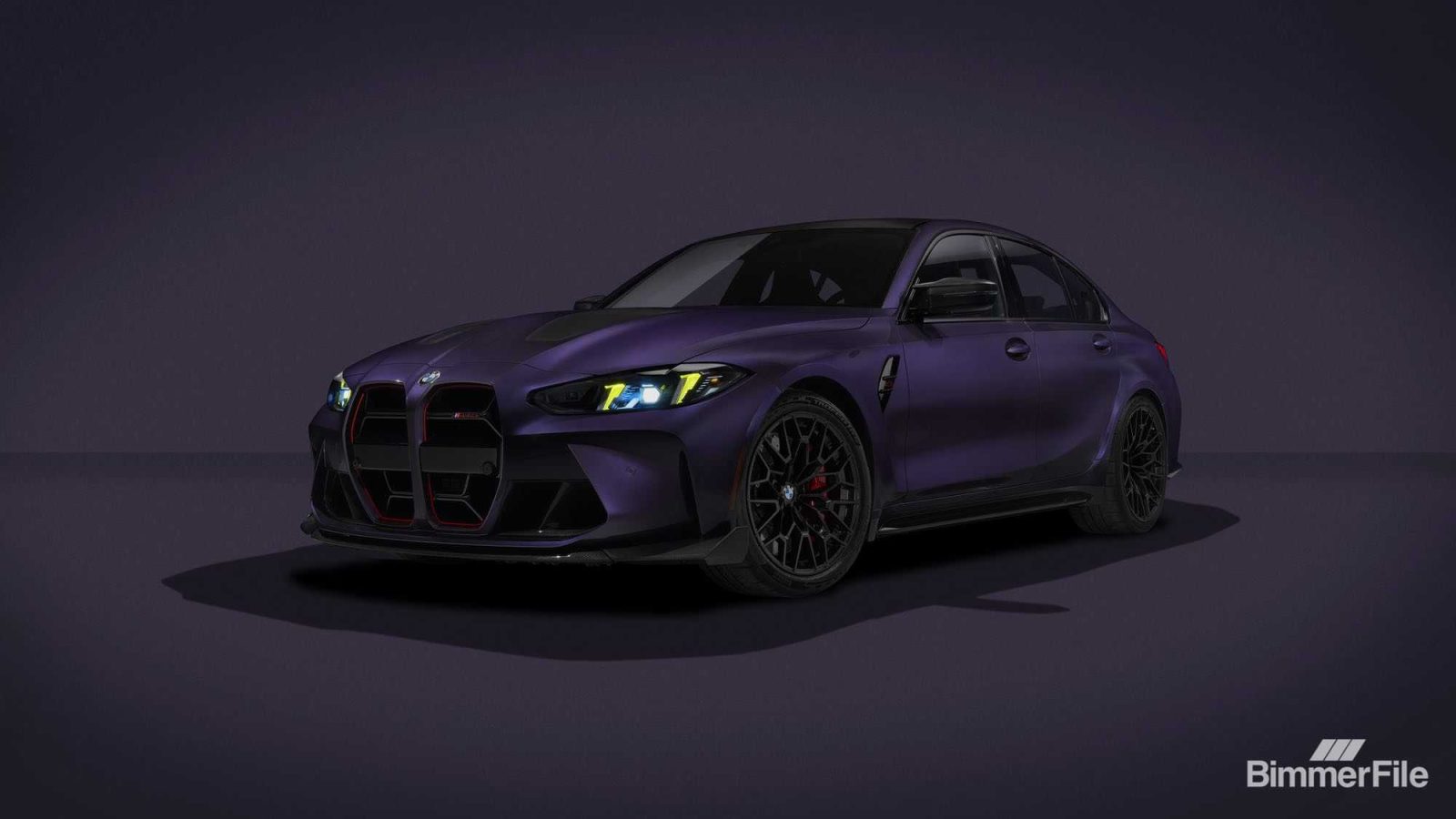
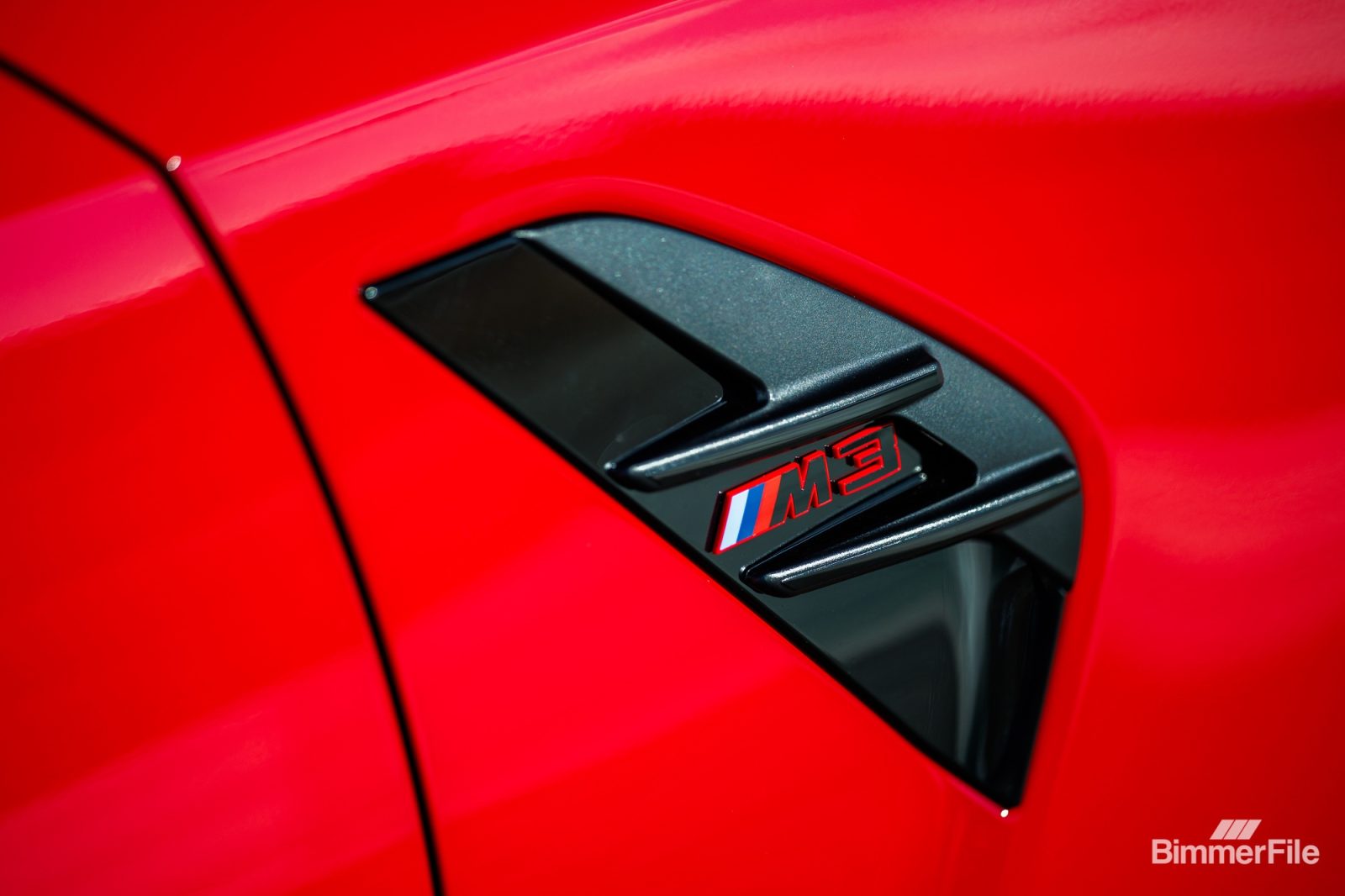
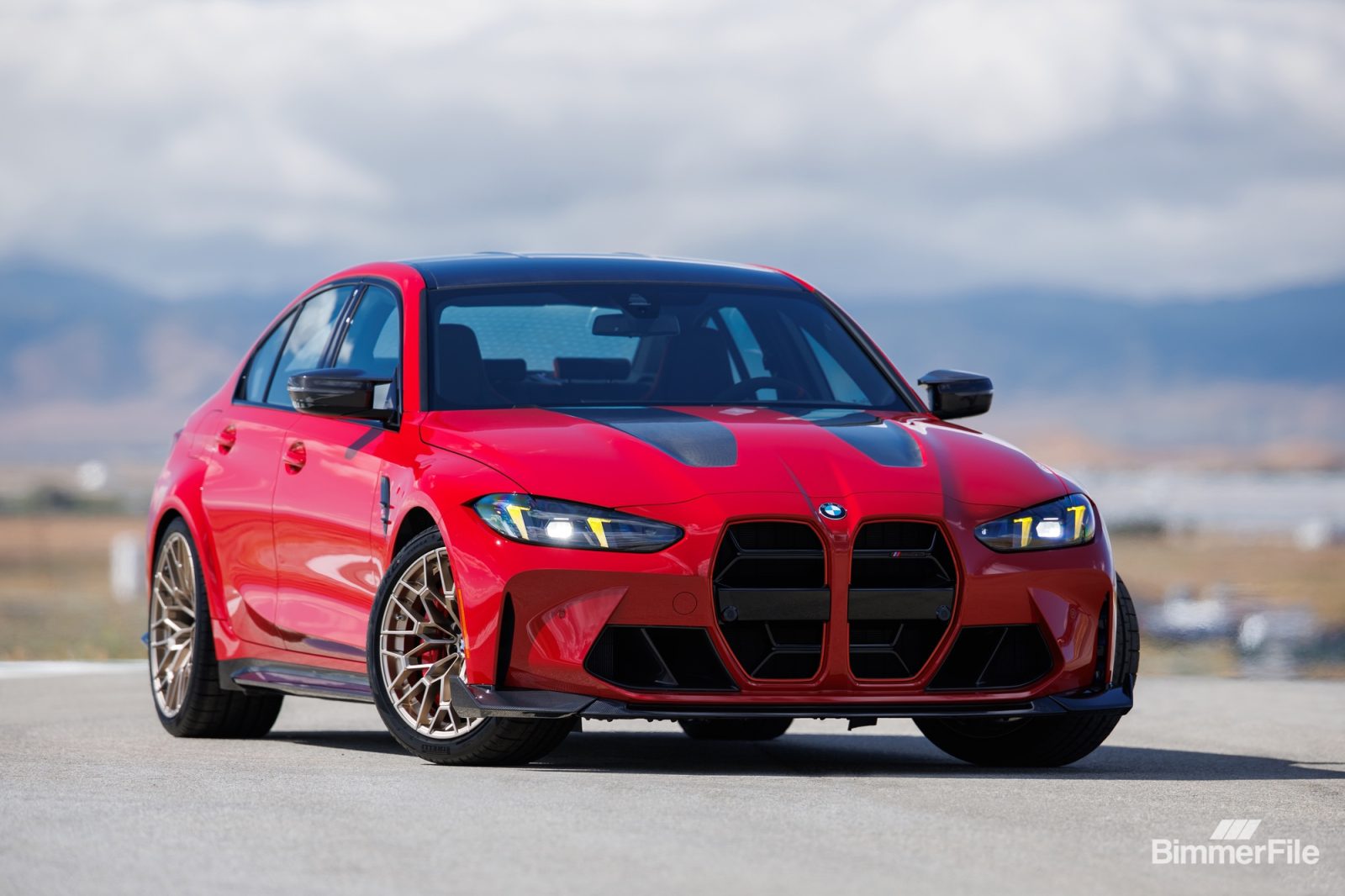
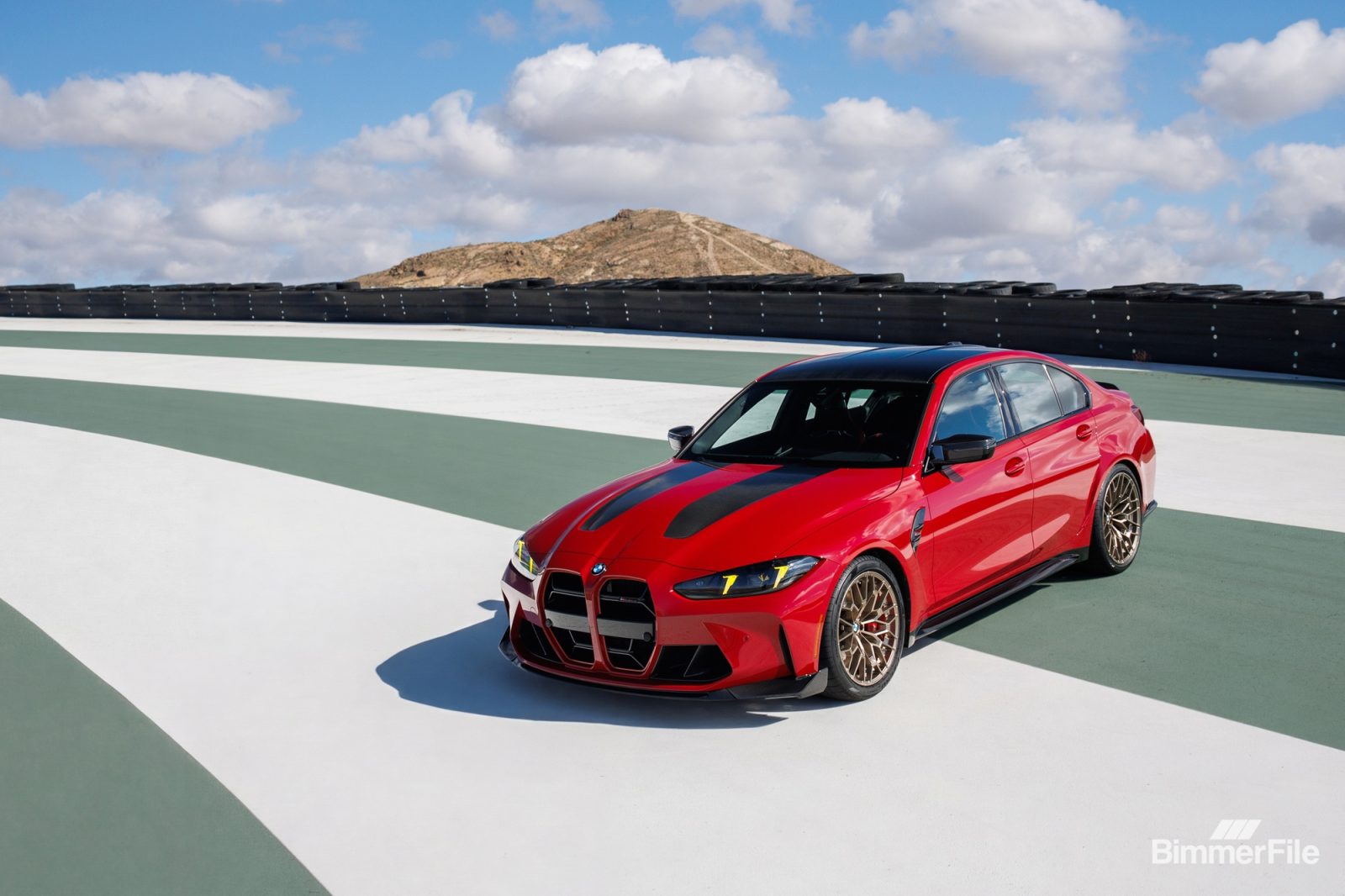
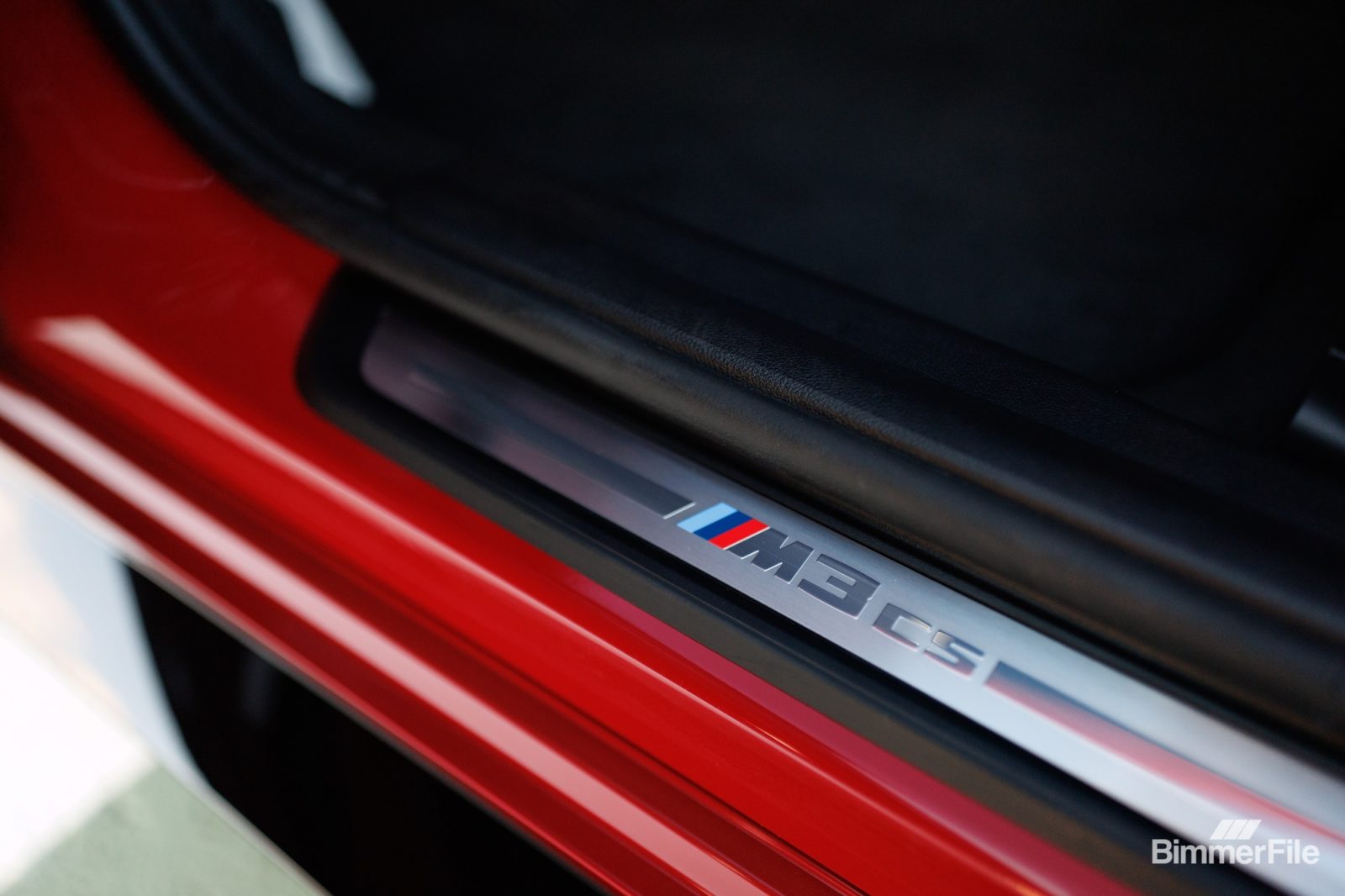
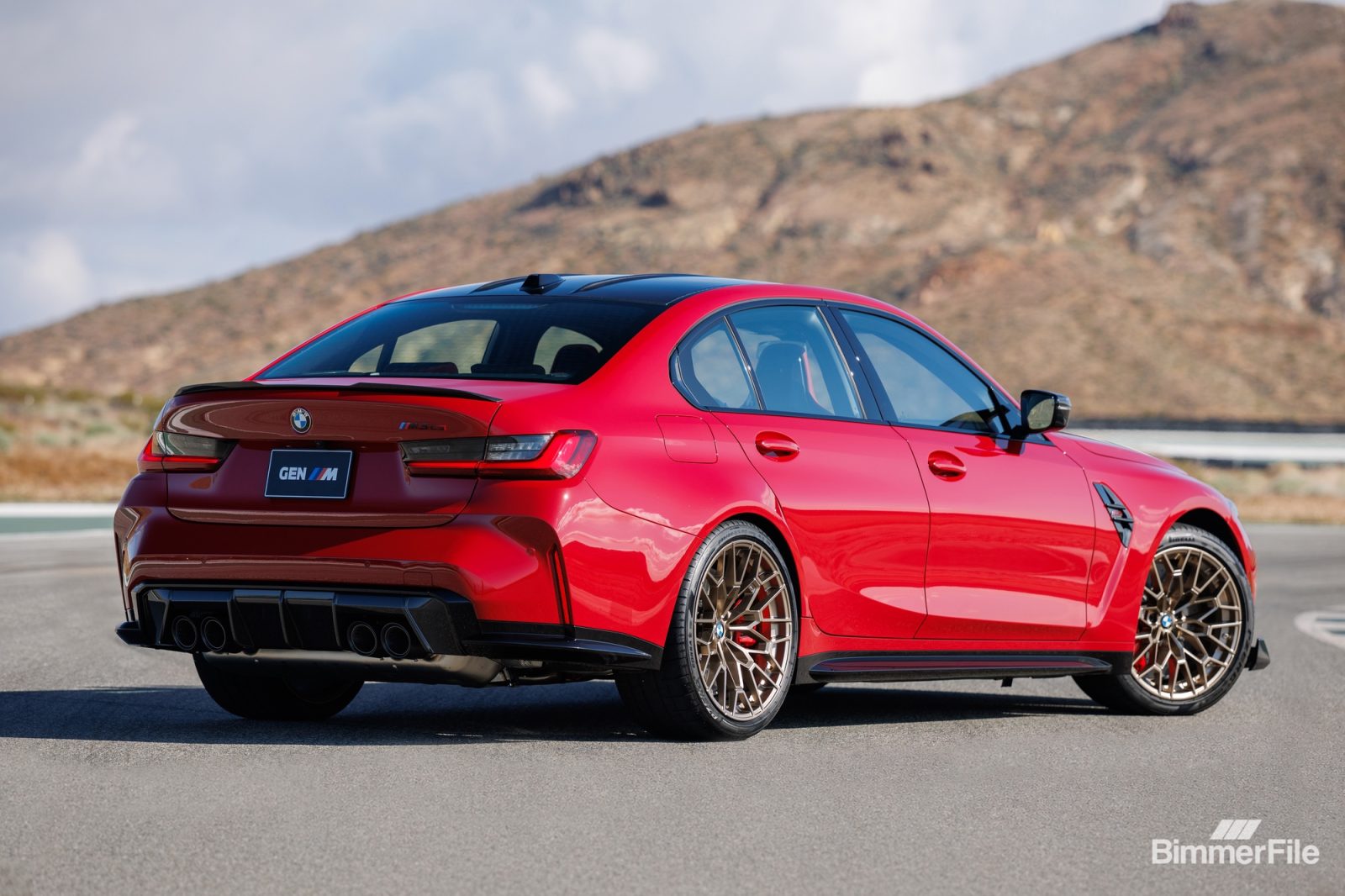
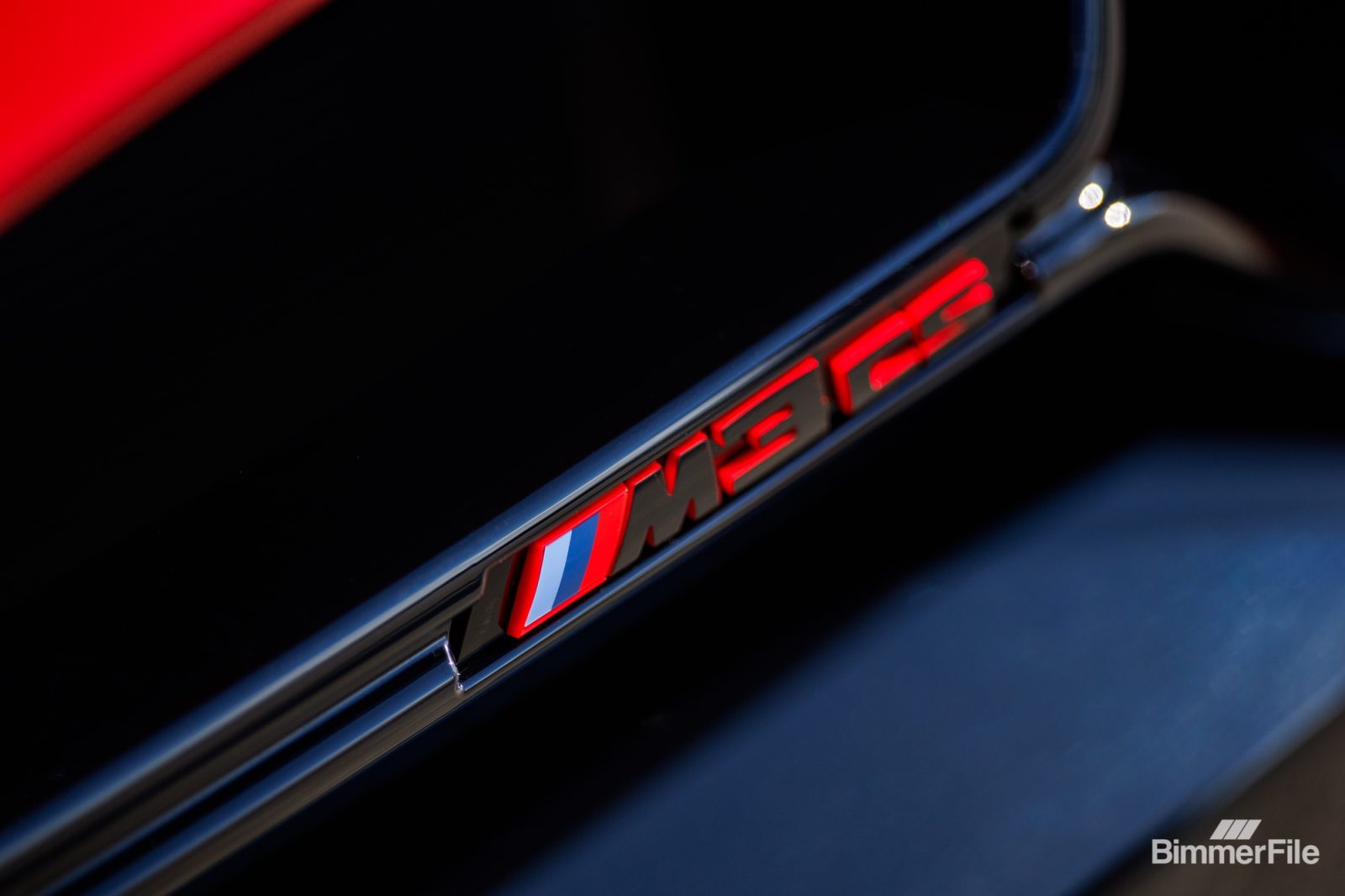
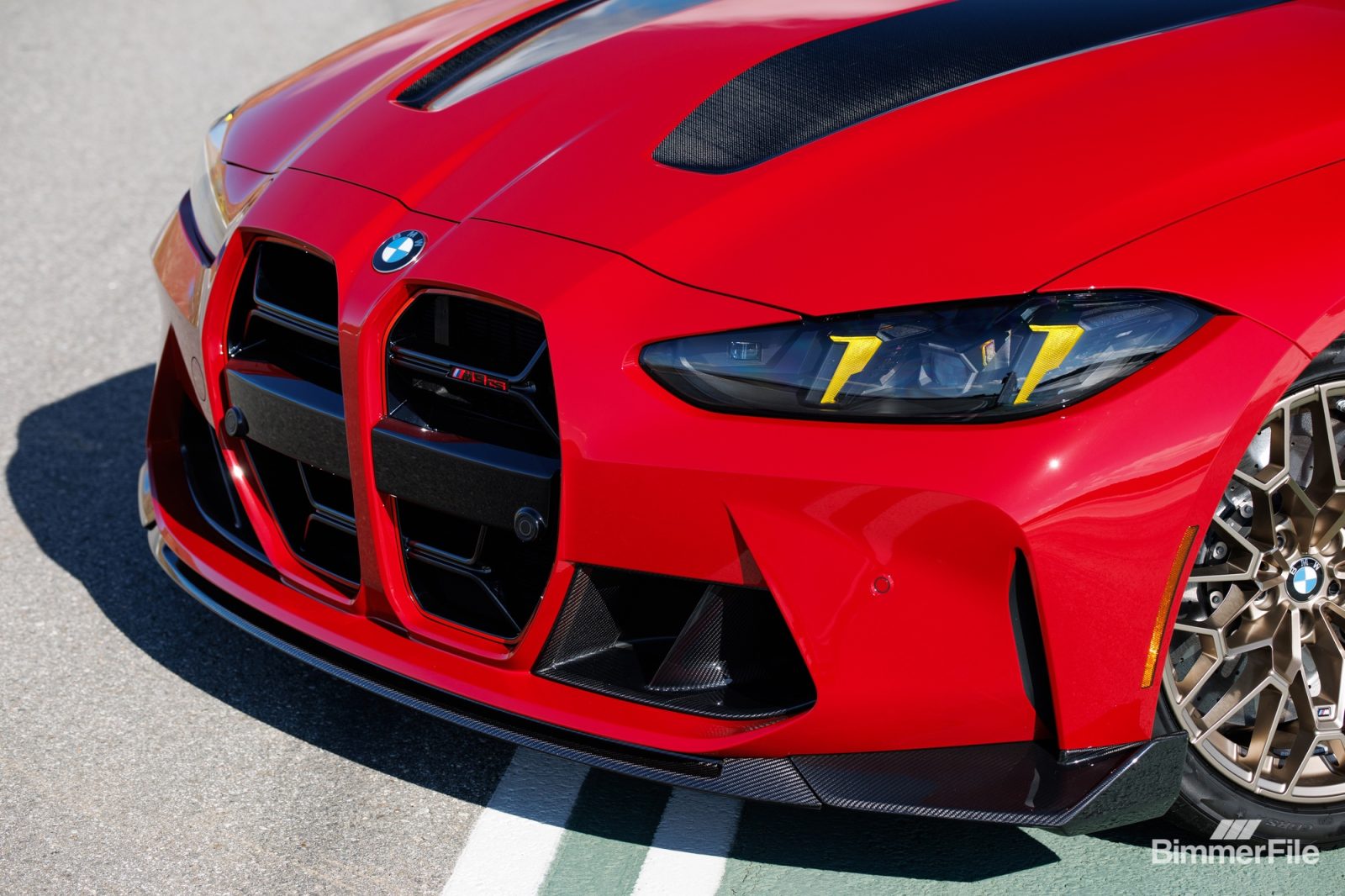
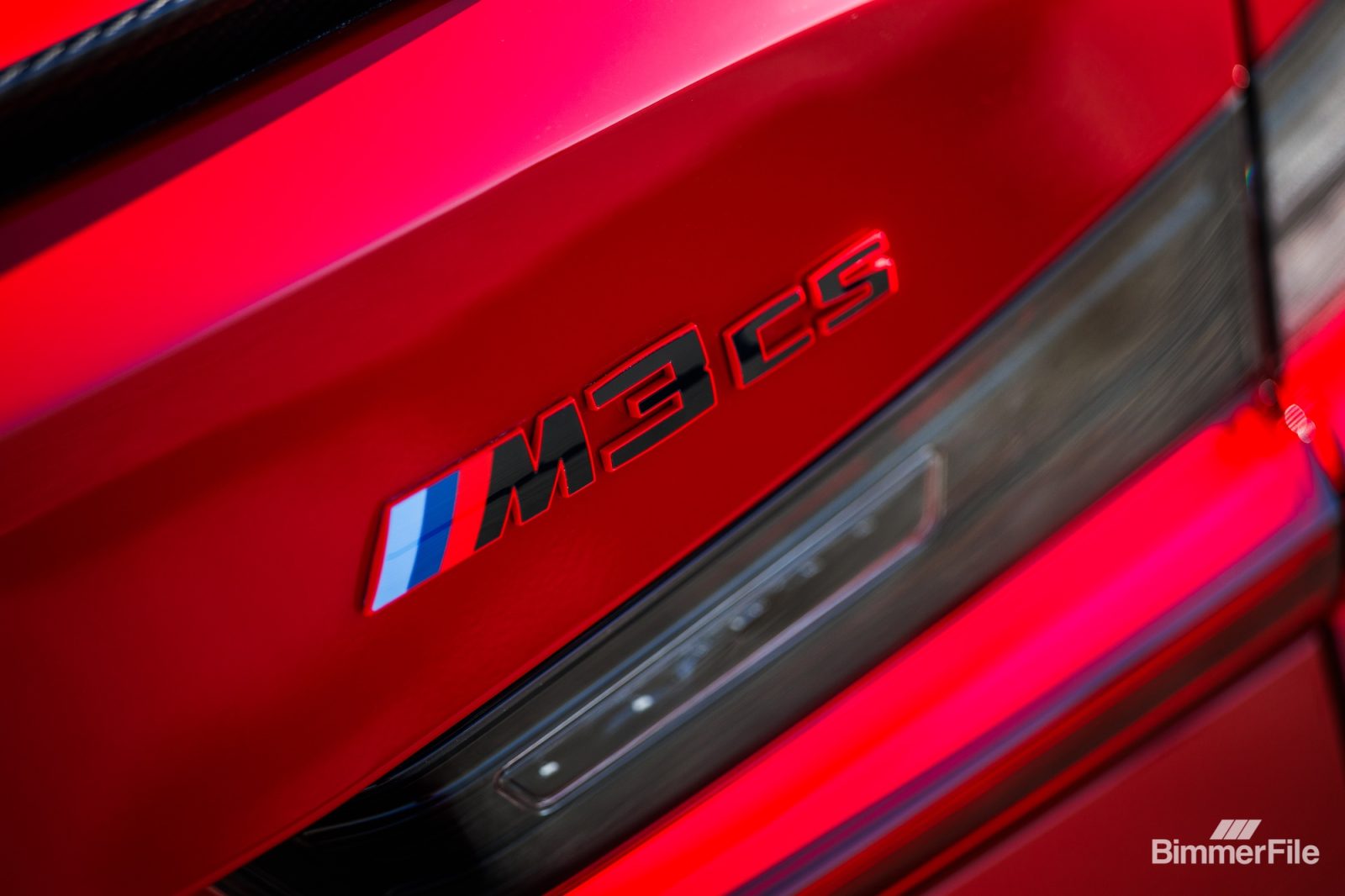
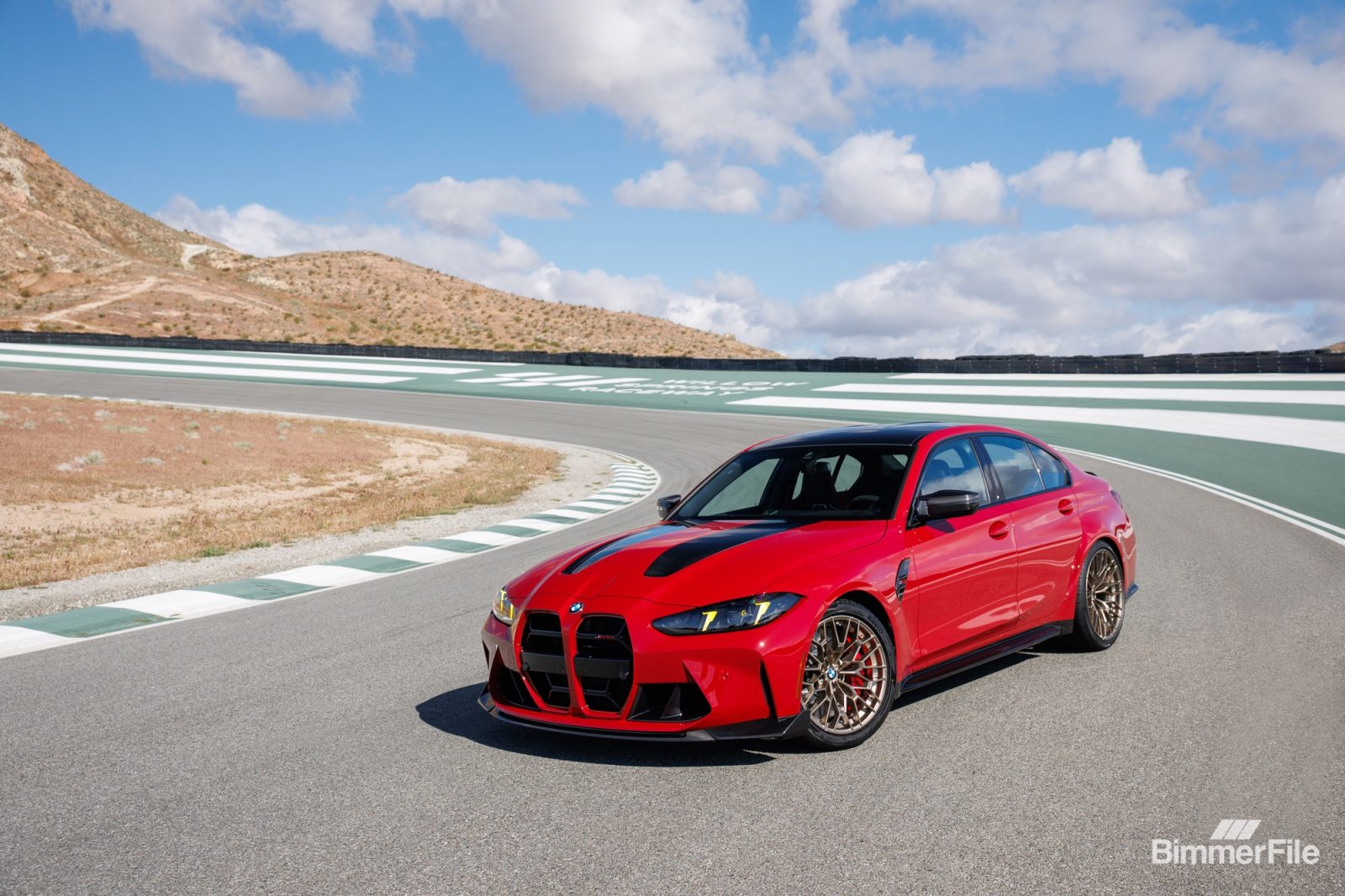
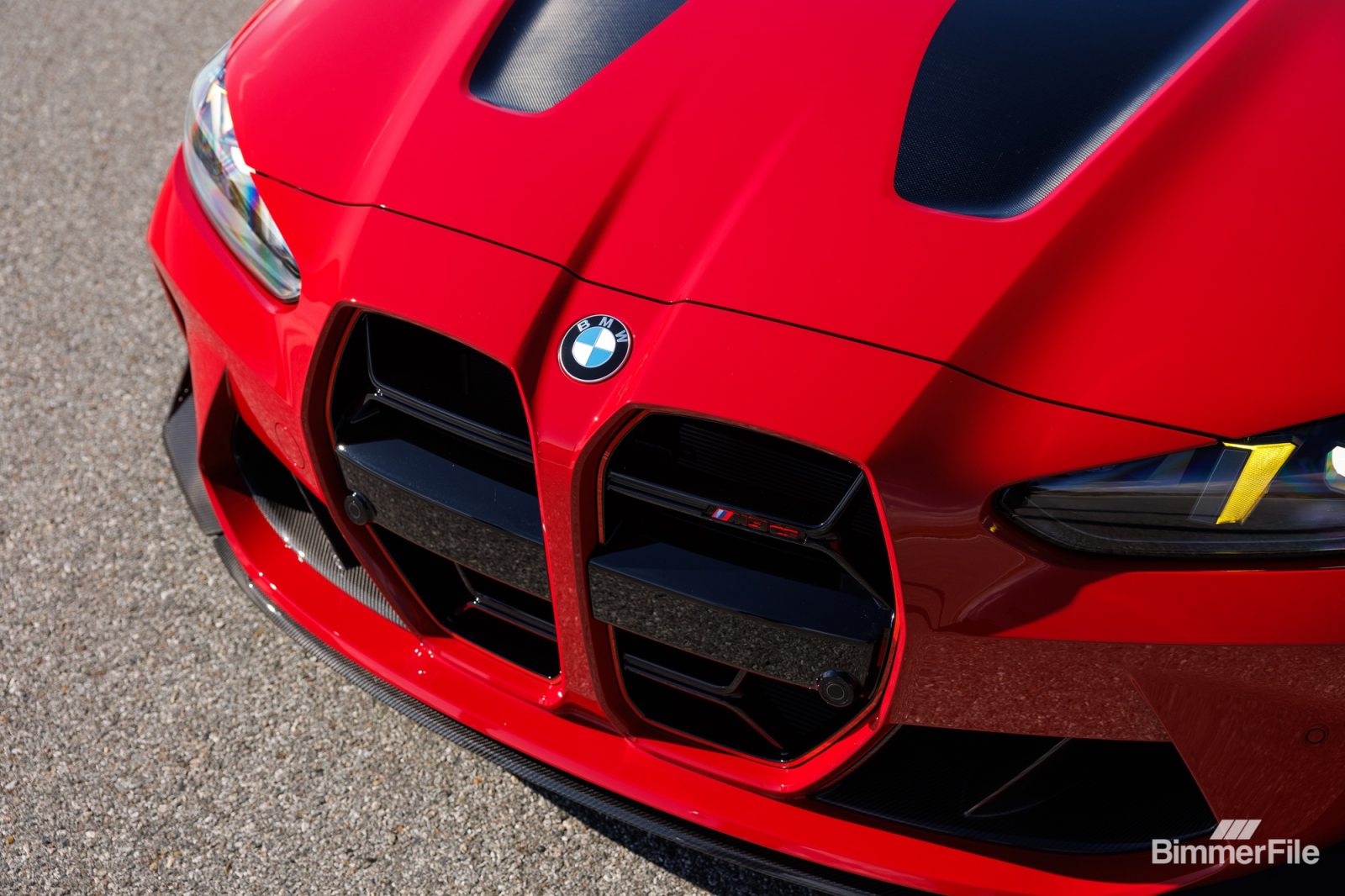
The Handschalter adheres to the visual template established by CS models before it. Exposed carbon fiber surfaces for the roof, hood channels, front splitter, front air intakes, mirror caps, rear spoiler, and rear apron combine with high-gloss black side skirts and M gills. The signature CS frameless kidney grille features pared-back styling, red contour lines, and an M3 CS badge on the upper horizontal bar. A detail worth noting: the angular daytime running light elements illuminate in yellow rather than white, both during the unlock sequence and while driving, a deliberate nod to GT racing cars that reads as considered rather than decorative.
Four exterior finishes are available. Isle of Man Green metallic and Black Sapphire metallic are offered at no charge. Two BMW Individual colors drawn from 40 years of M3 history, Imola Red and Techno Violet metallic, are available for $4,500. They are far more interesting choices. If you’re spending this kind of money on this particular car, the heritage colors make the argument for themselves.
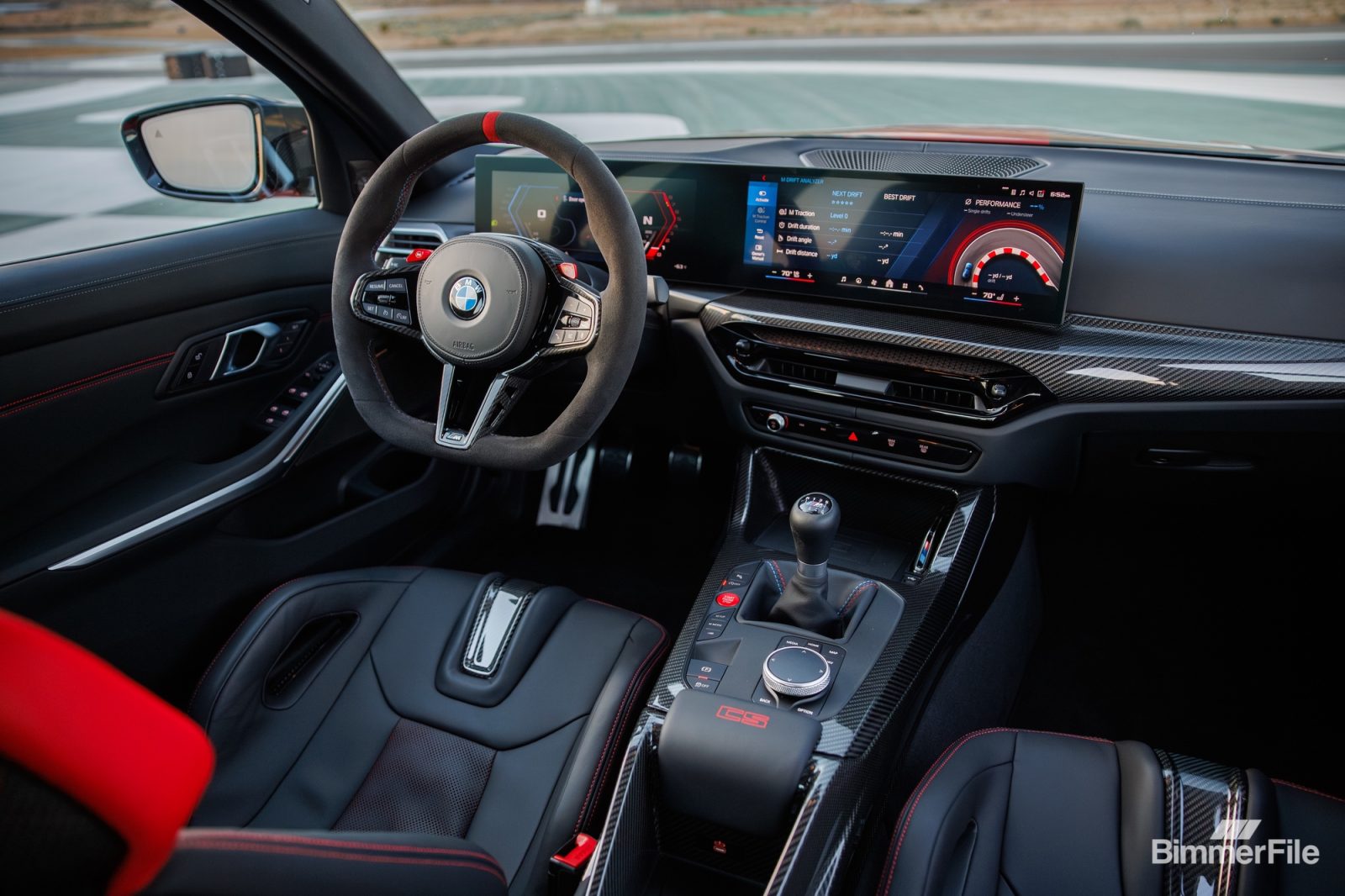
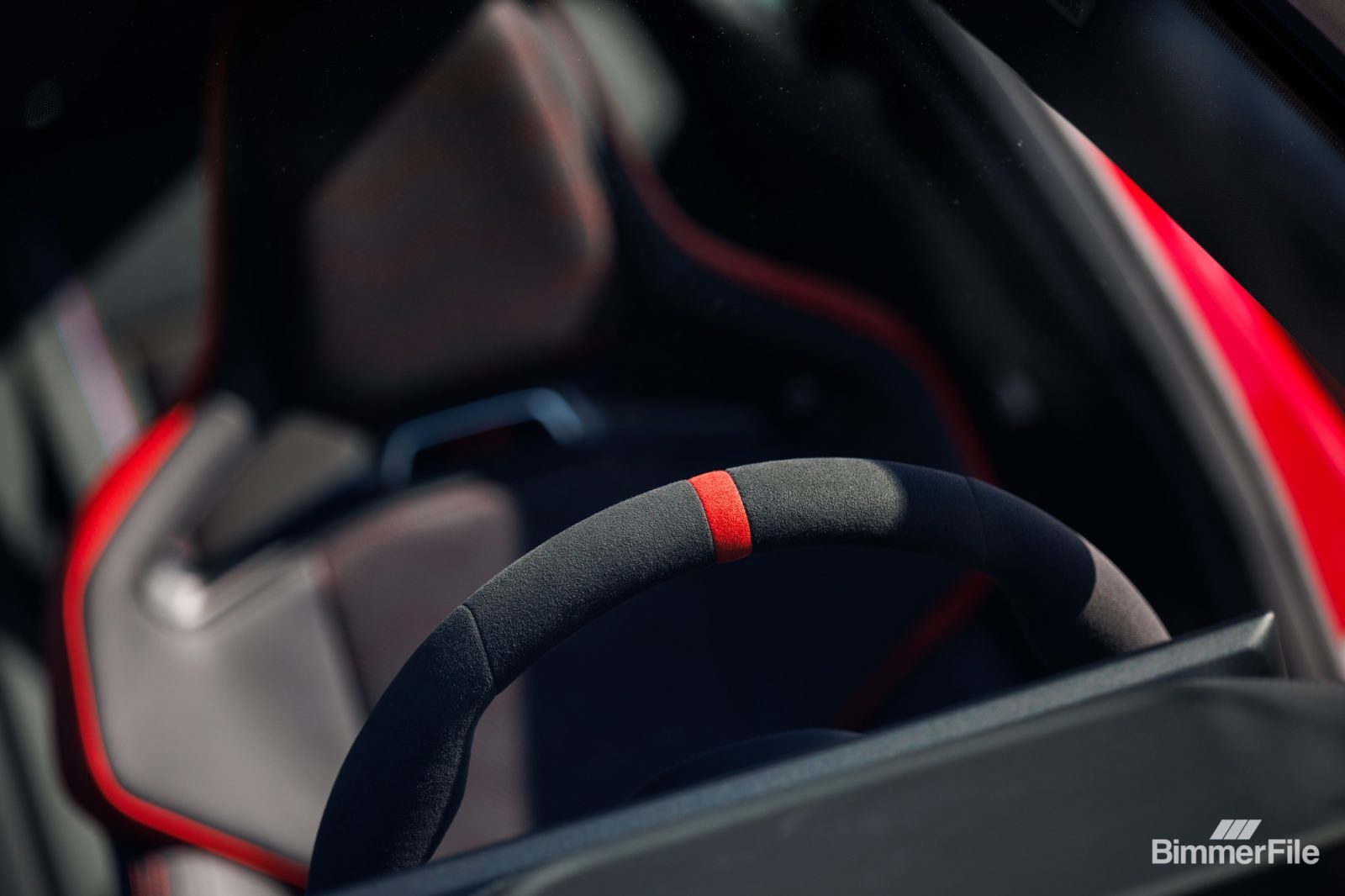
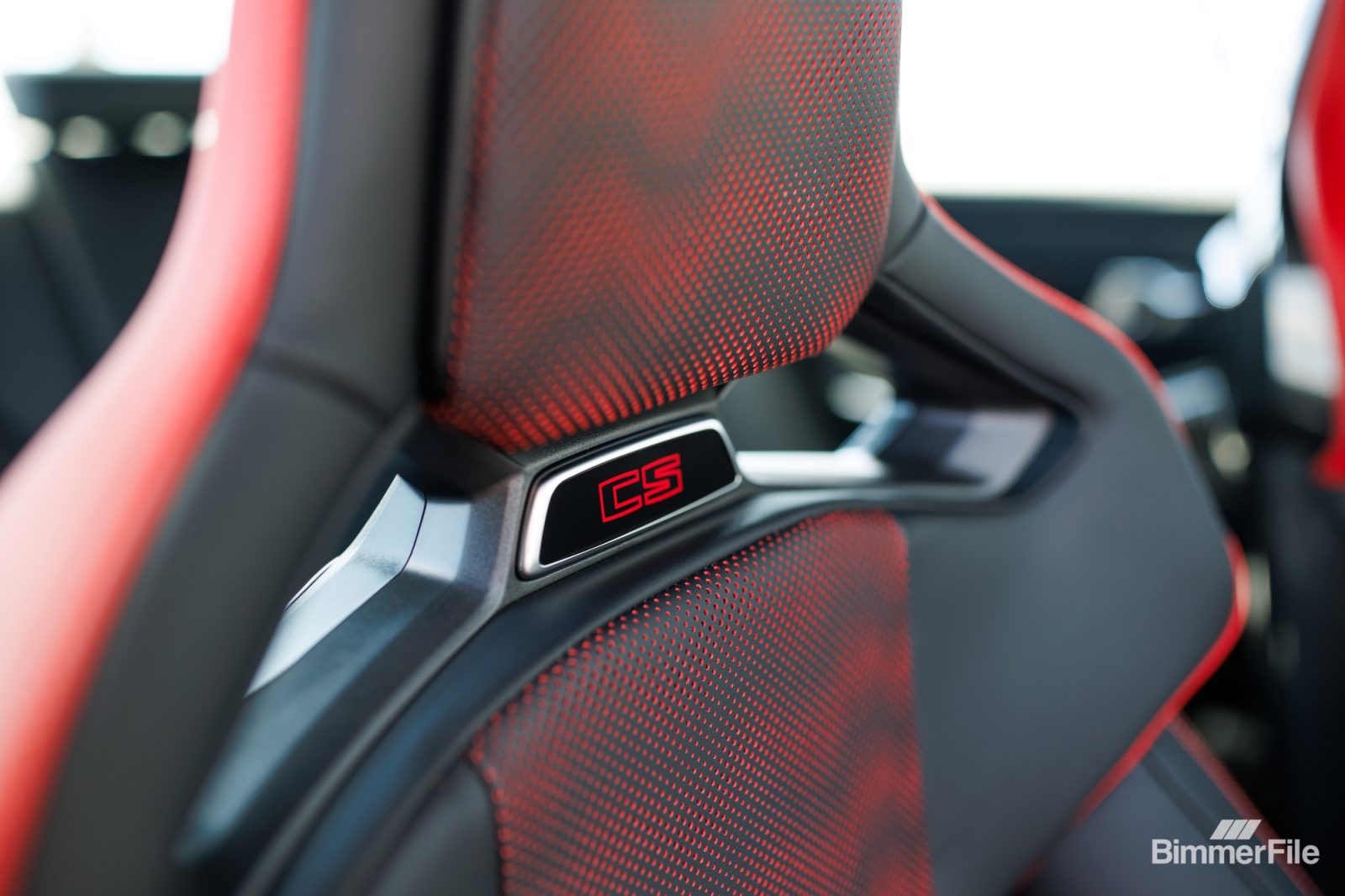
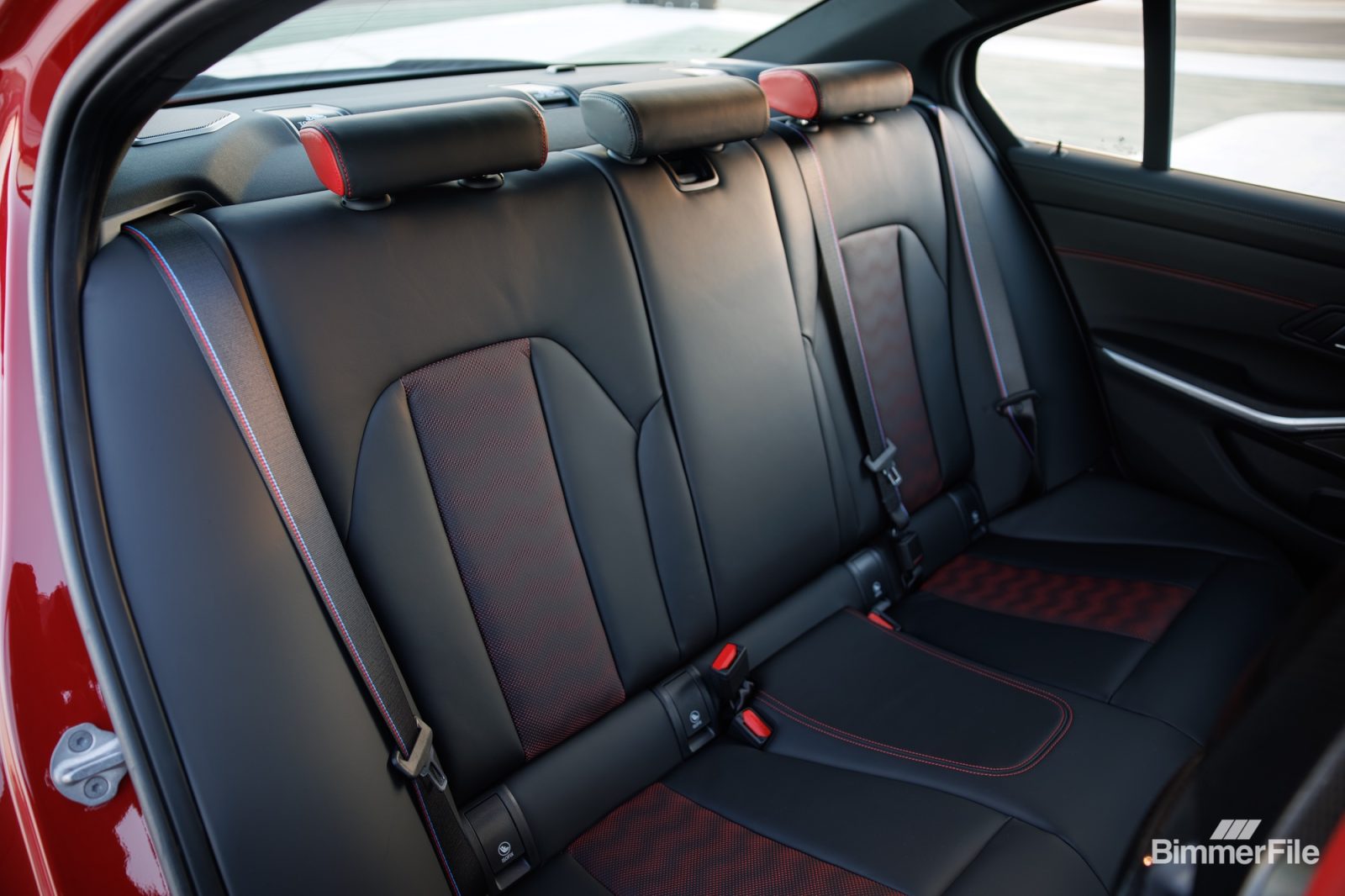
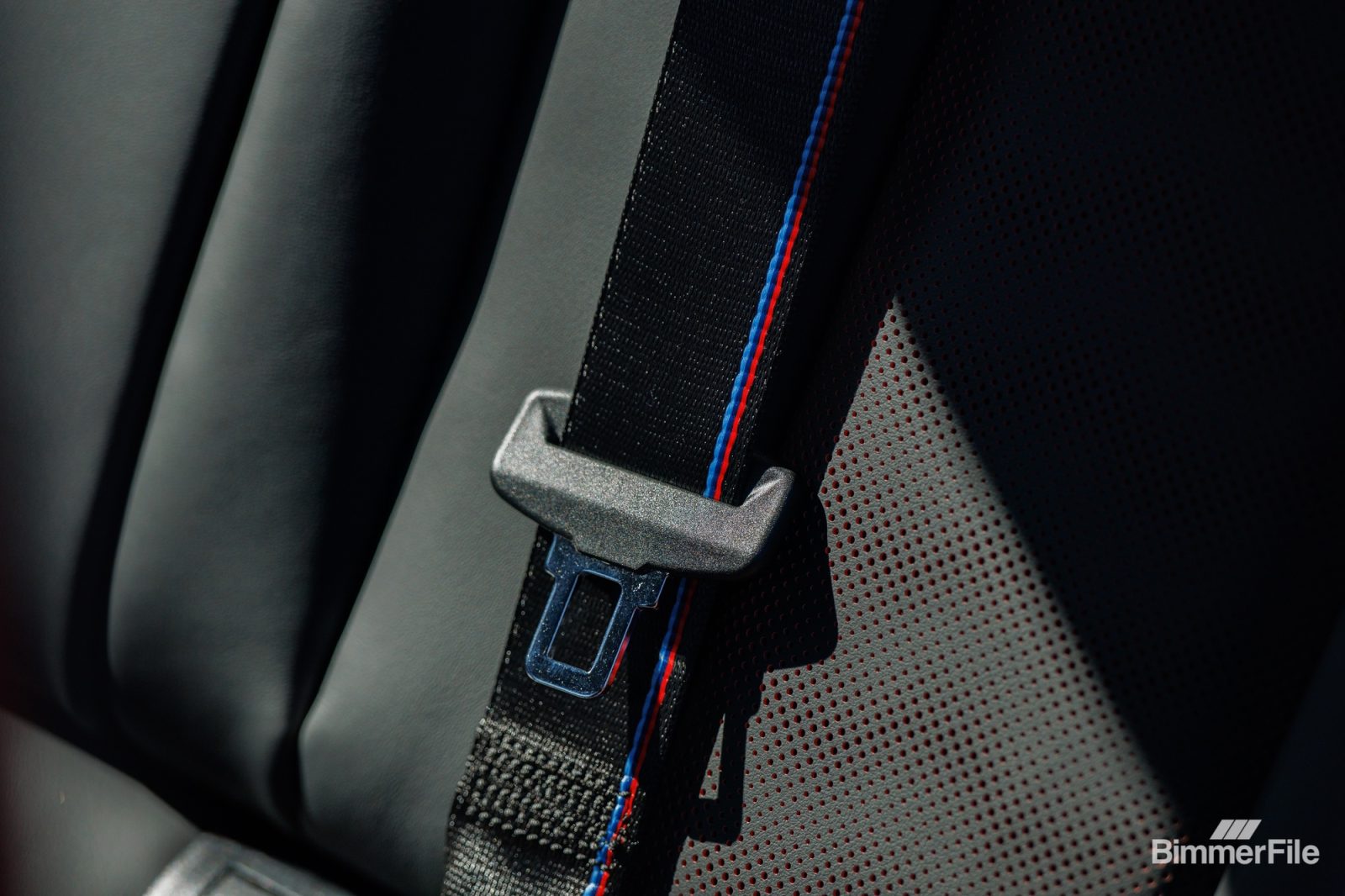
Despite its focus, the Handschalter doesn’t abandon daily usability. Standard equipment includes Comfort Access, dual-zone automatic climate control, a Harman Kardon Surround Sound System, Park Distance Control, Front Collision Warning, Lane Departure Warning, and Speed Limit Info. The standard M Carbon bucket seats are finished in Anthracite Full Merino leather with CS-exclusive Mugello Red accents, and are both heated and electrically adjustable. An optional Daily Driver Package adds a power-operated trunk lid and Head-Up Display for those who want the full convenience set.
Starting at $107,100 plus $1,350 destination and handling, the Handschalter sits well above the standard M3 but occupies recognizable CS territory. Production begins in July in very limited numbers, with deliveries expected this fall. The car makes its public debut at the All-BMW Petersen Cruise-In in Los Angeles on May 23, with the reveal scheduled for 10:00 AM. That venue, and that crowd, seem about right.
What’s interesting isn’t just that BMW M built this car; it’s what building it suggests about where the seventh-generation M3 is headed. If the Handschalter is a farewell, it’s one that quietly sets a bar. The question is whether the next generation will clear it, or whether this will stand as the last time BMW M built a car for the people who still think the gearbox is the point.
For the moment, the Handschalter is an honest send-off. In this segment, at this moment, that’s rarer than it should be.