
The Next BMW 5 Series: A Major Update Now, a Bigger Change Coming
 by
by 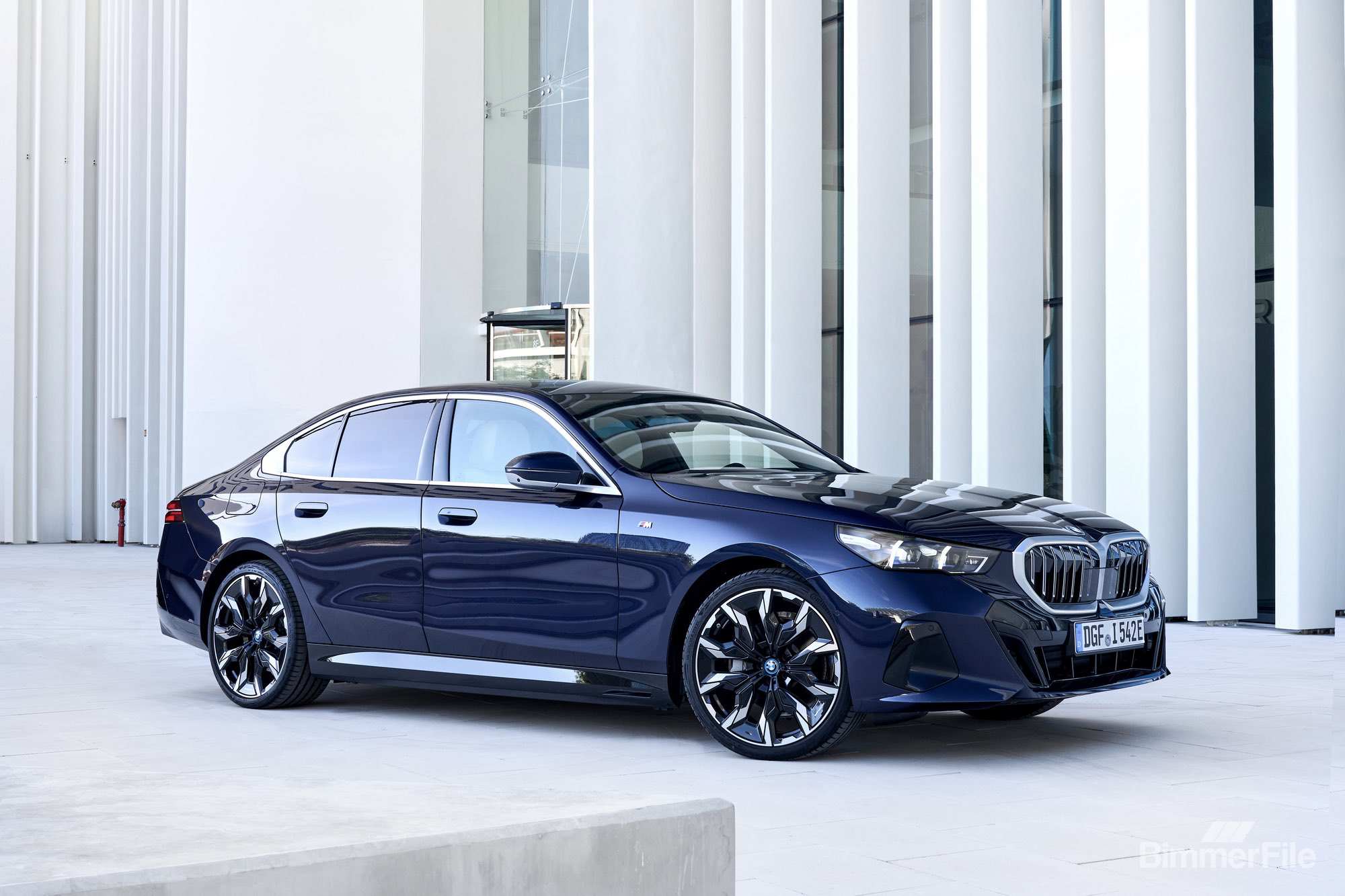

The BMW 5 Series has always occupied a particular position in the executive sedan market: not the most dramatic car in the segment, not the one that headlines auto shows, but consistently the one that gets the fundamentals right. Since 1972, it has been the car that synthesizes BMW’s engineering priorities most completely, offering the kind of balanced performance, technology, and refinement that the 3 Series previews and the 7 Series amplifies. Its transitions have generally been evolutionary rather than revolutionary, and the current generation is no exception.
The G60, launched in 2023 as BMW’s first 5 Series offered simultaneously in combustion and fully electric form, has been a capable if occasionally frustrating product. The i5 variant in particular represented a bridge rather than a destination: a well-executed EV on a platform designed for multiple powertrains, with all the compromises that implies in packaging, charging speed, and range relative to purpose-built competitors. The M5 Touring, arriving in the US for the first time ever, has been the generation’s standout product. And a July 2027 LCI brings meaningful technology updates that push the G60 toward Neue Klasse alignment without a platform change.
The proper Neue Klasse 5 Series, the NC0, waits until July 2030. This is the patience story of BMW’s product plan, and it turns out patience is probably the right call.

The July 2027 LCI for the G60 sedan and G61 Touring is more substantive than BMW’s typical mid-cycle refresh, and that’s by design. The 5 Series sits in a segment where technology currency matters to buyers, and the LCI is BMW’s mechanism for keeping the G60 relevant through the end of its production run without committing the full investment of a platform change.
The headline change is the switch to Panoramic Vision, the windshield-projected display architecture that first appeared in the 7 Series LCI and the Neue Klasse iX3 and i3. For the 5 Series, this means the G60 LCI’s interior will align visually and functionally with cars above and below it in the range, creating the coherent Neue Klasse interface family that BMW has been building toward. The passenger display arrives as an option at the same time, bringing the 5 Series in line with what the current 7 Series already offers.
Beneath the interface changes, the chassis control suspension system replaces the current adaptive options, following its debut on the G70 7 Series LCI. This is not a cosmetic update: chassis control represents a genuinely different approach to managing ride and handling, and the G60 LCI should feel meaningfully different to drive as a result. M-style headlights become available on M-lite models that previously couldn’t specify them. And the tiered highway and city drive assists, part of BMW’s broader autonomous driving rollout, arrive as options for the first time on the 5 Series.
The naming convention also updates at the LCI, adopting BMW’s simplified scheme. Massaging seats, previously reserved for the 7 Series, become available as an option across the range. These are the kinds of feature trickle-down moves that BMW uses to sustain the 5 Series’s value proposition against competitors who have been refreshing their executive sedan technology more aggressively.
The G61 Touring follows the same LCI schedule and runs to June 2032, four months longer than the sedan. It is not planned for the US market, which continues BMW’s long-standing position on the 5 Series wagon in North America. The M5 Touring’s arrival in the US was an exception that proved the rule: the regular 5 Series Touring remains a Europe-focused product.

The M5 sedan (G90) and Touring (G99) receive their LCI alongside the standard cars in July 2027, running until October 2031 and June 2032 respectively. The LCI brings everything the G60 gets, plus expanded Alcantara use in M5 interiors, a detail that reflects BMW M’s ongoing effort to differentiate the tactile experience from the standard car in meaningful rather than merely cosmetic ways.
The current M5 is one of the more extraordinary products BMW has built in recent years: a plug-in hybrid producing close to 600 hp that manages, somehow, to feel like an M car despite weighing considerably more than any previous M5. The M5 Touring takes that formula and adds genuine wagon utility, making it the most practical near-600-hp vehicle available at any price. The LCI keeps both cars current through the early 2030s. What follows them is, at this stage, not confirmed in detail, though the pattern established by the i3 and G50 3 Series suggests a future M5 family will face the same dual-powertrain question the M3 is navigating now.
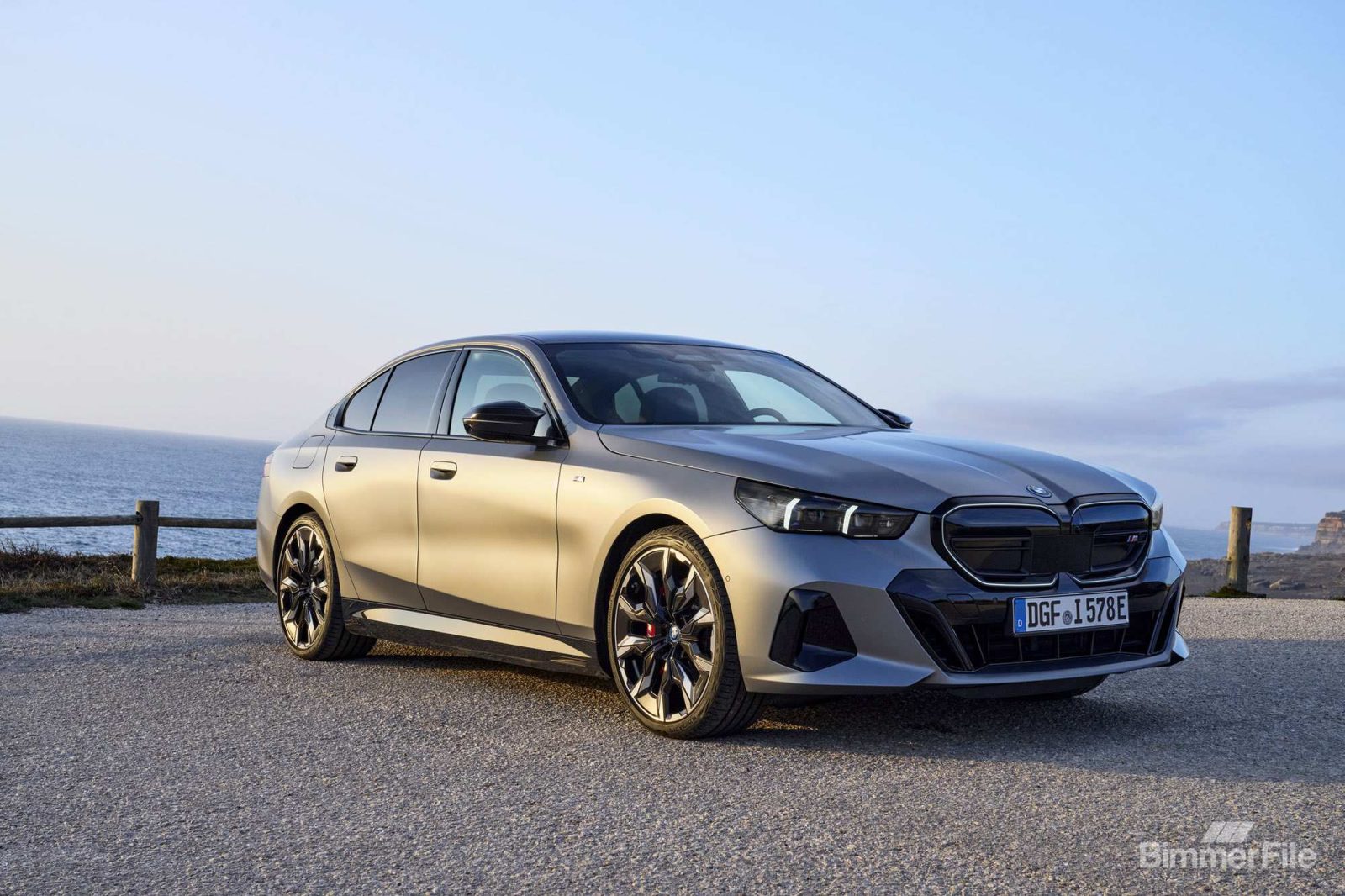
The NC0 is the Neue Klasse 5 Series, and it arrives in July 2030 with a production run that extends well into the mid-2030s. Built on the full NK platform rather than the shared CLAR architecture that underpins the G60 and its i5 variant, the NC0 will be what the current i5 tried to be: a purpose-built electric executive sedan with 800V charging, native Panoramic iDrive X, efficient battery packaging, and the full range of Neue Klasse technology from the ground up.
The timing of the NC0 is the most revealing detail in BMW’s 5 Series plan. By July 2030, the iX3 will have been in production for four years. The i3 will have been in production for nearly four years. The iX1, iX4, and electric M3 will all be established products. BMW will have accumulated years of real-world Neue Klasse data, software refinement history, and manufacturing experience before the NC0 enters production. The 5 Series, as the broadest-reaching car in BMW’s executive lineup, benefits from all of that accumulated knowledge in a way the iX3 and i3 couldn’t.
The current i5’s honest shortcomings were primarily platform-related: the shared CLAR architecture placed limits on what the battery could do in terms of packaging and charging capability, and put BMW behind purpose-built EV competitors in the specs that matter most to cross-shoppers. The NC0 removes those limits. It won’t be playing catch-up in the way the G60 i5 often was.
The G60 LCI and NC0 together represent a deliberate sequencing decision that BMW has been consistent about across its entire lineup. Don’t rush the Neue Klasse transition into products before the platform is ready. Let the iX3 and i3 prove the technology. Update the existing generation with the interface and chassis improvements that keep it competitive. Then bring the proper clean-sheet car when the platform has earned the trust that an executive sedan buyer requires.
There’s a tension here worth acknowledging. The current i5 was already trailing competitors like Lucid and Tesla on the metrics that EV-focused buyers care most about: range, charging speed, and efficiency. The G60 LCI updates the interface and chassis but doesn’t change the underlying EV architecture. BMW is asking i5 buyers to wait until 2030 for the car that genuinely closes those gaps.
Whether that patience is rewarded depends on how the broader EV market evolves between now and then. If the NC0 arrives into a segment where software-defined vehicles, over-the-air updates, and 800V charging have become table stakes rather than differentiators, BMW will have timed the transition correctly. If the window closes faster than expected and a purpose-built Neue Klasse 5 Series is needed sooner, the G60 LCI is a gap-filler rather than a solution. Right now, the 2030 timeline looks measured rather than late. Ask again in 2028.

