What BMW Group’s Earnings Reveal About the BMW Brand’s Long Game
 by
by 

At first glance, BMW Group’s latest earnings announcement looks like a familiar piece of corporate housekeeping. Revenue figures, margins, and cautious guidance dominate the headlines. Yet underneath the spreadsheets is a deeper story about the BMW brand itself and how it plans to navigate one of the most disruptive periods in automotive history.
BMW Group reported earnings before tax of more than €10 billion for 2025, maintaining an automotive EBIT margin of roughly 7.7 percent despite tariffs, economic uncertainty, and a rapidly shifting global market. Those numbers matter not simply because they are large, but because they represent something rare in today’s auto industry: stability. For the BMW brand, that stability is not accidental. It is the direct result of a deliberate strategy that has prioritized flexibility over dramatic pivots.
While several competitors have rushed headlong into all-electric lineups, BMW has chosen a more measured path. The company continues to invest heavily in electric vehicles while simultaneously refining internal combustion and hybrid powertrains. Executives often describe this as a technology-open approach, a phrase that sounds bureaucratic but carries a practical meaning. BMW intends to offer multiple propulsion technologies and allow markets, regulations, and customers to determine the pace of the transition.
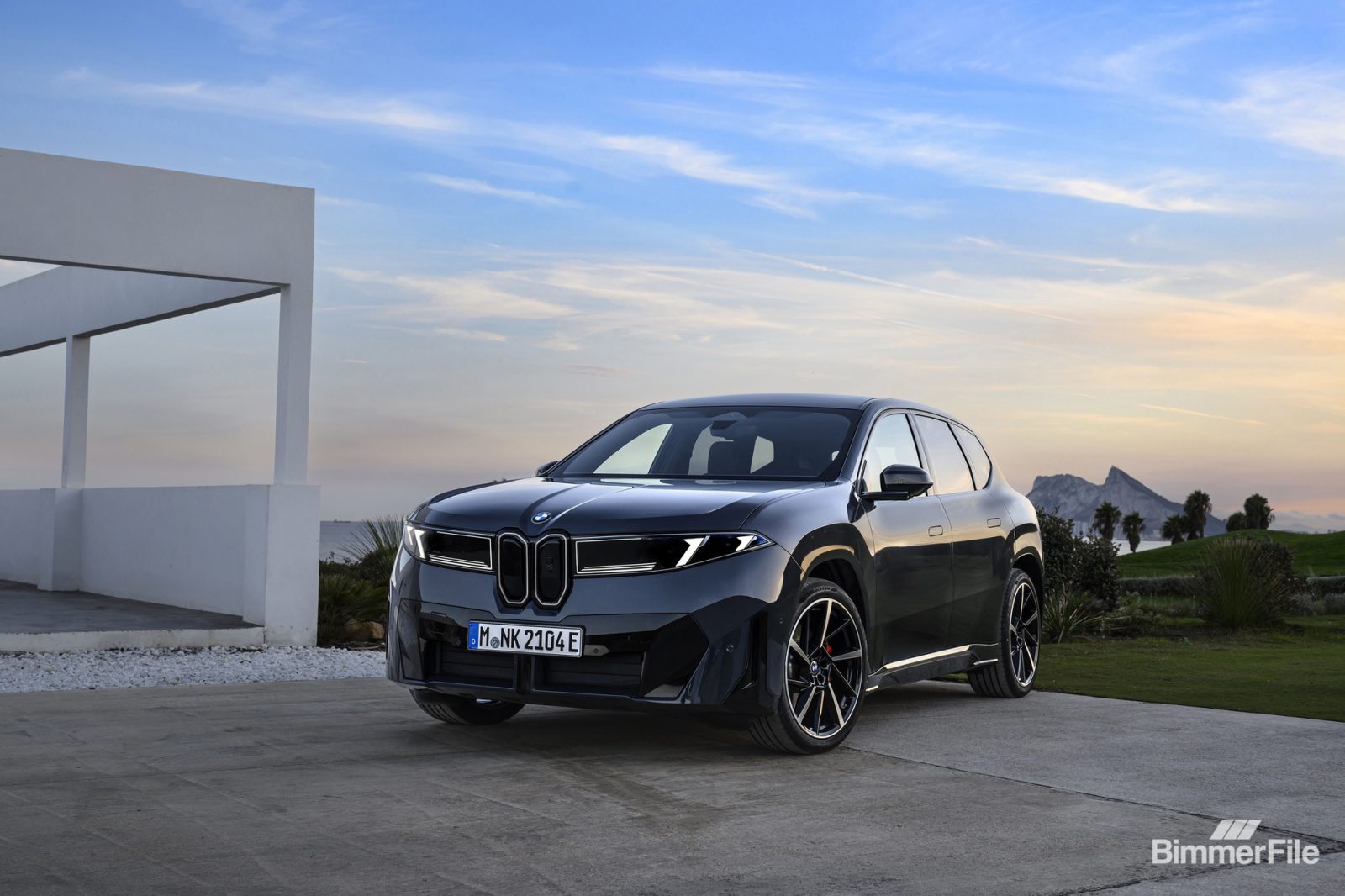
That strategy has shaped nearly every modern BMW product. Today the brand sells fully electric models such as the i4 and iX alongside plug-in hybrids and traditional combustion vehicles. Rather than isolating electric vehicles as a separate experimental branch, BMW has integrated electrification into the core of its lineup. In practice, that means buyers can choose an electric drivetrain without abandoning the design language or driving characteristics associated with the brand.
This flexibility has also allowed BMW to avoid one of the biggest risks currently facing the industry: committing too early to a single technological outcome. Electric vehicle adoption is growing, but the pace varies dramatically by region. Europe is accelerating, the United States is progressing unevenly, and China has become fiercely competitive with domestic EV manufacturers reshaping the market. A rigid strategy built around a single propulsion technology can quickly become a liability in such an environment.
BMW’s approach spreads the risk. By maintaining multiple powertrain options, the company can adapt production and product mix as market conditions evolve. That adaptability is becoming increasingly valuable as governments adjust emissions regulations, trade tensions reshape supply chains, and consumer preferences remain difficult to predict.
Tariffs and geopolitical pressure have already begun influencing the global auto industry. Trade disputes between Europe, China, and the United States are affecting the economics of electric vehicle production and export. For BMW, which operates a global manufacturing network stretching from Germany to South Carolina and China, these pressures require constant recalibration. A strategy built around flexibility allows the brand to shift production and sourcing more easily than a system locked into one technological direction.
Financial discipline plays an equally important role. Maintaining a solid profit margin while investing heavily in electrification requires careful cost management and an unwavering focus on scalable platforms. BMW’s Neue Klasse architecture, scheduled to debut soon, represents the next phase of this strategy. It is designed specifically for electric vehicles but incorporates lessons learned from the company’s existing multi-powertrain platforms. The goal is to combine efficiency, digital capability, and driving dynamics in a structure that can support BMW’s next generation of vehicles.
The Neue Klasse project signals how BMW sees the future of the brand. Electrification will become increasingly central, but it will be introduced in a way that preserves the qualities that have historically defined BMW. Engineers frequently emphasize that electric BMWs must still deliver the precise steering, balanced chassis behavior, and driver engagement that built the brand’s reputation. The challenge is translating those attributes into a world dominated by batteries, software, and digital interfaces.
Design is evolving as well. BMW’s recent vehicles reveal a shift toward simplified surfaces, digital interiors, and advanced user interfaces that place software at the center of the driving experience. Large curved displays, over-the-air updates, and increasingly sophisticated driver assistance systems are becoming standard features. These technologies are not simply aesthetic changes. They reflect a broader transformation in how cars are engineered and experienced.
Yet even as BMW embraces digitalization and electrification, the brand continues to emphasize its heritage as a performance-oriented manufacturer. The core identity built around driver engagement remains a guiding principle. This balancing act between tradition and innovation defines the company’s strategy today.
The significance of BMW Group’s stable earnings becomes clear when viewed through this lens. Financial resilience gives the brand something many competitors currently lack: room to maneuver. Rather than rushing products to market or abandoning previous technologies prematurely, BMW can develop its next generation of vehicles with a degree of patience.
That patience may prove to be one of the brand’s greatest strengths during the industry’s current transformation. Automotive history is filled with examples of companies that chased technological revolutions too aggressively or resisted them for too long. BMW’s strategy attempts to avoid both extremes. It is neither a sprint toward electrification nor a stubborn defense of the past.
Instead, it is a controlled transition shaped by engineering discipline, financial stability, and a willingness to adapt as the market evolves. If the company’s recent results are any indication, that strategy is working. For the BMW brand, the path forward is not defined by a single breakthrough moment but by a steady sequence of calculated moves that gradually reshape what the Ultimate Driving Machine will mean in the electric age.