BMW Art Cars Reunited: 50 Years of Rolling Art at BMW Welt
 by
by 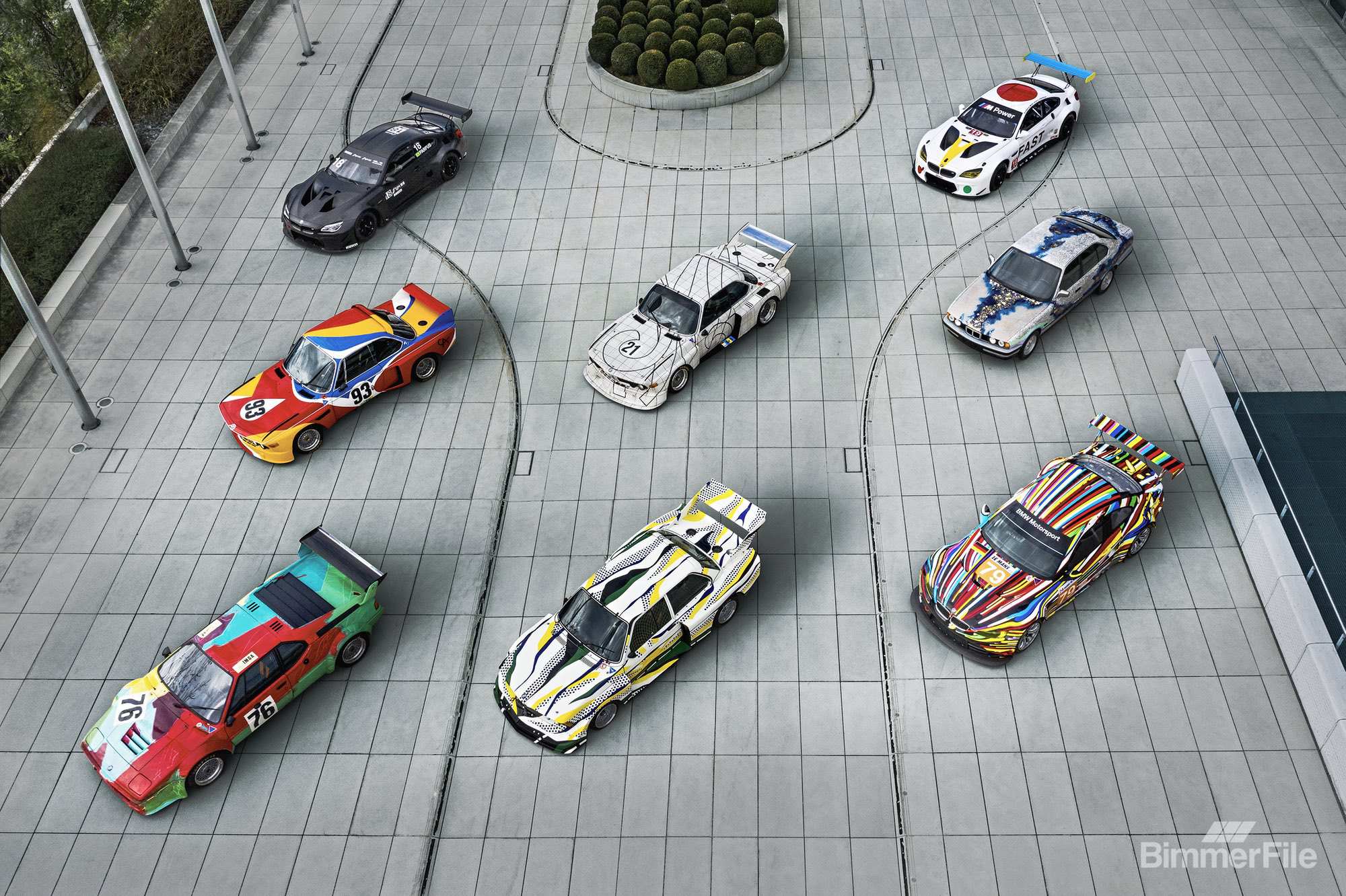

There is something faintly improbable about the idea that a collection born in the heat of endurance racing would end up as one of the most quietly influential intersections of art and industry. Yet here we are, fifty years on, with BMW bringing every one of its rolling provocations back to where the story now feels most complete.
This summer, BMW Welt becomes less a delivery center and more a kind of mechanical cathedral. From 29 July to 31 August 2026, all twenty BMW Art Cars will stand together for the first time, a full gathering that traces a lineage from Alexander Calder’s 1975 3.0 CSL to Julie Mehretu’s sprawling, multi-layered 2024 M Hybrid V8. The opening night on 28 July is invitation-only, which feels appropriate, because this is less an exhibition and more a reunion of ideas that were never supposed to sit quietly in one place.

The Art Car project has always thrived on tension. It began when Hervé Poulain, equal parts racer and art dealer, convinced BMW Motorsport to let an artist loose on a race car. The result was not a branding exercise or a polite collaboration. Calder’s CSL went to Le Mans wearing its paint like a manifesto, and the crowd responded not because it was pretty, but because it felt alive in a way race cars rarely do.
That same friction carries through the decades. Andy Warhol attacked the surface of the M1 with raw, physical urgency, finishing the car in minutes with gestures that still look wet. Roy Lichtenstein turned speed into comic-book abstraction, while Jenny Holzer used the V12 LMR to project language into a space usually reserved for lap times and pit boards. Each car resists the idea that it is merely decoration. They are arguments, sometimes contradictory ones, about what a car is allowed to be.
Walking through the collection in one sweep should feel less like a gallery visit and more like flipping through fifty years of cultural temperature. Minimalism collides with pop, abstraction bleeds into digital experimentation, and the machines underneath evolve from analog brutality to hybrid complexity. The cars chart not only BMW’s engineering arc, but also the shifting anxieties and ambitions of the eras that produced them.


One of the most elusive pieces in that arc finally returns to view. Olafur Eliasson’s BMW H2R project is not simply a car with a visual treatment. It is an environment, typically shown frozen in a controlled, almost otherworldly installation that underscores the hydrogen-powered prototype beneath it. Since its debut in 2007, it has surfaced only a handful of times. Seeing it again in Munich, within reach of the rest of the collection, adds a note of experimentation that feels unresolved in the best possible way.
The newest work, Mehretu’s Art Car, pushes the concept further still. Built on the M Hybrid V8, it is less a singular object and more a node in a broader cultural network. Her African Film and Media Arts Collective extends the project beyond the car itself, pulling in filmmakers and artists to explore narrative, identity, and motion in ways that have nothing to do with lap records. It suggests that the future of the Art Car may not even live entirely on four wheels.

There is also something quietly audacious about staging this finale now. The global tour that led here has already crossed more than thirty countries, stopping everywhere from Art Basel Hong Kong to the 24 Hours of Le Mans. Over two million people have seen fragments of the collection in isolation. Munich gathers those fragments into a single, coherent narrative, one that reveals how deliberately inconsistent the project has always been.
That inconsistency is the point. BMW never asked these artists to agree with one another, or even to agree with the brand. Instead, it handed over machines that represent precision and control, then invited chaos, critique, and imagination to take over. The result is a body of work that feels less like a corporate initiative and more like an ongoing conversation that refuses to settle.
Standing in BMW Welt this summer, surrounded by fifty years of painted metal and contested ideas, the cars should feel louder than any engine note. Not because they are static, but because they carry the residue of motion, of risk, and of artists who treated them as more than objects. They are artifacts of a company occasionally willing to let go of its own narrative, and that is far rarer than any limited-production model.